


The Tomato on Your Plate Is Safe for Your Dog. The One in Your Garden Isn't
The real tomato risk to dogs isn't the ripe fruit you share, it's the plant in the backyard. A vet explains the ripening chemistry that flips a tomato from toxic to safe, and how to garden around a dog.

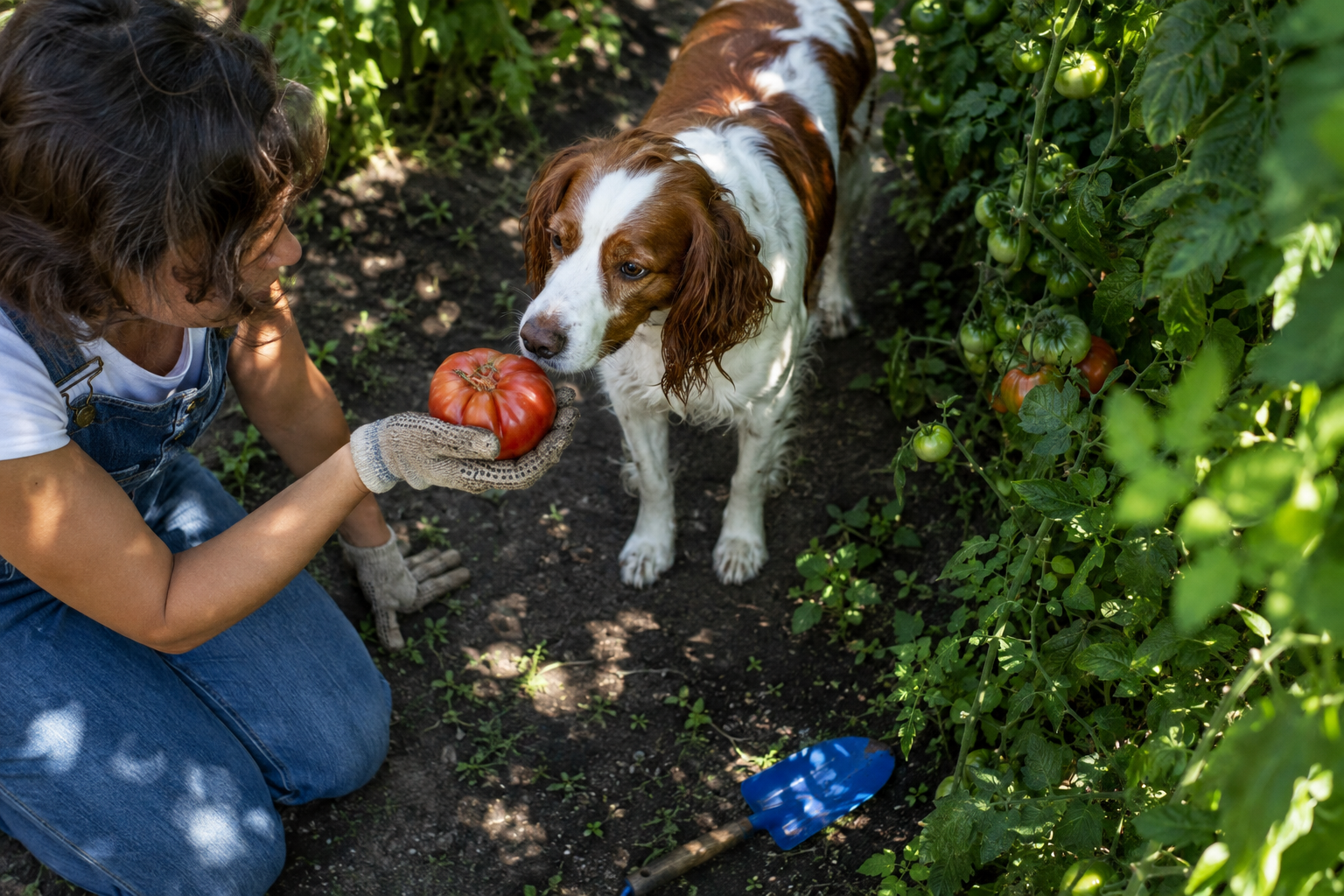
The internet asks “can dogs eat tomatoes?” and answers with a fussy paragraph about ripe versus green. That framing hides the actual point. The tomato slice on your cutting board is one of the least interesting things in this story. The dangerous tomato is the one growing in your backyard, and specifically the parts of the plant you would never think to fence off. If you understand one bit of plant chemistry, the whole thing snaps into focus, and your attention moves from the kitchen, where it is wasted, to the garden, where it belongs.
The chemistry that flips a tomato from toxic to safe
Tomato plants make a natural defense compound called tomatine, a glycoalkaloid that discourages animals from eating the plant before its seeds are ready. Tomatine is concentrated in the green, growing tissue, the leaves, stems, and vines, and in the unripe green fruit. As a tomato ripens and turns red, the plant no longer needs to protect that fruit, so the tomatine breaks down and all but vanishes.
That is the entire “ripe versus green” rule, and it is worth understanding rather than memorizing, because it tells you where the risk actually lives. Redness is not a color preference, it is a chemical readout: red means the tomatine has faded. Green, whether an unripe fruit or any leafy part of the plant, means it has not.
The plant is the hazard here, not the fruit. A bite of ripe tomato off the counter is a non-event. Where I see dogs get into trouble is the vegetable patch, the vines and the green tomatoes and the cuttings people toss on the compost. Fence the plant, not the plate.
Why the garden outranks the kitchen
Rank the parts of a tomato by tomatine and you get a clear hierarchy. Highest are the leaves, stems, and vines. Next comes unripe green fruit. Lowest, essentially negligible, is the ripe red fruit you would ever actually share. Now notice that the two dangerous tiers are exactly the parts that live outdoors, in reach of a curious dog, and often unsupervised. A dog rarely overdoses on tomato by begging at dinner. A dog overdoses by grazing a garden bed or chewing a discarded vine.
This is why garden management matters more than kitchen rules. If you grow tomatoes, keep your dog out of the beds, and do not leave prunings, cuttings, or green culls where a dog can reach them, on the ground, in an open compost bin, or in a low yard-waste pile. The cutting you toss aside is more concerning than anything on your plate.
What tomatine poisoning looks like, and how likely it is
The reassuring context: serious tomatine toxicity is uncommon in dogs. It is a bigger deal for grazing animals like cattle that eat plant matter in bulk. Still, it happens, and the dose depends on how much green material a dog gets into.
A dog who nibbles a small amount of unripe tomato may show mild signs: vomiting, diarrhea, and abdominal pain. A dog who raids the garden and eats a lot of green tomatoes or chews up whole plants can show more serious effects, including dilated pupils, drooling, lethargy or weakness, slow or shallow breathing, an unsteady gait, and elevated body temperature. If your dog gets into the green parts, call your vet or an animal poison control center rather than waiting it out, and bring a rough sense of how much and what part.
Sharing the ripe fruit, briefly
Since the ripe fruit is the safe part, sharing it is simple. A few bites of ripe red tomato, flesh and skin, are fine as an occasional nibble. Be honest about the upside, though: while ripe tomatoes carry vitamins C, K, and A, potassium, and the antioxidant lycopene, the benefits to dogs specifically are not well studied, and a balanced dog food already covers the nutrients. So treat ripe tomato as a harmless little snack your dog enjoys, not a health food, and keep it under the 10 percent of daily calories that all treats share.
One more kitchen caution that is really about seasonings, not tomatine: most tomato sauces and canned tomato products carry onion, garlic, and salt. Those, not the tomato, are the genuine hazards in a jar of marinara, so skip the seasoned stuff and stick to plain ripe fruit.
The bottom line
Reframe the whole question and it gets easy. The tomato you eat is safe for your dog in small amounts because ripening strips out the tomatine. The tomato you grow is the one to guard, because the leaves, vines, and green fruit keep that compound at full strength. Spend your caution on the garden bed and the compost pile, share the ripe fruit freely and modestly, and keep any seasoned tomato products, with their onion and garlic, off the menu entirely.
References
- ASPCA. “Toxic and Non-Toxic Plants: Tomato Plant.” https://www.aspca.org/pet-care/animal-poison-control/toxic-and-non-toxic-plants/tomato-plant.
- ASPCA. “People Foods to Avoid Feeding Your Pets.” https://www.aspca.org/pet-care/animal-poison-control/people-foods-avoid-feeding-your-pets.
- Friedman, M. “Tomato Glycoalkaloids: Role in the Plant and in the Diet.” Journal of Agricultural and Food Chemistry. https://pubs.acs.org/doi/10.1021/jf020560c.
- U.S. Department of Agriculture, FoodData Central. “Tomatoes, Red, Ripe, Raw.” https://fdc.nal.usda.gov/.
Common questions
What part of the tomato plant is actually dangerous?
The leaves, stems, and vines hold the highest concentration of tomatine, followed by unripe green fruit. The ripe fruit has almost none. So the garden, not the kitchen, is where dogs get into trouble.
My dog ate green tomatoes off the vine. What should I do?
Call your vet or an animal poison control center, especially if your dog ate a lot or is chewing on the plant itself. Watch for drooling, dilated pupils, wobbliness, vomiting, or lethargy. Severe cases are rare in dogs but worth acting on.
Can dogs eat cooked tomato or tomato sauce?
Plain cooked tomato is fine in small amounts, but most sauces and canned tomato products add onion, garlic, and salt, which are the real problems. Skip seasoned sauces.
Not a substitute for your vet. Our guidance is educational. For urgent symptoms, contact a vet or emergency clinic right away. Editorial standards
Dr. Chen is a small-animal veterinarian who leads health and safety coverage at The Pet Times. She writes and reviews the bulk of our illness, condition, and safety content, translating clinical guidance into clear, practical advice owners can act on at home.
Meet our experts ↗Keep reading
 FoodNot All Bell Peppers Are Equal: Why Red Beats Green in Your Dog's BowlDr. Lena Park · 6 min
 FoodOne Slim Jim Has as Much Saturated Fat as a Whole Serving of FriesDr. Priya Nair · 6 min
 FoodBananas Are Basically Dog Candy. That's Exactly Why They're UsefulDr. Lena Park · 5 min
 FoodCan Dogs Eat Black Pepper? Why It's Safe to Skip the ShakerDr. Ravi Mehta · 5 min
 FoodCauliflower for Dogs: A Filling Snack With One Gassy CatchDr. Lena Park · 6 min
 FoodBroccoli for Dogs: Great Snack, Until You Hit the 10% LineDr. Lena Park · 5 min