


Broccoli for Dogs: Great Snack, Until You Hit the 10% Line
Broccoli is safe, nutritious, and easy, but it has a built-in tipping point where it flips from healthy to harmful. Here's exactly where that line is, why the stalk is the sneaky risk, and how to serve it right.

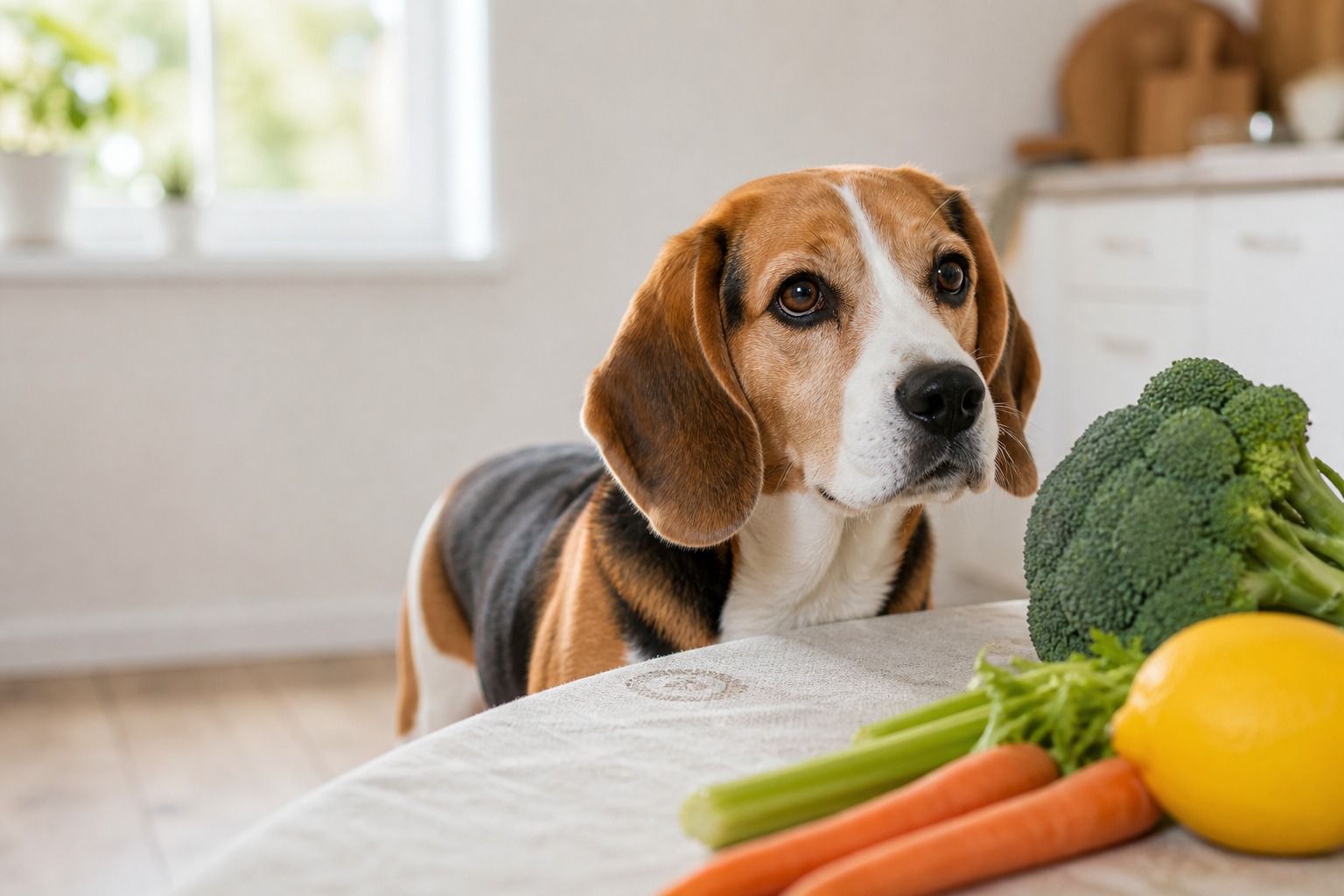
Broccoli is one of the easiest, safest vegetables to share with a dog, which is exactly why it is worth being precise about the one thing most articles wave past: broccoli has a tipping point. Below it, broccoli is a genuinely good low-calorie, high-fiber snack. Above it, the very fiber that made it healthy turns your dog gassy and can tip into outright stomach upset, and a compound in the florets starts irritating the gut. So the useful question is not “can dogs eat broccoli,” which is a plain yes, but “how much before it backfires.” This is a food defined by its ceiling, and knowing where that ceiling sits is what separates a good snack from a bad evening.
Where the line actually is
Two things flip broccoli from good to bad, and both are dose-dependent.
The first is a compound called isothiocyanate, concentrated in the florets. In the small amounts a sensible snack delivers, it is a non-issue. In large amounts, it irritates the gastrointestinal tract, which is the mechanism behind “my dog ate a bunch of broccoli and threw up.”
The second is simpler: fiber. Broccoli’s fiber is a feature at snack size and a problem at bowl size. It is one of the most reliable gas-producers in the dog-food world, and enough of it brings on the loose stool and belly discomfort nobody wants.
The line that keeps you on the right side of both is the standard treat rule, and it is genuinely load-bearing here: broccoli plus every other treat should stay under 10 percent of your dog’s daily calories. In practice that is a few small florets for most dogs, not a side dish. Cross it and you are into gas-then-upset territory; stay under it and broccoli is a smart, near-free snack.
Broccoli is a great example of a bonus food, it adds fiber and antioxidants, but a dog on a complete diet does not need it to thrive. I tell clients to picture a few small florets, not a serving. That is the whole trick. The dogs who get in trouble with broccoli are the ones handed a big pile, because then the fiber and the isothiocyanate both show up at once.
The stalk is the risk nobody flags
Everyone warns about the florets. The sneakier hazard is the stalk. It is dense and fibrous, genuinely hard for a dog to break down, and a chunk of it can lodge in the throat as a choking hazard or move down and cause an intestinal obstruction. This is a mechanical risk, separate from the digestive one, and it is easy to overlook because the stalk seems like the “boring” part.
The fix is simple: if you feed the stalk at all, slice it into small, bite-sized pieces, or skip it and stick to florets, which are softer and lower-risk. Never hand a dog a whole broccoli stem to gnaw.
What broccoli actually brings to the bowl
Within that safe ceiling, broccoli genuinely earns its spot. It is low in calories and high in fiber, a combination that makes it a smart pick for dogs on a weight-management plan, and it supplies a handful of useful nutrients:
- Fiber: adds bulk to stool, balances its moisture, keeps things regular, and feeds good gut bacteria.
- Vitamin C: an antioxidant that supports the immune system (dogs make their own vitamin C, so this is a bonus, not a requirement).
- Vitamin K: supports blood clotting and bone health.
- Potassium: an electrolyte for nerve and muscle function.
- Low calorie: you can offer it without meaningfully denting the calorie budget.
Just keep the framing honest: broccoli is a healthy extra, not a nutritional necessity. A complete, balanced dog food already covers everything on that list.
Raw, steamed, or boiled, it barely matters
Dogs can eat broccoli raw, steamed, or boiled, whatever your dog prefers, and the cooking method is not the safety issue. The rules that do matter apply to all of them:
- Wash it well to cut the risk of foodborne illness.
- Cut it small, florets into bite-sized pieces, stalk into even smaller ones, to stay ahead of the choking and obstruction risk.
- No seasoning, ever. Skip salt, spices, oil, and butter. Plain is the only safe way, and seasoned broccoli often carries garlic or onion, which are toxic to dogs.
If your dog reacts with vomiting, diarrhea, or heroic gas, stop the broccoli and try a gentler veggie next time.
Other produce worth rotating in
If broccoli is a hit, a few other vegetables and fruits ride along nicely, each with its own small caveat:
- Green beans: a low-calorie favorite for dogs slimming down, raw, steamed, or boiled. Go easy on canned versions, which can be salty.
- Carrots: sweet and crunchy, but their natural sugar means limiting them for diabetic or overweight dogs.
- Apples: high in fiber, cored and cut small so an excited dog does not choke. Unsweetened applesauce works too.
And the firm no-list: onions (in every form, they destroy red blood cells), grapes and raisins (kidney failure, via tartaric acid dogs cannot clear), and avocado (persin, plus a pit that is a choking and obstruction risk).
The bottom line
Broccoli is a safe, nutritious, low-calorie snack, right up until you cross its ceiling. Keep it to a few small plain florets, under the 10-percent-of-calories line, and cut the dense stalk small or leave it out. Overshoot and the same fiber and floret compounds that made it healthy turn on you as gas and stomach upset. Serve it plain, serve it small, and check with your vet before adding it if your dog has existing health concerns, then enjoy an easy, waistline-friendly treat, and brace for a little extra gas either way.
References
- Tian, S., et al. “Broccoli: A Multi-Faceted Vegetable for Health: An In-Depth Review of Its Nutritional Attributes, Antimicrobial Abilities, and Anti-inflammatory Properties.” Microorganisms. https://www.ncbi.nlm.nih.gov/pmc/articles/PMC8929083/
- Linder, D., et al. “Role of Dietary Fiber in Canine and Feline Gastrointestinal Disease.” 2020 ACVIM Forum Proceedings. https://www.vin.com/
- ASPCA. “Toxic and Non-Toxic Plant List, Dogs.” https://www.aspca.org/pet-care/animal-poison-control/dogs-plant-list
- Wegenast, C. A., et al. “Unique sensitivity of dogs to tartaric acid and implications for toxicity of grapes.” Journal of the American Veterinary Medical Association, 2021. https://www.aspcapro.org/resource/toxic-component-grapes-and-raisins-identified
Common questions
Is the broccoli stalk safe for dogs?
The stalk is the sneaky risk. It is dense and fibrous, hard to break down, and large pieces can choke a dog or cause an intestinal blockage. If you feed stalk, cut it into small bite-sized pieces, or just stick to florets.
Can dogs eat raw broccoli, or does it need to be cooked?
Both are fine, raw, steamed, or boiled, as long as it is plain and cut small. Raw florets are perfectly safe. The only firm rule is no seasoning, oil, salt, or butter, ever.
Will broccoli make my dog gassy?
Very likely, if you overdo it. The same fiber that makes broccoli good for digestion produces gas, and it is one of the most common reasons a broccoli snack goes wrong. Small portions keep it in check.
Not a substitute for your vet. Our guidance is educational. For urgent symptoms, contact a vet or emergency clinic right away. Editorial standards
Dr. Park is a board-certified emergency and critical care specialist. She reviews our health and safety content for clinical accuracy and contributes guides on recognising urgent conditions. Her focus is helping owners act quickly and correctly when it matters most.
Meet our experts ↗Keep reading
 FoodPork and Dogs: The Meat Is Fine, the Way We Cook It Isn'tDr. Mara Chen · 5 min
 FoodBaby Food Is a Sick-Day Tool for Dogs, Not a Treat. Read the Jar Like OneDr. Mara Chen · 6 min
 FoodThe People Foods That Actually Do Something for Your DogDr. Amara Solis · 7 min
 FoodProduce Is a Treat, Not a Topping: 11 Fruits and Veggies, Served RightDr. Mara Chen · 9 min
 FoodPeas Are a Fine Snack for Dogs. As a Diet Staple, It's Complicated.Dr. Ravi Mehta · 7 min
 Food9 Human Superfoods Worth Adding to Your New Dog's BowlLeila Torres · 6 min