


Bananas Are Basically Dog Candy. That's Exactly Why They're Useful
Bananas get sold to dog owners as a health food, but the real headline is the sugar. Reframe them as a sweet, soft, high-value treat, not a daily supplement, and they become one of the handiest tools in your kitchen.

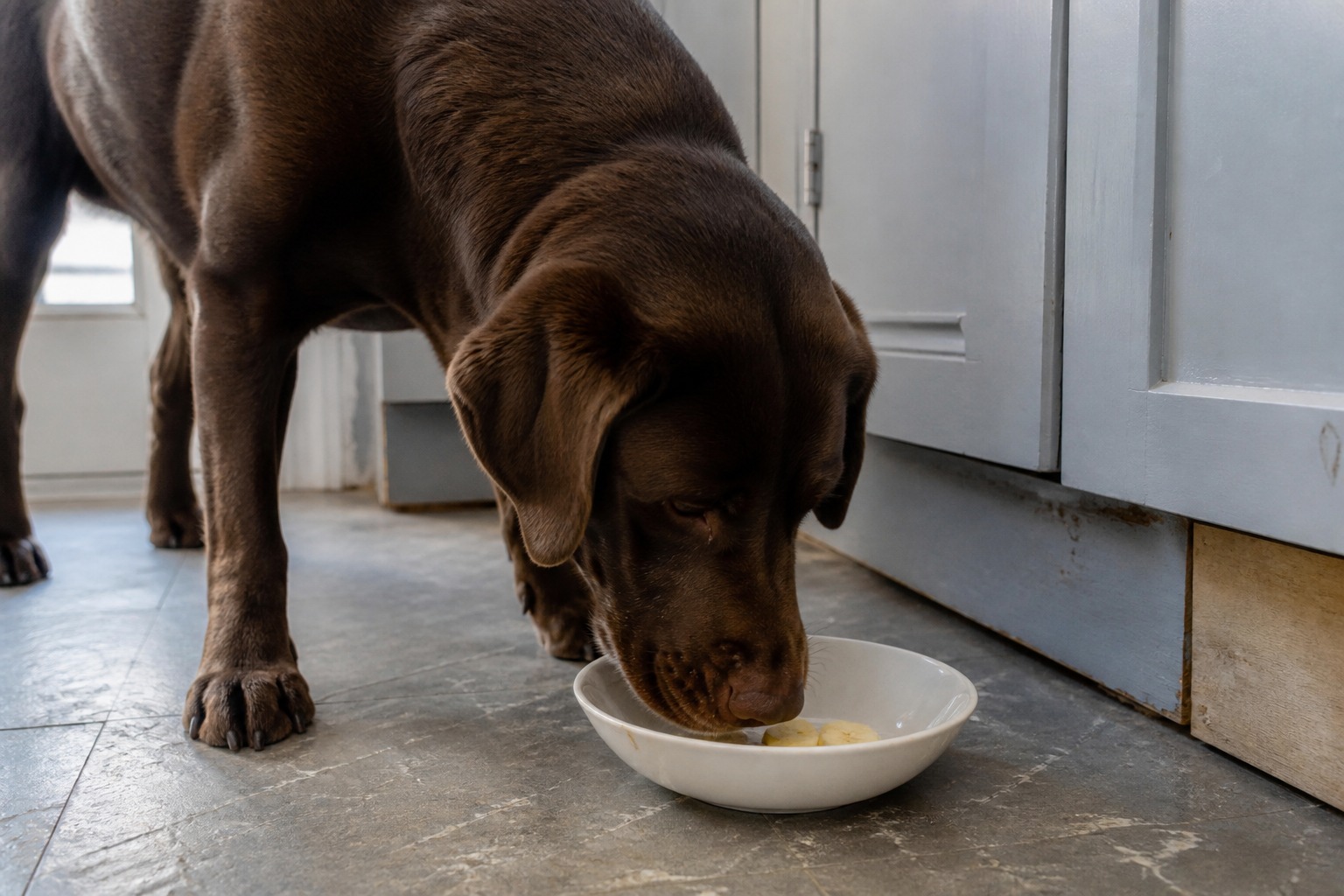
Bananas get a health-food halo in the dog world, potassium! fiber! magnesium!, and all of that is true. But it buries the one fact that should actually guide how you use them: a banana is largely sugar. A whole one carries about 105 calories and a real hit of natural sugar, which is why “in moderation” is not a throwaway line here; it is the entire point. Once you stop treating bananas as a daily supplement and start treating them as what they are, sweet, soft, dog-thrilling candy, they become genuinely useful. Candy has jobs a carrot cannot do.
The sugar is the headline, not the footnote
Because bananas are relatively high in sugar, they are a poor everyday choice for diabetic or overweight dogs, the two groups most likely to be handed “healthy” fruit by well-meaning owners. Introduce them slowly and start small; a dog who gorges on sweet fruit can end up with a stomachache, and you may also discover your dog simply is not a banana fan, which happens.
Bananas are a treat I’m happy to green-light for most dogs. They’re nutritious and the soft texture makes them perfect for mashing onto food or stuffing into a toy. But I want owners thinking of them like a cookie, not a vitamin. Keep the sugar in mind, especially for dogs managing diabetes or extra weight, and portion accordingly.
For the record, the nutrition is real, it is just not a reason to overfeed: potassium (muscle and blood-vessel function), fiber (a handy home remedy for the occasional bout of diarrhea or constipation), magnesium (energy transport and protein building), vitamin B6, and vitamin C. Nutritionists generally agree it is better for dogs to get these from whole foods than from supplements, so a banana slice beats a pill, but a complete dog food already covers the bases.
Where “dog candy” earns its keep
Reframing the banana as a treat, not a health food, unlocks the ways it is actually valuable, precisely because dogs find it irresistible.
- A high-value training reward. For teaching something hard or working through a distraction, you want a treat your dog will work for. A tiny piece of banana is soft, fast to eat, and exciting enough to hold attention, no chewing pause that breaks the training rhythm.
- A pill vehicle. Mashed banana is sticky and sweet, which makes it one of the better ways to hide a bitter tablet for a dog who spits out pill pockets. Fold the pill into a small blob and it usually goes down without a fight. (Confirm with your vet first, since a few medications should not be given with certain foods.)
- An enrichment filler. Because it mashes, banana smears beautifully into a rubber toy or a lick mat. Add a thin layer, freeze it, and a two-minute treat becomes twenty minutes of licking, useful for a dog who needs to settle.
- A picky-eater topper. A little mashed banana over kibble can win over a dog who finds their food boring, without adding many calories if you keep the portion honest.
How to serve it (and the one hard rule)
Peel and mash, add a few slices as a food topper, or cut bite-size pieces for training. That is the whole method.
The one non-negotiable: never feed the peel. The fruit is one of the more dog-friendly options out there, but the peel is tough, fibrous, and hard to digest, and it is not worth the stomach upset or, in a small dog, the blockage risk. Peel it, use the fruit, toss the skin.
A quick fruit cheat sheet
Other dog-friendly fruits (in moderation, same sugar caution):
- Peaches, fine in small amounts (skip the pit).
- Pears, high in fiber and safe (remove the core and seeds).
- Blueberries, lower in sugar and antioxidant-rich, a great everyday alternative when the banana feels too sweet.
Fruits to keep away entirely:
- Grapes and raisins, highly toxic; avoid at all costs.
- Watermelon, flesh is safe but seeds and rind are a choking and blockage hazard.
- Persimmons, the skin can cause intestinal blockages.
The bottom line on people food in general: some of it, like the banana, is a fine treat in moderation, but treats should always stay supplementary to a complete and balanced dog food.
The scariest fruit, finally explained
Grapes have topped the canine “never” list for decades, and until recently nobody knew why. Researchers have now pinpointed tartaric acid as the likely toxic component. Dogs cannot efficiently clear it from their systems, so it builds up and can cause acute kidney failure, which is why even a small amount can be dangerous. It is a sharp contrast with a gentle fruit like the banana, and a reminder that “fruit” is never a blanket green light.
FAQs
Can dogs eat bananas?
Yes, they’re safe and non-toxic for most dogs. Treat them as an occasional sweet treat, not a daily supplement, and go easy if your dog has diabetes or a weight problem.
How much banana can a dog eat?
Keep it small and inside the 10 percent of calories all treats should share, a few slices for a big dog, a coin or two for a small one. A whole banana is about 105 calories and a real dose of sugar.
Why can’t dogs eat the peel?
It’s tough and fibrous, hard to digest, and a blockage risk in small dogs. Peel first, toss the skin.
References
- “Healthy Treats for Pets.” Cummings School of Veterinary Medicine at Tufts University, Clinical Nutrition Service. https://vetnutrition.tufts.edu/
- “Banana, raw.” USDA FoodData Central. https://fdc.nal.usda.gov/
- Wegenast, Colette A., et al. “Unique Sensitivity of Dogs to Tartaric Acid and Implications for Toxicity of Grapes.” Journal of the American Veterinary Medical Association, 2021. https://www.aspcapro.org/resource/toxic-component-grapes-and-raisins-identified
Not a substitute for your vet. Our guidance is educational. For urgent symptoms, contact a vet or emergency clinic right away. Editorial standards
Dr. Park is a board-certified emergency and critical care specialist. She reviews our health and safety content for clinical accuracy and contributes guides on recognising urgent conditions. Her focus is helping owners act quickly and correctly when it matters most.
Meet our experts ↗Keep reading
 FoodA Cherry Is Two Different Hazards. Know Which One You're FacingDr. Amara Solis · 8 min
 FoodBlueberries Are the Rare 'Superfood' Your Dog's Aging Brain Actually UsesDr. Priya Nair · 5 min
 FoodLettuce Does Almost Nothing for Your Dog. Here's When It's Still Worth Feeding.Dr. Amara Solis · 5 min
 FoodStrawberries Are the One Fruit Treat Even a Dieting Dog Can KeepDr. Priya Nair · 5 min
 FoodPopcorn Is a Great Dog Treat, Until You Touch the ToppingsDr. Priya Nair · 7 min
 FoodThe Persimmon Rule for Dogs: Flesh Yes, Everything Else NoDr. Priya Nair · 7 min