


Lettuce Does Almost Nothing for Your Dog. Here's When It's Still Worth Feeding.
Lettuce is mostly water, so it won't nourish your dog much. But 'nearly pointless' isn't 'useless.' Here's the narrow case where lettuce earns its place, plus the kidney-stone catch on greens people never hear about.

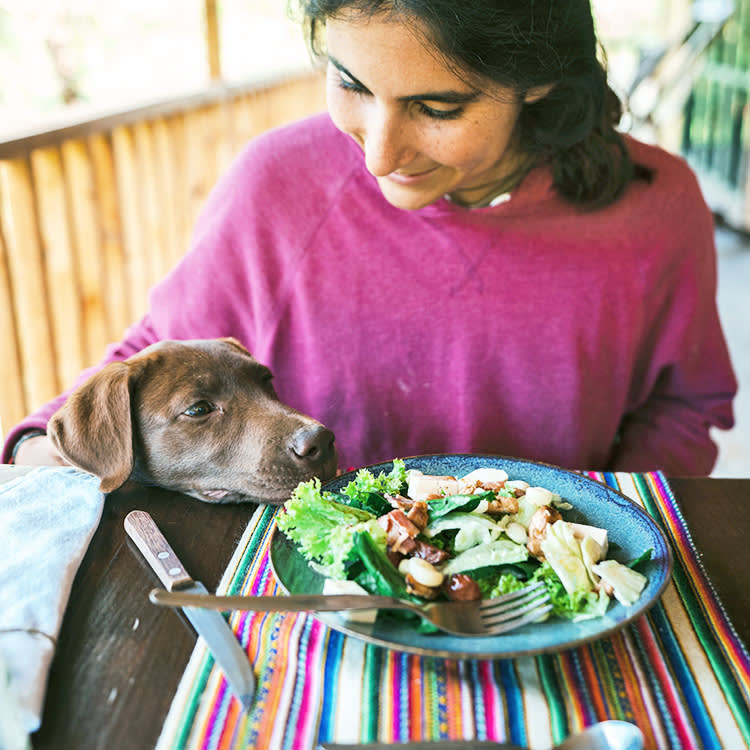
Let’s start with the unglamorous truth: lettuce barely registers as food for a dog. It is roughly 95 percent water, with a thin scattering of vitamins and fiber and almost no calories. If you were hoping a few leaves would deliver nutrition, they won’t. That is not a reason to skip it, though. It is a reason to feed it for the one thing it is actually good at.
Because “nearly pointless” is not the same as “useless.” Lettuce has a small, specific job it does well, and it comes with one catch about leafy greens in general that most owners have never been told. Both are worth two minutes.
What lettuce is actually for
Strip away the health-food framing and here is what remains. Lettuce is cold, crunchy, hydrating, and almost calorie-free. For most dogs that adds up to a pleasant, harmless treat. For one dog in particular, it adds up to something genuinely handy: the dog on a diet.
If your dog needs to lose weight, a few pieces of lettuce give you a way to reward them, or bulk up a meal, without adding meaningful calories. That is the narrow lane where lettuce earns its keep. It is the treat you reach for precisely because it does so little.
I never suggest lettuce because it’s nutritious, because it isn’t, really. I suggest it when an owner has a food-motivated dog who needs to drop weight and still wants the ritual of a snack. Lettuce lets you say yes without the calories, and that’s a surprisingly useful thing.
The varieties that are safe in moderation are romaine, iceberg, and arugula, all non-toxic to dogs. Just remember lettuce is a supplement to a small part of a meal or an occasional treat, never a staple.
Feed it plain, chopped, and washed
Lettuce is easy to get wrong in small ways, so a few rules:
- Chop it small. Big leaves are hard to chew and can be a choking risk, especially for little dogs. Cut it into bite-sized pieces.
- Wash it well. Store lettuce can carry pesticide residue and bacteria like E. coli, listeria, and salmonella. Rinse thoroughly under running water before serving, and organic is a reasonable choice to lower chemical exposure.
- Keep it naked. No dressing, no salt, and absolutely no onion or garlic, which are toxic to dogs. Fatty dressings can even trigger stomach trouble or pancreatitis. Share plain lettuce, not salad.
- Steam it if digestion is touchy. For a dog with a sensitive stomach or trouble chewing, a quick one-to-two-minute steam softens the leaf and makes it easier to digest without cooking away what little it offers. Cool it fully before serving.
Start with a small amount to see how your dog tolerates it. Most dogs handle lettuce well, but a dog with a sensitive gut can get gas or loose stool from it.
The kidney-stone catch on greens
Here is the piece that rarely makes it into a lettuce article, and it matters more than the lettuce itself. When people move on from lettuce to “heartier” greens like spinach and kale, they are stepping into oxalate territory, and for some dogs that is a real problem.
Oxalates bind with calcium in the body to form calcium oxalate crystals. A healthy dog excretes them without issue. A dog with kidney disease may not, and those crystals can build into stones that block the urinary tract, which is dangerous. In a dog with compromised kidneys, high-oxalate greens can also speed the disease along. Warning signs to know: painful urination, blood in the urine, straining or an inability to urinate (an emergency), lethargy, vomiting, or loss of appetite.
The practical upshot: lettuce is low enough in oxalates to be fine for most dogs, but for a dog with kidney disease, skip the high-oxalate greens like spinach and kale, and lean on lower-oxalate options such as green beans, zucchini, or carrots. Always run new foods past your vet before adding them to a kidney-disease diet.
Other greens, ranked by how useful they are
If lettuce has your dog interested in greens, some are worth more than others:
- Green beans: the standout. Low-calorie, high-fiber, and genuinely nutritious.
- Cucumber: like lettuce, mostly water, great for hydration.
- Spinach: iron and vitamins, but high in oxalates, so moderation only, and off the menu for dogs with kidney disease.
- Kale: nutrient-dense but also high in oxalates and thyroid-affecting compounds, so a small occasional topper at most, and not for dogs with kidney disease.
What newer research adds
Lettuce’s real value, low-calorie volume, tracks with where vets are putting their attention. Recent pet obesity surveys estimate that most dogs now land in the overweight-to-obese range by body condition score, and in 2024 far more owners than the prior year recognized their own dog was carrying extra weight. That is why “water with crunch” treats keep coming up.
The advice underneath hasn’t shifted: manage weight with portion control and movement against a balanced diet, and use near-zero-calorie treats like lettuce, cucumber, and green beans as the low-stakes rewards inside that plan.
The bottom line
Lettuce won’t nourish your dog, and that is fine, because that is not its job. Its job is to be a cold, crunchy, near-calorie-free treat, which makes it quietly perfect for a dog watching their weight. Keep it plain, chopped, and washed, and remember the real caution isn’t lettuce at all. It’s the higher-oxalate greens, and the dogs with kidney trouble who should steer clear of them.
References
- Calcium Oxalate Stones in Dogs — American College of Veterinary Surgeons
- Feeding Fruits and Vegetables to Pets — Cummings School of Veterinary Medicine, Tufts University
- 2024 Pet Obesity Survey Results — Association for Pet Obesity Prevention
Common questions
Is lettuce good for dogs?
Not very, nutritionally. Lettuce is mostly water, so it adds hydration and a little crunch and fiber without many calories. It is a fine low-calorie treat but not a meaningful source of nutrients.
Which lettuce is safest for dogs?
Romaine, iceberg, and arugula are all fine in moderation. Whatever you choose, wash it thoroughly to remove pesticides and bacteria, and chop it small to prevent choking.
Can dogs with kidney disease eat leafy greens?
Be careful. Higher-oxalate greens like spinach and kale can worsen kidney disease and stone risk. Lower-oxalate options like green beans, zucchini, or carrots are safer, but always check with your vet first for a dog with kidney disease.
Not a substitute for your vet. Our guidance is educational. For urgent symptoms, contact a vet or emergency clinic right away. Editorial standards
Dr. Solis is a board-certified veterinary dermatologist with over twelve years of clinical experience. She advises on skin conditions, allergies, and grooming practices that affect coat and skin health. All dermatology and allergy content at The Pet Times is reviewed by her team before publication.
Meet our experts ↗Keep reading
 FoodThat Lemon Face Your Dog Makes Is a 40,000-Year-Old Survival TrickDr. Lena Park · 6 min
 FoodThe Lowest-Sugar Berry in the Bowl Belongs to Your DogDr. Lena Park · 6 min
 FoodYour Dog Doesn't Need an Orange's Vitamin C. That Changes EverythingDr. Priya Nair · 5 min
 FoodSkittles Aren't the Candy That'll Send Your Dog to the ERDr. Lena Park · 6 min
 FoodThe Fruit Bowl Has Landmines. The Fruit Usually Isn't One of Them.Dr. Priya Nair · 8 min
 FoodYour Dog Can Have Pineapple. The Sweet Part Isn't the Problem.Dr. Priya Nair · 6 min