


Your Dog Can Have Pineapple. The Sweet Part Isn't the Problem.
Fresh pineapple is a safe, vitamin-rich treat for most dogs. The parts that actually cause trouble are the fibrous core, the spiky rind, and the sugar you forget to count.

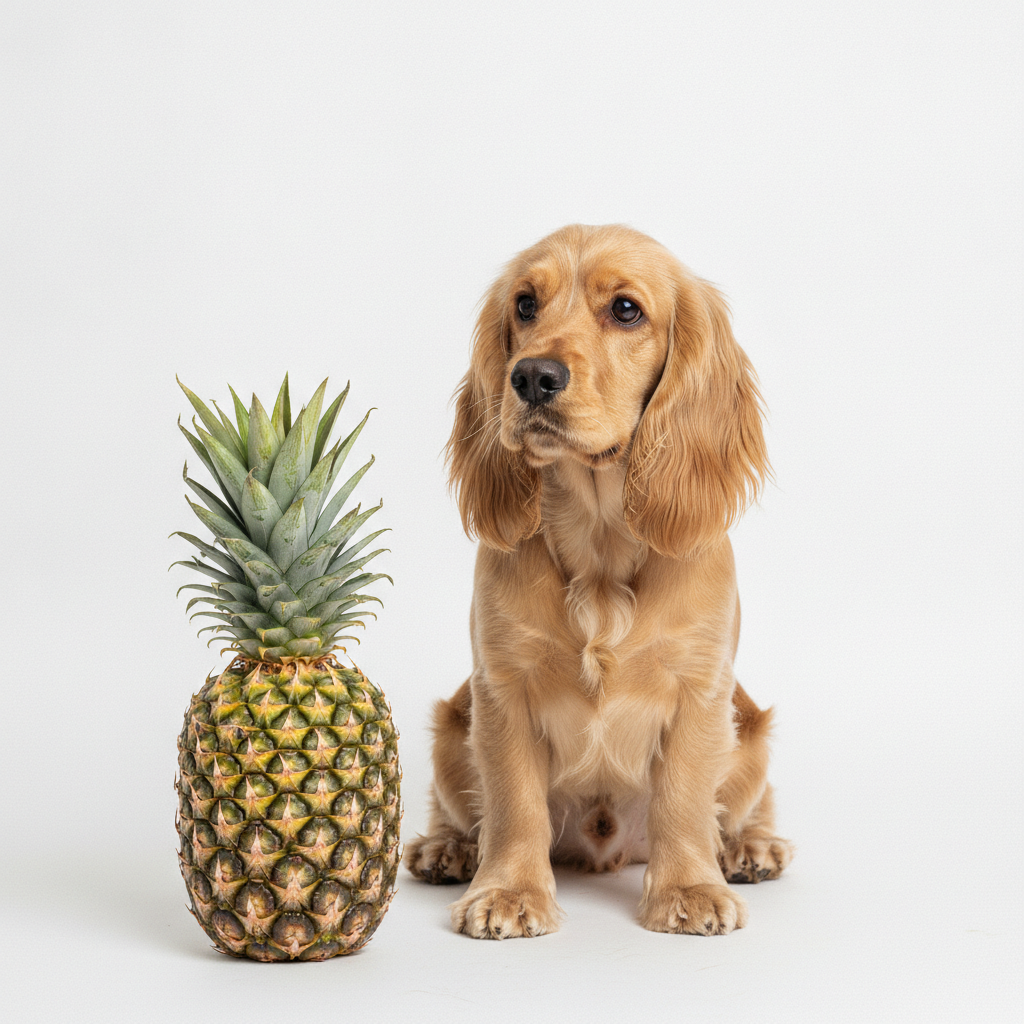
Somewhere along the way, pineapple picked up a reputation as either a miracle dog snack or a fruit to fear. Neither is true. The soft yellow flesh is genuinely fine for most dogs, and dogs tend to love the sweet-tart hit of it. What trips people up is everything around that flesh: the woody core, the spiky rind, and the fact that pineapple is one of the sweeter fruits you can hand over without thinking about it. Get those three things right and pineapple is a perfectly good treat.
What pineapple actually gives your dog
Pineapple is not empty sugar water. The flesh carries vitamin B1 (thiamin) and vitamin B6, plus minerals like iron, magnesium, and potassium that support normal nerve, muscle, and immune function. It is also a strong source of vitamin C. That last one matters less for dogs than it does for us: humans cannot make our own vitamin C and have to eat it, but healthy dogs produce vitamin C on their own, so they do not depend on fruit to get it.
Pineapple’s most talked-about ingredient is bromelain, an enzyme that breaks down protein and has been studied for its role in digestion and inflammation. It is real, and it is interesting, but the amount your dog gets from a couple of chunks of fruit is small. Think of pineapple as a pleasant, nutrient-carrying treat, not a supplement.
People hear ‘enzyme’ and picture pineapple doing something dramatic inside the dog, and it just doesn’t work that way at snack-sized portions. I’d rather owners think about pineapple the way they think about any sweet fruit: nice in small amounts, easy to overdo, and never a substitute for a balanced bowl.
The three parts that cause problems
Here is where most pineapple mistakes happen, and none of them involve the fruit being toxic.
The core is the first one. That firm, pale cylinder running down the center is far too tough for a dog to chew down properly. Swallowed in chunks, it is a genuine choking hazard and, for smaller dogs especially, a risk of intestinal blockage. Cut it out and throw it away before your dog is anywhere near it.
The skin and crown are the second. The spiky outer rind and the leafy top are fibrous, indigestible, and rough on the mouth and gut. There is no version of pineapple prep where these belong in a dog bowl.
Sugar is the quiet third one. Pineapple tastes sweet because it is sweet, and those natural sugars add up fast if you are handing over chunk after chunk. For a dog who is overweight, diabetic, or prone to an upset stomach, a sugar load can mean weight gain over time or loose stool today. This is the part owners skip because the fruit feels healthy, so it does not register as a treat that counts against the daily total. It does.
How to serve it without the drama
Peel it, core it, and cut the flesh into bite-sized pieces sized to your dog. Offer a small amount the first time and watch for any digestive upset over the next day before making it a regular thing. Plain frozen pineapple chunks make a nice cooling summer treat, and freezing changes nothing about safety as long as nothing sweet is added.
Keep the whole thing inside the ten-percent rule: treats and table scraps together should stay under ten percent of your dog’s daily calories, with the other ninety percent coming from a complete and balanced dog food. That is what keeps a fun snack from quietly turning into a nutrition problem.
The poop myth, briefly
You have probably heard that feeding a dog pineapple stops them from eating their own stool, on the theory that bromelain makes the poop taste bad. It is a tidy story, and there is no solid evidence it works. If your dog eats poop, the fix is figuring out why, which can range from boredom to a diet or medical issue, and that is a conversation for your vet, not a bowl of pineapple.
What’s new since this was written
Pineapple safety for dogs has not changed, but the advice on artificial sweeteners around it has gotten sharper, and it is worth folding in. Cases of xylitol poisoning in dogs, a sweetener now often labeled as “birch sugar,” were among the most common poisoning calls to pet helplines in 2024 and 2025 and have more than doubled over five years. That matters for fruit lovers because “sugar-free” and “no sugar added” pineapple products, dried snacks, or yogurt-style dips can contain xylitol, which is dangerous to dogs even in small amounts.
The practical takeaway is simple. Stick to plain fresh or plain frozen pineapple with nothing added, and read the label on anything processed. If a pineapple product is sweetened without sugar, treat it as off-limits until you have confirmed it does not contain xylitol or birch sugar.
References
- Harvard T.H. Chan School of Public Health: Vitamin C
- National Center for Biotechnology Information: Properties and Therapeutic Application of Bromelain: A Review
- U.S. Food and Drug Administration: “Complete and Balanced” Pet Food
- U.S. Food and Drug Administration: Paws Off Xylitol; It’s Dangerous for Dogs
- American Kennel Club: Dangers of Xylitol for Dogs
Common questions
Can dogs eat canned pineapple?
Skip it. Canned pineapple is usually packed in syrup or juice that piles on sugar your dog does not need. Fresh or plain frozen pineapple with no added sugar is the better choice.
Can dogs eat the pineapple core or skin?
No. The tough core is a choking and blockage risk, and the spiky skin and crown are too fibrous to digest. Cut them away and offer only the soft yellow flesh.
Will pineapple stop my dog from eating poop?
Probably not. The old idea that pineapple makes stool taste bad to dogs is a myth with no real evidence behind it. If your dog eats poop, talk to your vet about the actual cause.
Not a substitute for your vet. Our guidance is educational. For urgent symptoms, contact a vet or emergency clinic right away. Editorial standards
Dr. Nair is a veterinarian focused on diet and feeding. She covers everyday nutrition, treats, and the many "can they eat this?" questions owners ask, grounding each answer in what is actually safe and sensible for dogs and cats.
Meet our experts ↗Keep reading
 FoodLettuce Does Almost Nothing for Your Dog. Here's When It's Still Worth Feeding.Dr. Amara Solis · 5 min
 FoodA Marshmallow Is Harmless for Dogs, Until One Word Is on the BagDr. Mara Chen · 5 min
 FoodCinnamon Isn't the Problem for Your Dog. What's Next to It IsDr. Lena Park · 5 min
 FoodThe Lowest-Sugar Berry in the Bowl Belongs to Your DogDr. Lena Park · 6 min
 FoodPapaya for Dogs: The Enzyme Is the Point, and Also the CatchDr. Priya Nair · 6 min
 FoodRaw Sesame Seeds Pass Right Through Your Dog. Toast Them or Skip Them.Dr. Nina Kohl · 4 min