


Papaya for Dogs: The Enzyme Is the Point, and Also the Catch
Papaya isn't just another dog-safe fruit. Its papain enzyme and heavy fiber load are what make it useful, and the exact reason some dogs should skip it. Here's how to tell which dog you have.

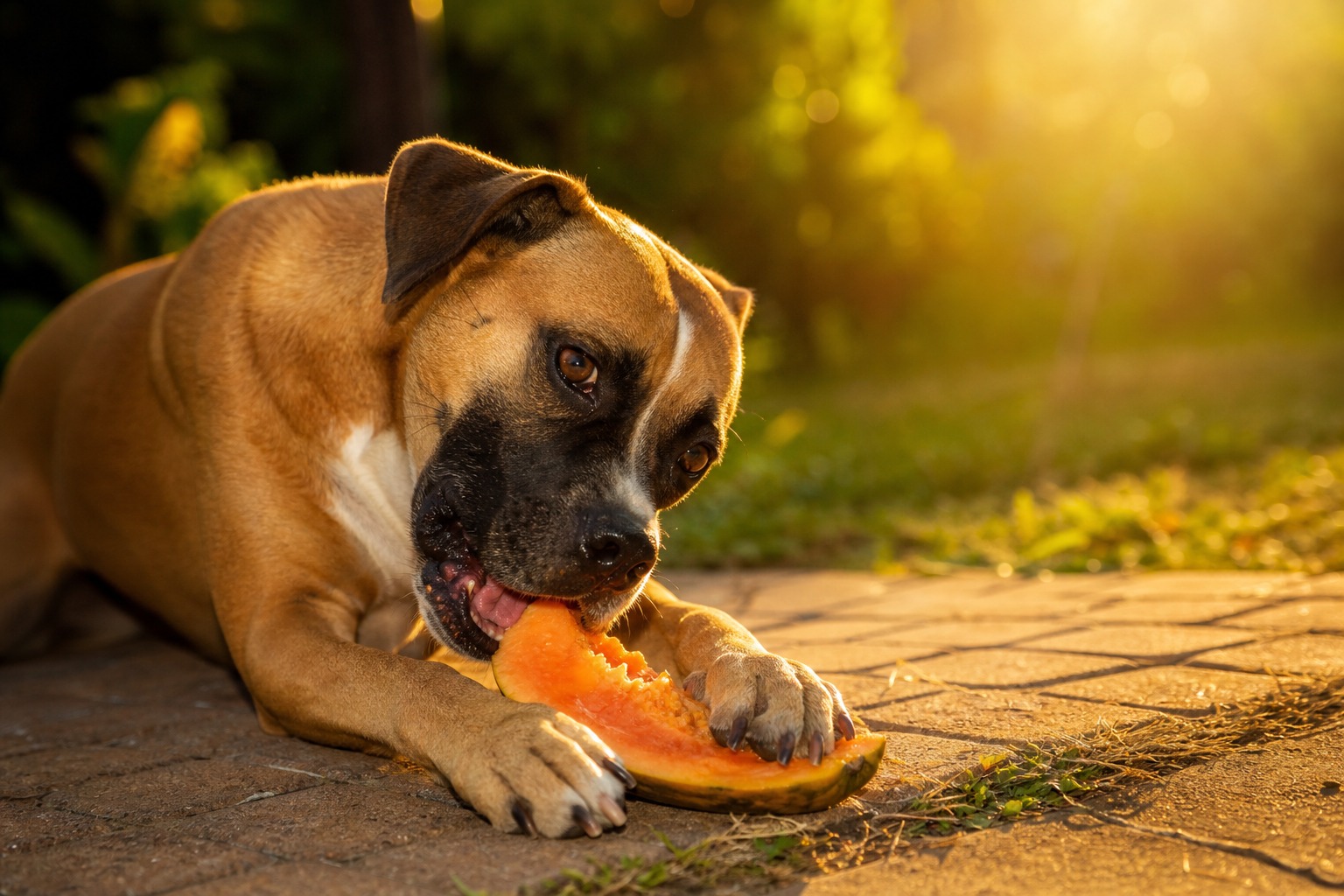
Papaya keeps showing up on “fruits dogs can eat” lists, filed next to apples and blueberries as one more sweet, safe thing to hand over. That framing sells it short and misses the one thing that actually makes papaya interesting for a dog: it is not just sugar and fiber, it carries an active enzyme called papain. And here is the twist most articles skip. The very features that make papaya worth offering, the enzyme and the heavy fiber load, are the same features that make it a bad idea for a specific set of dogs. So the real question is not “can dogs eat papaya.” It is “is your dog one of the ones who should.”
What papain actually is, and why it gets papaya its reputation
Papain is a protein-digesting enzyme that concentrates in fresh papaya, especially when the fruit is slightly underripe. It is the reason papaya turns up in meat tenderizers and in a whole shelf of digestive supplements, and it is the origin of papaya’s folk reputation as a tummy soother.
Two honest caveats keep this from being a miracle claim. First, papain is heat-sensitive, so any cooked, dried, or heavily processed papaya has lost most of the enzyme, which is one more reason fresh is the only version worth bothering with. Second, there is no established therapeutic dose of papain for dogs, so treat any digestive benefit as a pleasant maybe, not a reason to start dosing your dog with fruit. If your dog has genuine digestive trouble, that is a conversation with your vet, not a papaya prescription.
The nutrition, briefly and accurately
Beyond the enzyme, fresh papaya brings a genuinely useful nutrient profile in small amounts:
- Vitamins A, C, E, and K, supporting immune function and helping the body build proteins. The beta-carotene behind that vitamin A also acts as an antioxidant.
- Soluble fiber, which supports the gut and helps keep digestion regular.
- Minerals including calcium and potassium for bone and muscle function.
That is a nice list. It is also the setup for the catch.
The catch: fiber and sugar cut both ways
Papaya is high in fiber and high in natural sugar, and each has a flip side. A little fiber keeps things moving. Too much, in a dog whose gut is not used to it, does the opposite and produces loose stool or an upset stomach. The sugar is fine as an occasional treat but adds up fast, which is why portion discipline matters more here than with a low-sugar fruit.
That leads to a clear line between the dogs who can enjoy papaya and the dogs who should not:
- Fine for papaya: a healthy dog with a normal stomach, offered a few small cubes of fresh flesh, occasionally.
- Skip papaya entirely: any dog with pancreatitis or a history of it, any dog with diabetes (that sugar load is a real problem), and any dog with food allergies or a chronically sensitive gut.
As with any new food, introduce a tiny amount first and watch, and check with your vet if your dog has any ongoing health condition.
How to serve it so it does more good than harm
Fresh and ripe is the whole game. Scoop out the flesh, discard the skin and the seeds, and cut the flesh into small, size-appropriate cubes. A large dog can have a few cubes; a small dog, a bite or two. Keep it well within the ten-percent-of-daily-calories treat allowance, and never let it replace a meal of complete, balanced dog food.
Two parts are non-negotiable to remove. The skin is too thick and fibrous for a dog to digest and can lodge as an intestinal obstruction. The seeds can irritate the stomach and contain trace cyanide-releasing compounds, so they go in the trash, not the bowl.
I like papaya as an occasional treat for the right dog, and the fiber is a genuine bonus. But I spend more time telling people who it’s wrong for. If your dog has ever had pancreatitis or is diabetic, this sweet, fibery fruit is not the treat for them, no matter how much they beg.
Where papaya sits among other fruits
If papaya turns out to be a poor fit, plenty of other fruits are gentler bets. Peaches are safe in moderation as a sweet treat, pears are juicy and refreshing on a hot day, and blackberries pack antioxidants into a low-mess snack. Steer clear of the genuine hazards: grapes are toxic and never acceptable, persimmon skin and seeds can cause blockages, and watermelon seeds and rind are a choking and digestion problem even though the flesh is fine.
The bottom line
Papaya is more than a filler entry on a safe-fruits list. Its papain enzyme and fiber are what make it worth a spot in some dogs’ treat rotation, and those same traits are exactly why dogs with pancreatitis, diabetes, allergies, or delicate stomachs should pass. Match the fruit to the dog, keep it fresh, small, and occasional, ditch the skin and seeds, and papaya earns its place. Force it on the wrong dog and it does not.
References
- U.S. Department of Agriculture, FoodData Central. “Papayas, raw” (full nutrient profile, fiber and sugar per 100 g).
- Amri E, Mamboya F. “Papain, a Plant Enzyme of Biological Importance: A Review.” American Journal of Biochemistry and Biotechnology (papain as a heat-labile cysteine protease).
- National Center for Biotechnology Information, PubChem. “Benzyl isothiocyanate” and cyanogenic glycoside content of Carica papaya seeds.
- ASPCA Animal Poison Control Center. “People Foods to Avoid Feeding Your Pets.”
- Tufts University Cummings Veterinary Medical Center, Clinical Nutrition Service. “Nutrients Essential for Dogs” and treat-allowance guidance (treats under 10 percent of daily calories).
Common questions
What is papain and does it help my dog?
Papain is a protein-digesting enzyme concentrated in fresh papaya. It is the basis for papaya's reputation as a digestive aid, but the enzyme is heat-sensitive, so cooked or heavily processed papaya loses most of it, and there is no established dose for dogs.
Can dogs eat dried papaya?
It is best avoided. Drying concentrates the sugar and shrinks the portion, making it very easy to overshoot and upset a dog's stomach. Fresh is the only form worth offering.
What parts of the papaya are off-limits?
The skin, which is too thick to digest and can cause a blockage, and the seeds, which can irritate the stomach and contain trace cyanide compounds.
Not a substitute for your vet. Our guidance is educational. For urgent symptoms, contact a vet or emergency clinic right away. Editorial standards
Dr. Nair is a veterinarian focused on diet and feeding. She covers everyday nutrition, treats, and the many "can they eat this?" questions owners ask, grounding each answer in what is actually safe and sensible for dogs and cats.
Meet our experts ↗Keep reading
 FoodLettuce Does Almost Nothing for Your Dog. Here's When It's Still Worth Feeding.Dr. Amara Solis · 5 min
 FoodOne Tater Tot Won't Kill Your Dog. The Fifth One Might Ruin Your Night.Dr. Ravi Mehta · 5 min
 FoodButternut Squash Is a Cozy Win for Dogs. Skip One PartDr. Amara Solis · 5 min
 FoodKale Is a 'Superfood.' For Dogs, It Comes With a Catch.Dr. Priya Nair · 5 min
 FoodThe Xylitol in Raspberries Sounds Scary. The Math Says Feed Them AnywayDr. Mara Chen · 6 min
 FoodBeef Jerky and Dogs: The Word Tells You Nothing, the Label Tells You EverythingDr. Mara Chen · 7 min