


Beef Jerky and Dogs: The Word Tells You Nothing, the Label Tells You Everything
"Jerky" is a texture, not a recipe. Whether a strip is a fine treat or a vet visit comes down to the ingredient list, so here is the 10-second label check that sorts them out.

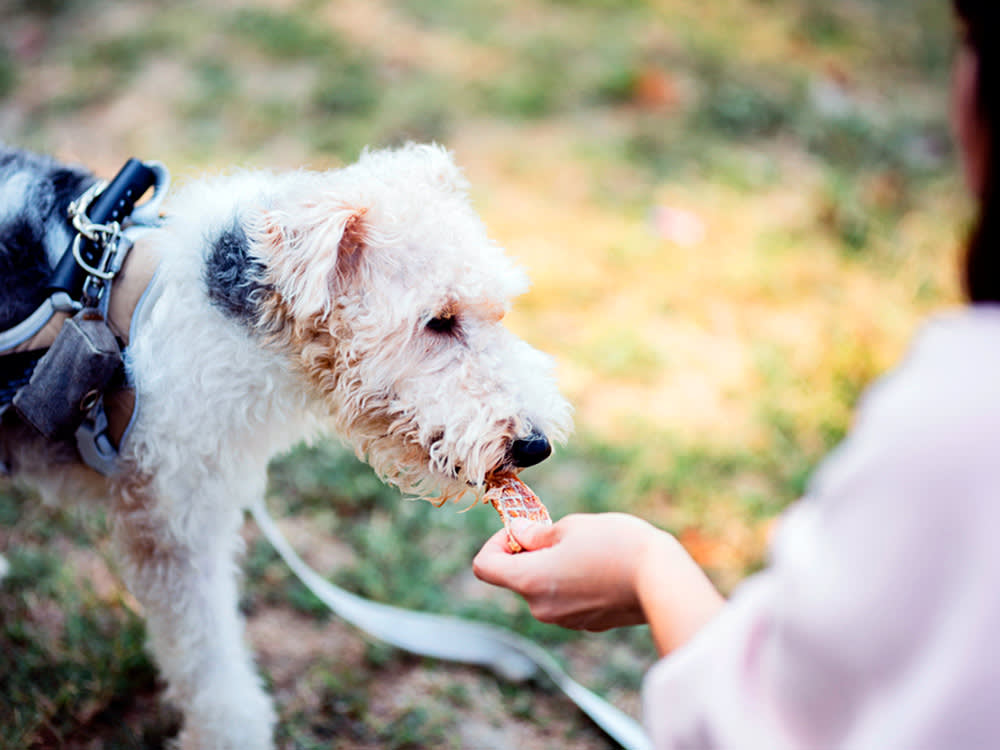
Here is the thing almost every “can my dog eat jerky” question gets wrong from the start: it treats jerky like a single food. It is not. Jerky is a texture, dried, chewy strips of meat, and the word tells you nothing about what is actually in the bag. One strip can be nothing but lean beef. The strip right next to it can be soaked in teriyaki glaze, dusted with garlic and onion powder, and salted to the edge of what a human palate enjoys, which is well past what a dog’s body can handle.
So the honest answer to “can dogs have beef jerky” is not a yes, a no, or even a maybe. It is: read the label, because the label is the whole answer. A plain, single-ingredient strip is a genuinely good treat. A typical grocery-store strip made for people is a bad idea, and sometimes a dangerous one. Same word, opposite verdicts. This article is built to get you to the right verdict in about ten seconds.
The 10-second label check
You do not need to memorize toxicology to feed jerky safely. You need to run four quick scans on the ingredient panel before a single piece reaches your dog:
- Alliums. Garlic and onion, in any form, are the deal-breakers. They damage red blood cells and can cause anemia, and they hide inside vague terms like “natural flavors” and “spices.” See them, or suspect them, and the strip is out.
- Sodium. Glance at the milligrams of sodium per serving. Most human jerky lands around 400 to 600 mg per ounce, which is a lot of salt for a body that weighs a fraction of yours.
- Xylitol and sweeteners. Scan for xylitol (sometimes labeled “birch sugar”), which is extremely toxic to dogs even in tiny amounts, plus heavy sugar and sticky sweet glazes.
- Piece size. If the only clean strip you have is big and leathery, tear it small, especially for little dogs and enthusiastic gulpers.
Pass all four and you have a fine occasional treat. Fail any one and you have a snack that belongs to you, not your dog. Everything below is just the reasoning behind those four scans.
Why “made of meat” fools people
Beef jerky reads as the ideal dog food. It is protein-dense, low in carbohydrates, and satisfyingly chewy, and none of that is wrong. A safely made strip really does deliver:
- Protein to support muscle and energy.
- Low carbohydrate load, which suits dogs on low-carb or grain-free plans.
- A long-lasting chew that fights boredom and gives teeth something to work on.
The problem is that the same qualities that make jerky appealing are exactly why it gets so heavily seasoned. Drying concentrates flavor, so manufacturers lean on salt, sugar, smoke, and allium powders to make a shelf-stable strip taste like something. The nutrition survives the drying. So do the additives, in concentrated form.
The ingredients that turn a treat into a hazard
When a strip fails the label check, these are usually why:
- Garlic and onion powder: damage red blood cells and can cause hemolytic anemia. Powdered forms are far more concentrated than the fresh vegetable, so a dusting is not a trivial dose.
- Xylitol: a sugar substitute that is dangerously toxic to dogs even in small amounts.
- Excess sodium: can lead to salt poisoning and dehydration, with early signs of heavy thirst, restlessness, and tremors.
- Spices and chili powder: irritate the gut and can bring on vomiting or diarrhea.
- Nitrates and nitrites: preservatives that may be harmful in large amounts over time.
Layer those onto the fact that some jerky is genuinely high in fat, which can inflame the pancreas in prone dogs, and you can see why a “protein snack” sends dogs to the clinic.
Jerky is the treat where the marketing works against the dog. It looks like a pure protein reward, but a single strip of garlicky, heavily salted human jerky can make a small dog genuinely sick. My rule for clients is simple: if you cannot read the ingredient list and vouch for every line, the dog does not get that strip. Buy dog-specific jerky or dry your own, and the question disappears.
A caution that applies even to some dog jerky
Reading the label is not only about human snacks. There is a piece of regulatory history every jerky-buyer should carry.
For more than a decade, the U.S. Food and Drug Administration investigated a wave of illnesses tied specifically to jerky pet treats, many of them imported. By the FDA’s own tally, the reports involved more than 6,200 dogs and over 1,140 canine deaths, drawn from roughly 5,200 complaints through the end of 2015. A striking share of the sick dogs developed an acquired kidney disorder called Fanconi-like syndrome, normally a rare, mostly inherited condition. Despite years of testing, investigators never pinned down a single contaminant or cause, and the agency eventually scaled back the active investigation as new reports declined.
The practical lesson is not “never buy jerky.” It is that the jerky category has a real, unresolved safety history, so knowing your source and reading the bag matters even for treats sold for dogs. If your dog ever shows the Fanconi-like pattern, sharply increased drinking and urination, lethargy, and loss of appetite, after eating jerky treats, call your vet promptly and mention the treats by name.
If your dog raids the bag
A dog that gets into human jerky needs to be taken seriously, because the risk scales with the amount eaten and what was in it. Watch for:
- Pale gums, a possible sign of anemia
- Tremors, seizures, or disorientation
- Loss of appetite
- Lethargy or weakness
- Drooling or pawing at the mouth
- Vomiting or diarrhea
- Excessive thirst or urination
Call your vet immediately if any of these appear, or if you simply do not know what was in the jerky. With alliums and salt, an early call beats waiting to see.
Make your own and skip the guesswork
The surest way to pass the label check is to be the label. Homemade jerky is easy and puts every ingredient under your control:
- Slice lean beef (round, sirloin, or flank steak) into thin strips about a quarter inch thick.
- Preheat the oven to 160 to 170 degrees Fahrenheit, or set up a dehydrator.
- Arrange the strips on a wire rack over a baking sheet so air circulates.
- Dry for six to eight hours, flipping halfway through.
- Cool completely, then store in an airtight container in the fridge for up to two weeks or the freezer for up to three months.
No salt, no seasoning, no marinade, no sauce. That is the entire recipe, and it is the whole point.
Lower-effort safe swaps
If you would rather not dry anything, these single-focus chews cover the same “chewy, meaty reward” craving:
- Freeze-dried single-ingredient meats from the pet store
- Air-dried liver treats
- Dehydrated sweet potato slices
- Dental chews sized for your dog
- Crunchy veggie sticks like carrot, cucumber, and green bean
The bottom line
Beef jerky is not one food with one answer. It is a texture that can wrap either a clean strip of meat or a salty, garlicky snack that lands a dog at the vet. Run the ten-second label check, alliums, sodium, sweeteners, piece size, before you share. When the label is clean, jerky is a fine occasional treat. When it is not, the strip is yours. And when in doubt, dog-specific jerky or a homemade batch takes the guesswork out entirely.
FAQs
Can puppies eat beef jerky?
Hold off for at least the first six months. The choking risk is higher and puppy digestive systems are more easily upset. Stick to treats formulated for their age.
Can dogs eat beef jerky?
Only if it passes the label check: plain, unseasoned, no garlic or onion, low sodium, no xylitol. Most jerky made for humans fails at least one of those.
Can dogs eat Jack Link’s beef jerky?
No. Popular human brands typically contain garlic and onion powder along with heavy salt and sugar, which is exactly the profile to avoid.
Can beef jerky cause blockages in dogs?
Yes, especially when large, tough pieces are swallowed without chewing. Small dogs and gulpers are most at risk, so tear strips into small pieces.
Is human beef jerky safe for dogs?
Usually not, because of seasonings, salt, and additives. If a label shows nothing but meat, no garlic, onion, sweeteners, or preservatives, it is likely fine, but dog-specific or homemade jerky is the safer default.
References
- “FDA Investigates Animal Illnesses Linked to Jerky Pet Treats.” U.S. Food and Drug Administration. https://www.fda.gov/animal-veterinary/outbreaks-and-advisories/fda-investigates-animal-illnesses-linked-jerky-pet-treats
- Nybroe, Stinna, et al. “Outcome of Acquired Fanconi Syndrome Associated with Ingestion of Jerky Treats in 30 Dogs.” Animals, vol. 12, no. 22, 2022, p. 3192. https://doi.org/10.3390/ani12223192
- Merck Veterinary Manual. “Garlic and Onion (Allium spp) Toxicosis in Animals.” https://www.merckvetmanual.com/toxicology/food-hazards/garlic-and-onion-allium-spp-toxicosis-in-animals
- Cummings Veterinary Medical Center, Tufts University, Clinical Nutrition Service. “The Truth About Treats.” https://vetnutrition.tufts.edu/2016/09/the-truth-about-treats/
Not a substitute for your vet. Our guidance is educational. For urgent symptoms, contact a vet or emergency clinic right away. Editorial standards
Dr. Chen is a small-animal veterinarian who leads health and safety coverage at The Pet Times. She writes and reviews the bulk of our illness, condition, and safety content, translating clinical guidance into clear, practical advice owners can act on at home.
Meet our experts ↗Keep reading
 FoodWatermelon Is a Great Dog Treat. Two Parts Are NotDr. Priya Nair · 5 min
 FoodTwo Goldfish Crackers Are Fine. Here's the Number That Isn't.Dr. Mara Chen · 5 min
 FoodPopcorn Is a Great Dog Treat, Until You Touch the ToppingsDr. Priya Nair · 7 min
 FoodCauliflower for Dogs: A Filling Snack With One Gassy CatchDr. Lena Park · 6 min
 FoodKale Is a 'Superfood.' For Dogs, It Comes With a Catch.Dr. Priya Nair · 5 min
 FoodWith Peanuts, Read the Jar Before You Read the DogDr. Lena Park · 7 min