


Popcorn Is a Great Dog Treat, Until You Touch the Toppings
Air-popped popcorn is one of the few human snacks that genuinely suits dogs: low-calorie, high-fiber, and satisfying. The risks are not the corn at all. They are the butter, the salt, and two physical hazards owners forget.

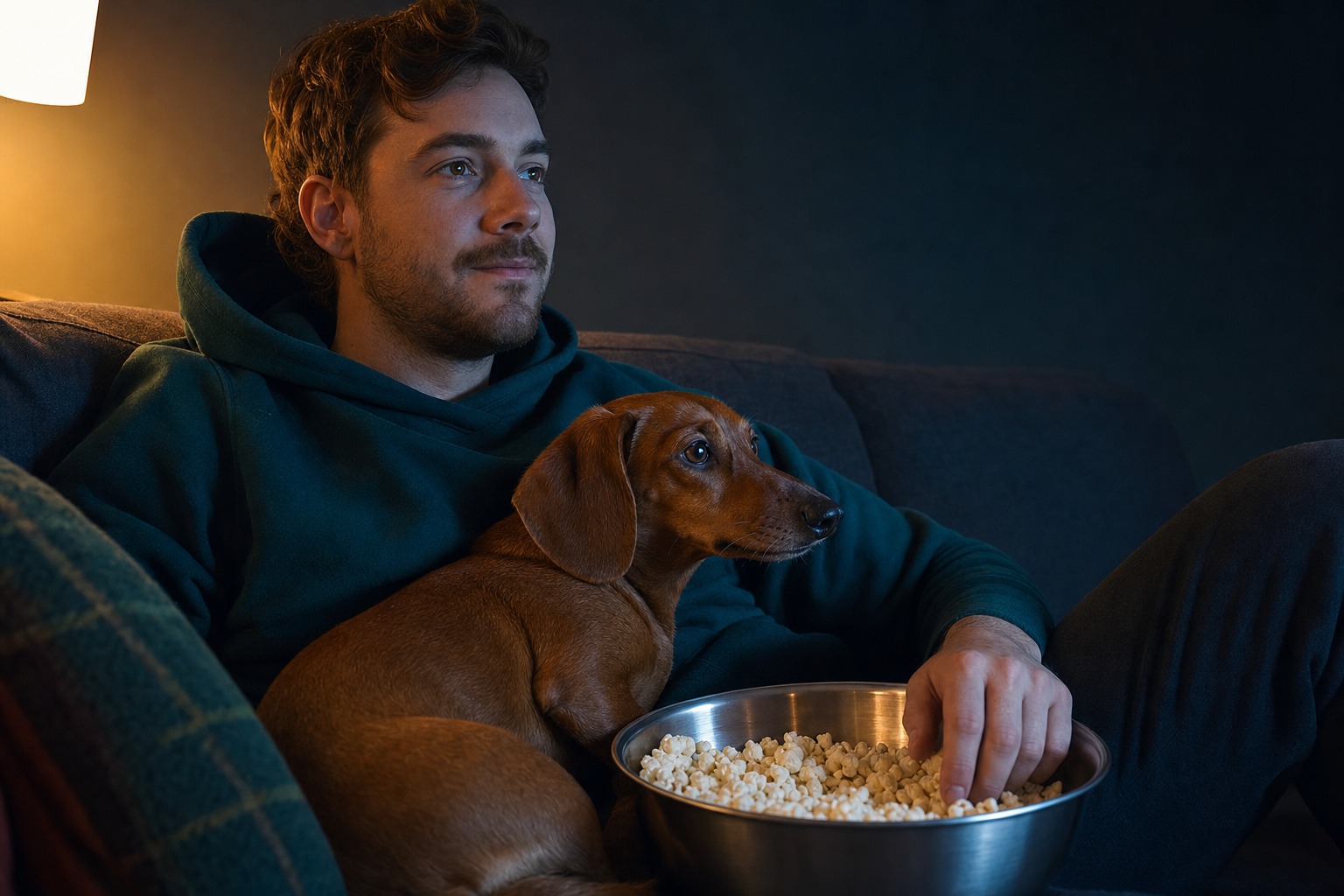
Most “can my dog eat this” snack foods land somewhere between “harmless in a pinch” and “please don’t.” Popcorn is a rare exception: air-popped and plain, it is a treat that genuinely fits a dog’s needs. It is very low in calories for its volume, high in the kind of fiber that helps a dog feel full, and satisfying to crunch. If you were designing a light training treat from a human pantry, plain popcorn would be a strong candidate.
That is the part people get backwards. They worry the corn itself might be risky, when the corn is the good part. Everything that goes wrong with popcorn and dogs comes from two places: the flavorings we add to make it taste like movie-night popcorn, and two physical hazards, un-popped kernels and choking, that have nothing to do with nutrition. Sort those out and popcorn becomes one of the easiest treats to share.
What popcorn actually is, and why the plain version works
Popcorn is a specific type of corn with just the right internal makeup to burst. Each kernel holds starch and protein plus a little water and oil, all sealed in a tough hull. Apply enough heat and the trapped water flashes to steam, the pressure builds, and the kernel essentially explodes into the fluffy shape you eat.
What you are eating is mostly the starchy interior, which delivers carbohydrate energy and a good dose of insoluble fiber. For a dog, that fiber is the quiet benefit: it adds bulk and a feeling of fullness without many calories, which is exactly what you want in a treat for a dog watching their weight. Popped kernels also carry trace amounts of iron, magnesium, and B vitamins. A complete dog food already covers those, so treat them as a small bonus, not a reason to feed popcorn.
Green light, red light: how to prep it
The single most useful thing to know about popcorn and dogs is which version you are holding. Here is the split:
Green light (share a little):
- Air-popped, with nothing on it
- Fully popped, with any un-popped kernels picked out
- Broken into smaller pieces for small dogs
- Kept to a small handful as an occasional treat
Red light (keep it for yourself):
- Buttered or oiled
- Salted, or dusted with cheese powder or seasoning
- Kettle corn or caramel corn (heavy sugar)
- Anything with onion or garlic powder, or a chocolate drizzle
- Microwave popcorn with heavy flavor packets
The green-light column is a real treat. The red-light column is where the trouble lives, and the trouble is worth spelling out.
The toppings, and why they matter more than the corn
- Salt. Store-bought and movie popcorn is often heavily salted, and a dog’s much smaller body handles far less sodium than yours. Make it at home and leave your dog’s portion bare.
- Butter and oil. Buttery popcorn is delicious and exactly the kind of sudden fat load that can upset a dog’s stomach and, in prone dogs, contribute to pancreatitis.
- Sugary coatings. Kettle corn and caramel corn pile on sugar and empty calories.
- Toxic add-ins. Some flavored popcorn carries onion or garlic powder or a chocolate coating, all of which are genuinely toxic, not just unhealthy.
- Diacetyl, in context. You may have heard about diacetyl in artificial butter flavoring. The concern was lung disease from chronically inhaling the fumes during manufacturing, not from eating the popcorn, and many major brands dropped it years ago. It is not a reason to fear a plain kernel.
Popcorn is one of the few crossover snacks I am actually happy to see a dog get. But only the plain, air-popped kind. The second it is buttered and salted, you have turned a low-calorie, high-fiber treat into a stomachache waiting to happen. The corn was never the issue.
The two hazards that have nothing to do with flavor
Even perfectly plain popcorn carries two physical risks that owners routinely overlook.
Un-popped kernels can crack teeth. This is the one people miss. A dog that bites down hard on a stray un-popped kernel can suffer a slab fracture, a chunk breaking off one of the large chewing teeth. Fractures of those teeth are among the more common dental injuries dogs get from hard objects, and a rock-hard kernel is exactly the small, dense item that causes one. Swallowing one or two whole is usually harmless, but a mouthful of kernels can also cause bloating, gas, and, in large amounts, a constipation-like backup. Pick the kernels out before you share.
Whole pieces can choke a dog. Popcorn is a known choking hazard for small children, and the same shape and texture can catch in a dog’s airway, especially in small dogs with narrower throats who struggle to chew it. Smashing or breaking the popped pieces into smaller bits is a simple fix.
How much, and for which dogs
Because air-popped popcorn is so light, a small handful is only a few calories, which makes it easy to keep treats under the standard 10-percent-of-daily-calories guideline. One exception worth flagging: a dog who needs to limit carbohydrates, such as a diabetic dog, is not a great candidate for a starchy snack, so check with your vet first. And as with any new food, start with a taste and watch for gagging, vomiting, diarrhea, or facial swelling before it becomes a regular thing.
Better and worse, at a glance
Other easy, safe crunchy treats: carrot coins, cucumber slices, and a few blueberries. Keep firmly off the menu: grapes and raisins, avocado, chocolate, and anything with onion or garlic.
The bottom line
Plain, air-popped popcorn is a genuinely good dog treat, light, fibrous, and satisfying, and the corn is the safe part. The risks all sit elsewhere: the butter, salt, and seasonings that turn it into movie snack, and the two physical hazards, un-popped kernels that can crack a tooth and whole pieces that can choke. Keep it air-popped and bare, pick out the kernels, break big pieces up, and hold the portion small. Do that and popcorn earns its rare spot on the dog-friendly list.
References
- Cummings Veterinary Medical Center, Tufts University, Clinical Nutrition Service. “The Truth About Treats.” https://vetnutrition.tufts.edu/2016/09/the-truth-about-treats/
- American Veterinary Dental College. “Fractured Teeth.” https://afd.avdc.org/fractured-teeth/
- ASPCA Animal Poison Control. “People Foods to Avoid Feeding Your Pets.” https://www.aspca.org/pet-care/animal-poison-control/people-foods-avoid-feeding-your-pets
- U.S. Department of Agriculture, FoodData Central. “Snacks, popcorn, air-popped.” https://fdc.nal.usda.gov/
Common questions
Is it OK to give dogs popcorn?
Yes, plain air-popped popcorn is fine in small amounts. The moment it is buttered, salted, or seasoned, it stops being a good idea.
Why do dogs like popcorn?
Dogs are drawn to the crunch and the starchy taste, and they are often curious simply because they see you enjoying it.
Can dogs eat un-popped kernels of popcorn?
No. Hard, un-popped kernels can crack a tooth if a dog bites down on one, and a pile of them can cause digestive upset because the indigestible hulls have to pass all the way through.
Is popcorn safe for dogs?
Plain, fully popped, air-popped popcorn is safe in small amounts. Break large pieces up, skip the toppings, and pick out any un-popped kernels first.
Not a substitute for your vet. Our guidance is educational. For urgent symptoms, contact a vet or emergency clinic right away. Editorial standards
Dr. Nair is a veterinarian focused on diet and feeding. She covers everyday nutrition, treats, and the many "can they eat this?" questions owners ask, grounding each answer in what is actually safe and sensible for dogs and cats.
Meet our experts ↗Keep reading
 FoodPapaya for Dogs: The Enzyme Is the Point, and Also the CatchDr. Priya Nair · 6 min
 FoodThe Fruit Is Never the Problem. It's the Pit, the Skin, and the Seasoning.Dr. Priya Nair · 8 min
 FoodYour Meatloaf Could Hospitalize Your Dog. This One Won't.Dr. Lena Park · 7 min
 FoodThat Lemon Face Your Dog Makes Is a 40,000-Year-Old Survival TrickDr. Lena Park · 6 min
 FoodPistachios and Dogs: A Not-Toxic Food That's Still Not Worth ItDr. Mara Chen · 6 min
 FoodTwo Goldfish Crackers Are Fine. Here's the Number That Isn't.Dr. Mara Chen · 5 min