


That Lemon Face Your Dog Makes Is a 40,000-Year-Old Survival Trick
Dogs can absolutely taste sour, they just hate it, and that dramatic pucker is doing a real job. Here's the evolutionary reason your dog recoils from anything sharp.


Hand a dog a slice of lemon and you get a short performance: the muzzle scrunches, the lips smack, the head pulls back, and you get a look of pure betrayal. It is one of the internet’s favorite pet clips. It is also widely misread. People treat the sour face as proof that dogs are picky, or that their taste is broken. It is the opposite. That reaction is one of the oldest, best-working pieces of equipment your dog owns.
The thesis of this piece is simple: your dog’s disgust at sour isn’t a flaw in its palate, it’s a feature that kept its ancestors alive. Dogs taste sour just fine. Hating it is the whole point.
Dogs taste more than most people think
A dog’s tongue carries taste buds that detect the same five basic categories people register: sweet, salty, bitter, umami, and sour. Tens of thousands of years of sharing human food likely nudged canine taste toward ours. So the flavors are all there. What differs is resolution.
Dogs carry roughly 1,700 taste buds, against about 9,000 in people. Fewer sensors means less nuance. A dog can clearly tell that a lemon is sour, but probably doesn’t register the bright, layered tang that makes some people crave sour candy or a squeeze of lime. It gets the headline, not the fine print. That gap matters for what comes next, because a blunt, unmistakable “this is sour” signal is exactly what a survival alarm should be.
The pucker is an alarm, not an opinion
Sourness comes from acid, and in the natural world, acid is a clue. Unripe fruit is sharp and hard to digest. Fruit that has tipped over into rot and fermentation turns tangy and can carry bacteria that cause real gastrointestinal trouble. A quick, decisive recoil from that sharp taste, and often from the tangy smell that arrives a beat earlier, keeps an animal from filling up on something that will make it sick.
So the drama isn’t your dog being a diva. It is an avoidance reflex firing on schedule. The scrunched face, the frantic lip-licking, the retreat, that is a body saying “wrong food, abort” as loudly as a body can.
That exaggerated reaction isn’t your dog being dramatic, it’s a warning system doing its job. A sharp sour taste in the wild usually meant unripe or turning food, so a dog that flinched hard and walked away was a dog that stayed out of trouble. We bred the manners, not the instinct.
Bitter runs on the same wiring
Sour has a twin, and it’s bitter. Dogs reject bitter flavors for the same protective reason: in nature, bitterness often flags a toxin. A dog that spits out the first bitter, tannic mouthful and moves on is a dog avoiding poison.
Every pet parent who has tried to hide a pill knows this reflex intimately. Tuck a bitter tablet in a treat and many dogs will delicately eat around it, or bite in, recoil, and leave you with a puddle of drool and no medicated dog. The same instinct that protects them in the wild makes them maddening at the medicine cabinet.
Humans have even weaponized the bitter reflex for safety. Antifreeze contains ethylene glycol, which tastes dangerously sweet and has poisoned countless pets and children. The Antifreeze Bittering Act pushed manufacturers to add a bitter agent, usually denatonium benzoate, to make it repellent, and many states adopted the rule in the early 2000s. The same idea powers the bitter sprays sold to stop dogs from chewing cords, bandages, and furniture.
When the survival reflex misfires
The system isn’t perfect. It is built to flag sourness and bitterness as danger, but plenty of tart, dog-safe foods trip the alarm anyway. That is worth knowing, because a dog turning up its nose isn’t always a verdict on whether a food is good for it.
The bigger risk runs the other direction, in the sour and sweet foods people actually eat. Sour candies pair that pucker-inducing tang with a heavy sugar load. Sour pickles carry a lot of salt. Sharp citrus can irritate a dog’s stomach and, in large amounts, the peels and oils cause trouble. So the smart move is to respect the instinct rather than override it for a laugh, and to keep the tempting sour snacks on your side of the table.
The one weirdo exception
There is always the outlier dog that seems to relish lemon pulp or begs for a lick of something sharp. That doesn’t break the rule, it just proves individual taste exists, the same way a few people love the most punishing sour candy on the shelf. For nearly every other dog, the recoil is the honest answer, and it is telling you something true.
What to give instead
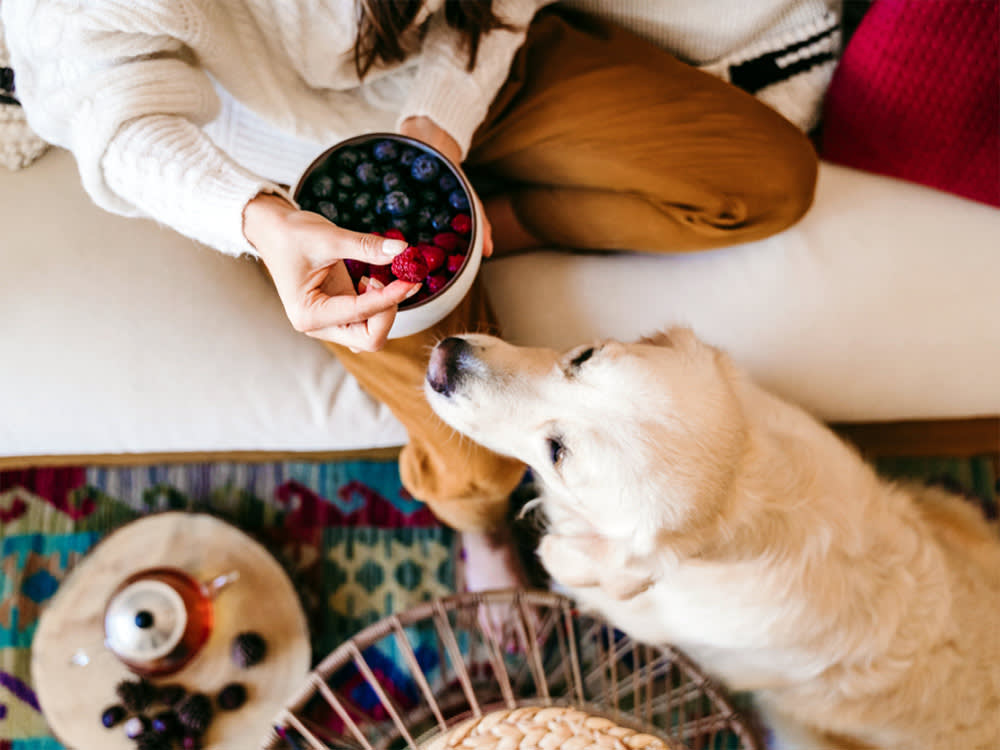
If the goal is a fun, safe treat, skip the sour experiment and reach for foods dogs are built to enjoy. Small amounts of dog-safe fruit like blueberries or watermelon deliver a little natural sweetness without the acid assault, and they come without the sugar-and-salt baggage of the human snacks that make dogs pull that famous face. Let the lemon stay in your drink.
What’s new since this was written
Researchers are still filling in exactly how dog taste receptors work, and recent work has sharpened one part of the picture: bitter sensitivity. A 2022 study of domestic dogs in PLOS ONE mapped how canine bitter receptors respond and connected that to how well common bitter deterrents actually keep dogs from chewing and licking things they shouldn’t. The short version for pet parents is that bitter sprays are hit or miss because dogs vary in how strongly they detect bitter compounds. If a chew-stopping spray does nothing for your dog, that’s not you doing it wrong, it may simply be a dog whose bitter alarm is set low.
References
- Gibbs, M. R., Winnig, M., Riva, I., Dunlop, N., Waller, D., Klebansky, B., Logan, D. W., Briddon, S. J., Holliday, N. D., and McGrane, S. “Bitter Taste Sensitivity in Domestic Dogs (Canis familiaris) and Its Relevance to Bitter Deterrents of Ingestion.” PLOS ONE, 2022, 17(11), e0277607. https://doi.org/10.1371/journal.pone.0277607
- Kurihara, K. “Canine Taste Responses to Elements of Food Deliciousness Closely Resemble Those of Human Responses, While Rodent Responses Are Very Different from Canine Responses.” SM Journal of Nutrition and Metabolism, 2020, 6(1), 9. https://dx.doi.org/10.36876/smjnm834643
- American Veterinary Medical Association. “Antifreeze manufacturers agree to bittering agent addition.” JAVMA News, 2013. https://www.avma.org/javma-news/2013-02-15/antifreeze-manufacturers-agree-bittering-agent-addition
- InformedHealth.org. “How does our sense of taste work?” National Center for Biotechnology Information. https://www.ncbi.nlm.nih.gov/books/NBK279408/
Common questions
Why does my dog make such a dramatic face at a lemon?
That exaggerated recoil is a built-in avoidance reflex. Sour and bitter flavors often signal unripe or spoiling food in nature, so a strong 'get that out of my mouth' reaction is protective, not just theatrical.
Should I let my dog have sour treats since they can taste them?
Better not to. The foods behind that sour hit, sour candy, pickles, sharp citrus, tend to be loaded with sugar or salt or are simply irritating. Reach for dog-safe fruit instead if you want to share.
Not a substitute for your vet. Our guidance is educational. For urgent symptoms, contact a vet or emergency clinic right away. Editorial standards
Dr. Park is a board-certified emergency and critical care specialist. She reviews our health and safety content for clinical accuracy and contributes guides on recognising urgent conditions. Her focus is helping owners act quickly and correctly when it matters most.
Meet our experts ↗Keep reading
 FoodPistachios and Dogs: A Not-Toxic Food That's Still Not Worth ItDr. Mara Chen · 6 min
 FoodThe Bread Is Never the Problem. What's Baked Into It IsDr. Mara Chen · 5 min
 FoodA Cashew Won't Poison Your Dog. That's Not the Same as 'Go Ahead'Dr. Ravi Mehta · 7 min
 FoodKiwi Is Safe for Dogs. The Skin Is the Part to WatchDr. Mara Chen · 4 min
 FoodLettuce Does Almost Nothing for Your Dog. Here's When It's Still Worth Feeding.Dr. Amara Solis · 5 min
 FoodThe Xylitol in Raspberries Sounds Scary. The Math Says Feed Them AnywayDr. Mara Chen · 6 min