


The Bread Is Never the Problem. What's Baked Into It Is
Plain bread is a harmless nibble for most dogs. The real risks ride along inside it, raisins, garlic, nuts, nutmeg, xylitol, and the genuinely dangerous raw dough. Here's how to read the loaf, not just the slice.

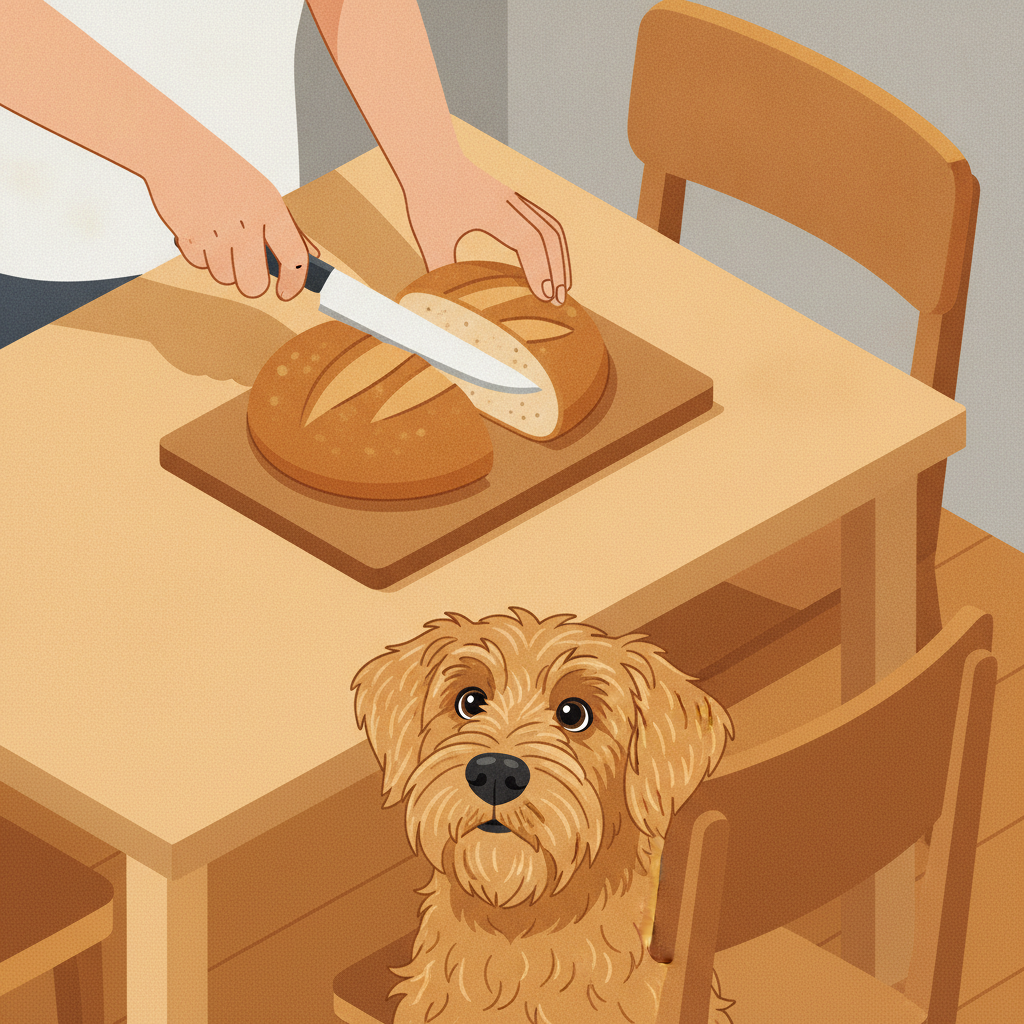
Here is the reframe that keeps a dog out of the ER: with bread, the slice is almost never the hazard. Plain bread is boring-safe. Everything that makes bread dangerous, and some of it is genuinely dangerous, gets baked into it. Raisins, garlic, nuts, nutmeg, chocolate, the sweetener xylitol, and above all raw dough. So the skill worth having is not “can my dog have bread” but “can my dog have this bread,” and that means reading the ingredients, not the loaf.
We will start with the one that is an actual emergency.
The one that’s a real emergency: raw dough
If your dog steals a rising ball of yeast dough off the counter, this is not a “watch and see” situation. Uncooked yeast dough expands in the warmth of a dog’s stomach, which can cause a painful obstruction, and, worse, the fermenting yeast produces alcohol.
The real danger with raw dough is the alcohol toxicosis that follows. It depresses the central nervous system and can cause weakness, an unsteady, drunken-looking gait, dangerously low body temperature, seizures, and coma.
If you suspect your dog ate raw dough, call your vet or an animal poison control line right away. This is the scenario that earns bread its place on any danger list, and it is worth knowing cold before it happens.
The breads to keep well out of reach
Baked breads are far safer than raw dough, but several carry add-ins that range from “not great” to “toxic.”
- Raisin bread: A hard no. Raisins and grapes are toxic to dogs and can cause kidney failure. Store any raisin loaf where your dog cannot reach it, and take even a single stolen slice seriously.
- Garlic bread: Off-limits. Garlic and other alliums like onions are toxic, causing stomach upset, vomiting, diarrhea, and in larger amounts hemolytic anemia.
- Banana bread: Skip it. Bananas themselves are fine, but banana bread is often baked with macadamia nuts or walnuts, both a choking hazard and potentially toxic, plus a lot of added sugar.
- Gingerbread: Best avoided. A bite or two probably will not hurt, but gingerbread contains nutmeg, whose compound myristicin is toxic to dogs in larger amounts and can cause GI upset, elevated heart rate and blood pressure, and even hallucinations.
Two more add-ins to scan any baked good for: chocolate and xylitol (a sugar substitute), both toxic. And breads heavy in sugar or fat can trigger stomach upset or, worse, pancreatitis.
So which plain breads are actually fine?
For a healthy dog, plain bread is a safe occasional treat, and a few loaves even carry modest perks:
- Whole wheat: A step up from white, with fewer calories and more vitamin B6, magnesium, and iron. The higher fiber can help relieve constipation.
- Rye: A denser whole-grain option with less gluten than wheat and more fiber, especially good for keeping things moving. Check the label to confirm it is truly whole grain.
- Cornbread: A yeast-free bread and a decent source of phosphorus, fine as an occasional treat, but high in carbs, sodium, and sugar, without the upside of whole-grain loaves.
The honest caveat: “safe” is not “healthy.” Bread brings little beyond starch: the carbohydrates digest down to sugar, and whatever the body does not burn, it banks as fat. It is a fine nibble, not a nutrition strategy. And if your dog has allergies, a gluten intolerance, or a touchy stomach, bread may not sit well at all.
“Run any new human food past your vet before it hits the bowl, because dogs vary, and a snack that sits fine in one can stir up trouble in another,” Dr. Chen says. “Dogs with a chronic condition especially need to stay strictly on the diet they were prescribed. Even a small detour can make them sick enough to land in the ER.”
Better-than-bread snacks (and a couple to avoid)
If you want to share something more worthwhile than a carb, a few simple swaps beat a slice of bread:
- Plain, unsweetened yogurt: Safe, healthy, and most dogs adore it.
- Dog-friendly popsicles: Made with dog-safe ingredients, a genuinely good warm-weather treat.
- Cherries (fruit only): Sweet and nutrient-rich in small amounts, once pits and stems are removed.
On the skip list: Ritz crackers (harmless in a pinch, but empty calories), tortilla chips (far too much sodium), and, again, garlic bread, never.
The bottom line
For a healthy dog, a small piece of plain bread is a fine occasional treat, not a daily habit. Keep the “read the loaf” habit and the risks nearly disappear: the danger lives in raisins, garlic, nuts, nutmeg, chocolate, xylitol, and raw dough, not in the bread itself. When choosing what to share, plainer and simpler always wins.
What the latest data says about the hidden hazards
Two of the add-in dangers have sharpened recently. The case against xylitol keeps growing: the ASPCA Animal Poison Control Center logged more than 10,000 calls about dogs eating xylitol in 2024, and the sweetener increasingly shows up in baked goods, “skinny” desserts, and even some nut butters. In early 2025, a member of Congress introduced legislation that would require foods containing xylitol to carry a clear warning about the danger to dogs.
The raisin danger is better understood, too. Researchers now believe the culprit behind grape and raisin toxicity is tartaric acid, which dogs are uniquely unable to clear efficiently, which helps explain why even a single slice of raisin bread is worth taking seriously.
FAQs
Can dogs eat bread?
Yes, healthy dogs without allergies or gluten issues can eat plain bread in moderation. It’s safe but not nutritious, so keep it occasional. The danger is the add-ins, not plain bread.
What kinds of bread are dangerous for dogs?
Raisin, garlic, banana, and gingerbread, plus anything with chocolate or xylitol. Raw yeast dough is the most dangerous of all.
Why is raw bread dough dangerous?
It expands in the warm stomach (blockage risk) and ferments into alcohol, causing potentially life-threatening alcohol toxicosis. Treat it as an emergency.
References
- “Bread Dough Toxicosis in Animals.” Merck Veterinary Manual. https://www.merckvetmanual.com/toxicology/food-hazards/bread-dough-toxicosis-in-animals
- “Paws Off Xylitol; It’s Dangerous for Dogs.” U.S. Food and Drug Administration. https://www.fda.gov/consumers/consumer-updates/paws-xylitol-its-dangerous-dogs
- “People Foods to Avoid Feeding Your Pets.” ASPCA Animal Poison Control. https://www.aspca.org/pet-care/animal-poison-control/people-foods-avoid-feeding-your-pets
- Wegenast, Colette A., et al. “Unique Sensitivity of Dogs to Tartaric Acid and Implications for Toxicity of Grapes.” Journal of the American Veterinary Medical Association, 2021. https://www.aspcapro.org/resource/toxic-component-grapes-and-raisins-identified
Not a substitute for your vet. Our guidance is educational. For urgent symptoms, contact a vet or emergency clinic right away. Editorial standards
Dr. Chen is a small-animal veterinarian who leads health and safety coverage at The Pet Times. She writes and reviews the bulk of our illness, condition, and safety content, translating clinical guidance into clear, practical advice owners can act on at home.
Meet our experts ↗Keep reading
 FoodPapaya for Dogs: The Enzyme Is the Point, and Also the CatchDr. Priya Nair · 6 min
 FoodBananas Are Basically Dog Candy. That's Exactly Why They're UsefulDr. Lena Park · 5 min
 FoodCan Dogs Eat Almonds? Why This Snack (and Most Nuts) Belongs to YouDr. Lena Park · 4 min
 FoodYour Meatloaf Could Hospitalize Your Dog. This One Won't.Dr. Lena Park · 7 min
 FoodChicken Feet Are Safe for Your Dog — Until You Watch How They ChewDr. Mara Chen · 7 min
 FoodEdamame Looks Like a Protein Boost for Your Dog. It Isn't OneDr. Priya Nair · 4 min