


With Peanuts, Read the Jar Before You Read the Dog
Plain peanuts are a safe treat, but nearly every real peanut danger to dogs lives on the label, not in the nut. A vet walks through the ingredient list that matters, xylitol and all.

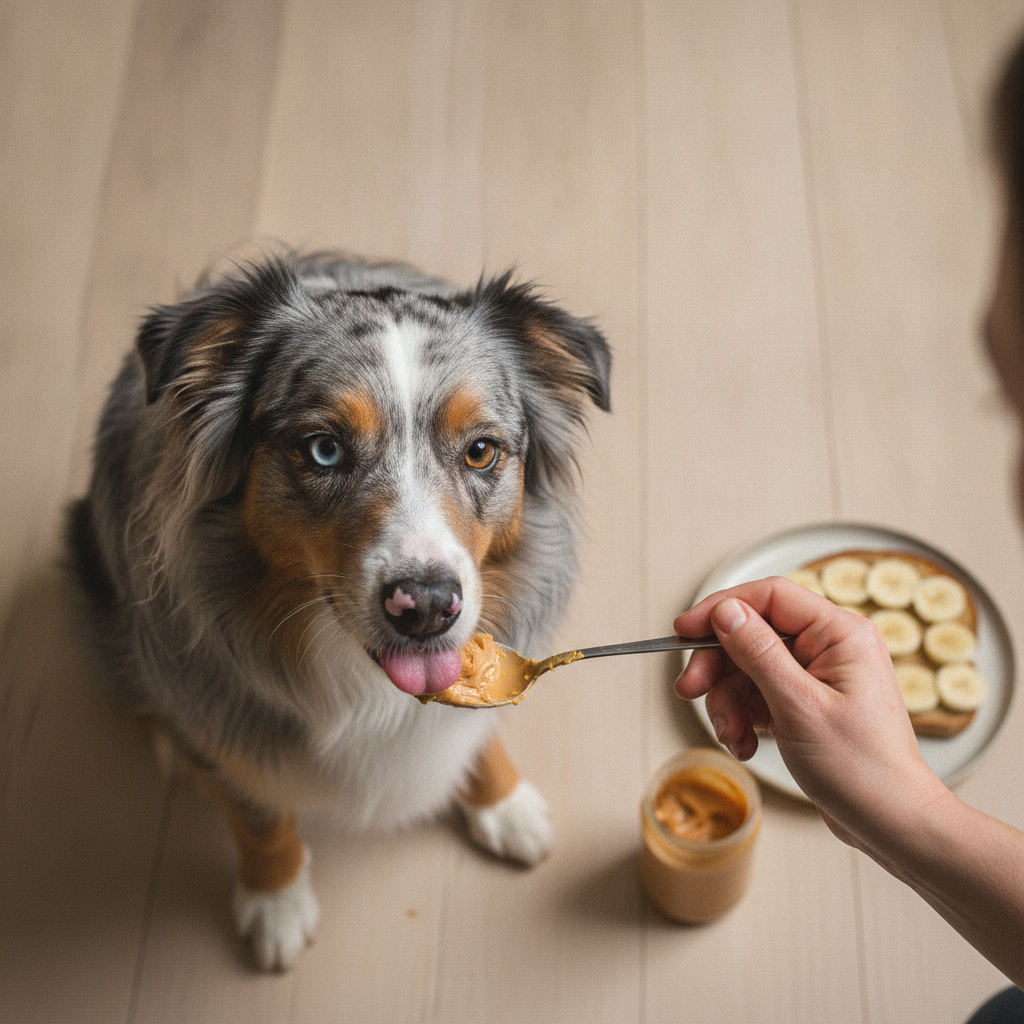
Here is the counterintuitive truth about peanuts and dogs: the peanut is rarely what hurts them. A plain, shelled, unsalted peanut is a genuinely fine snack. What sends dogs to the emergency clinic is almost always something a manufacturer added to it, a sweetener, a salt load, a flavor coating, or a fungal toxin in a stale batch. So the most useful skill is not memorizing whether dogs can eat peanuts. It is learning to read the jar. This is a walk through that label, in order of how dangerous each line is.
First, why the plain nut is fine
Peanuts are not nuts and not peas, despite the company they keep. They are legumes, the fruit of Arachis hypogaea, closer kin to lentils than to almonds. That legume pedigree is why they carry a respectable nutrient load: plant protein and its amino acids, energy-dense monounsaturated fat, fiber that feeds gut bacteria and firms up stool, and B vitamins along with phosphorus and magnesium. Their antioxidants concentrate in the papery skin and increase when peanuts are boiled rather than roasted, a small detail that matters more to human diets than canine ones but explains why “boiled peanuts” are not nutritionally silly.
None of that makes a peanut a health food for your dog, whose complete diet already covers these bases. It just means the baseline nut clears the safety bar. Everything risky is downstream of it.
The label, from most dangerous to least
1. Xylitol (also called birch sugar or wood sugar)
This is the line that can kill, and it is the reason peanut butter deserves special caution. Xylitol is a sugar substitute that triggers a massive, sudden insulin release in dogs, crashing blood sugar within 10 to 60 minutes and, at higher doses, causing liver failure. It is so common a poisoning that xylitol-related calls were the fourth most frequent dog-poison call the Pet Poison Helpline fielded in both 2024 and 2025.
The trap is that grocery-staple peanut butters, Jif, Skippy, Smucker’s, Peter Pan, are xylitol-free. The danger hides in “sugar-free,” high-protein, or specialty nut butters. Brands that have carried xylitol or similar sweeteners include Go Nuts Co., Nuts ‘N More, P28, and No Cow. On a label, xylitol may be listed outright or disguised as “birch sugar,” “wood sugar,” or a generic “sugar alcohol,” and a front-of-jar “sugar free” or “natural sweetener” claim is your cue to read the fine print. If you use peanut butter to hide a pill or stuff a chew toy, this is the one line you cannot skip.
2. Salt and seasonings
Most snacking peanuts are salted, and some are dusted with flavor coatings built for human palates, garlic and onion powder among them, which are toxic to dogs. Cocktail nuts and flavored mixes are the usual offenders. Excess sodium can cause thirst, vomiting, and at extreme doses far worse. The fix is simple: buy plain, unsalted peanuts and share from that jar only.
3. Freshness (the aflatoxin line you cannot see)
This one is not printed on the label, but the label’s date is your only clue. Peanuts and corn can host Aspergillus mold, which produces aflatoxin, a potent liver toxin. It leaves no visible mold and no off smell, so you cannot inspect your way to safety. Documented cases of fatal aflatoxicosis in dogs, tied to contaminated commercial food, are the reason this is not merely theoretical. You cannot eliminate the risk, but you shrink it to near zero by sharing only fresh, properly stored, in-date peanuts and discarding anything stale.
4. The shell and the shape
The shell is indigestible and can bring on nausea, gas, and diarrhea, and in quantity a blockage. Skip it entirely. The nut’s firm, round shape is also a choking risk for small and toy breeds, so crush peanuts into pieces for little dogs.
Peanuts are a good snack, but they are rich, so portion is everything, and honestly, so is reading. The nut itself is rarely the problem. It is the salt, the flavor coatings, and in peanut butter the xylitol that catch people out. Turn the jar over before you turn to the dog.
Who should be extra careful
Two groups of dogs get less latitude with peanuts even when the label is clean. Dogs with a history of pancreatitis and dogs who are overweight should generally avoid the fat load peanuts carry; a high-fat treat can provoke a flare or crowd out calories they cannot spare. Check with your vet before making peanuts a habit for these dogs. And because dogs, like people, can have nut allergies, watch closely the first few times and stop if you see itching, vomiting, or loose stool.
Portion, in plain numbers
Treats of all kinds should stay under 10 percent of daily calories, and peanuts hit that ceiling fast because they are fat-dense. For most dogs a few small pieces is a full serving, not a starting point. Use them well: ask for a sit, a wait, or a trip to the mat before the reward, and the same rich snack that could pad a waistline instead buys you better manners.
The bottom line
Dogs can eat peanuts, but that was never the interesting question. The interesting question is what is on the peanut. Buy plain and unsalted, keep them fresh, crush them for small dogs, and treat any peanut butter jar as a label to be read rather than a food to be assumed safe, with xylitol as the single non-negotiable check. Do that, and the peanut goes back to being what it should be: a small, motivating, harmless treat.
References
- U.S. Food and Drug Administration. “Paws Off Xylitol; It’s Dangerous for Dogs.” https://www.fda.gov/consumers/consumer-updates/paws-xylitol-its-dangerous-dogs.
- Pet Poison Helpline. “Xylitol.” https://www.petpoisonhelpline.com/poison/xylitol/.
- Bruchim, Y., et al. “Accidental Fatal Aflatoxicosis Due to Contaminated Commercial Diet in 50 Dogs.” Research in Veterinary Science. https://pubmed.ncbi.nlm.nih.gov/.
- Arya, S. S., et al. “Peanuts as Functional Food: A Review.” Journal of Food Science and Technology. https://pmc.ncbi.nlm.nih.gov/articles/PMC4325078/.
Common questions
What makes some peanut butter dangerous for dogs?
Xylitol, a sugar substitute also labeled as birch sugar or wood sugar. It is highly toxic to dogs and appears in some 'sugar-free' or high-protein nut butters. Always read the ingredient list before sharing peanut butter.
Can dogs eat peanut shells?
No. Shells are indigestible and can cause vomiting, diarrhea, or in larger amounts an intestinal blockage. Only offer shelled peanuts.
How many peanuts can a dog have?
A few small pieces at most, and kept under the 10 percent of daily calories that all treats share. Peanuts are rich in fat, so a little goes a long way, especially for small dogs.
Not a substitute for your vet. Our guidance is educational. For urgent symptoms, contact a vet or emergency clinic right away. Editorial standards
Dr. Park is a board-certified emergency and critical care specialist. She reviews our health and safety content for clinical accuracy and contributes guides on recognising urgent conditions. Her focus is helping owners act quickly and correctly when it matters most.
Meet our experts ↗Keep reading
 FoodOat Milk Is Fine for Your Dog. The Carton Is the Problem.Dr. Mara Chen · 6 min
 FoodPapaya for Dogs: The Enzyme Is the Point, and Also the CatchDr. Priya Nair · 6 min
 FoodThe Fruit Is Never the Problem. It's the Pit, the Skin, and the Seasoning.Dr. Priya Nair · 8 min
 FoodThe Bread Is Never the Problem. What's Baked Into It IsDr. Mara Chen · 5 min
 Food10 Human Superfoods for Dogs: The Prep Matters More Than the ProduceDr. Ravi Mehta · 8 min
 FoodButternut Squash Is a Cozy Win for Dogs. Skip One PartDr. Amara Solis · 5 min