


10 Human Superfoods for Dogs: The Prep Matters More Than the Produce
A blueberry is only a superfood until you bake it into a muffin. Here's the part most lists skip, how to prep ten safe people foods so they actually help, the 10 percent rule that caps all of them, and the toxic look-alikes that ride in on the same plate.

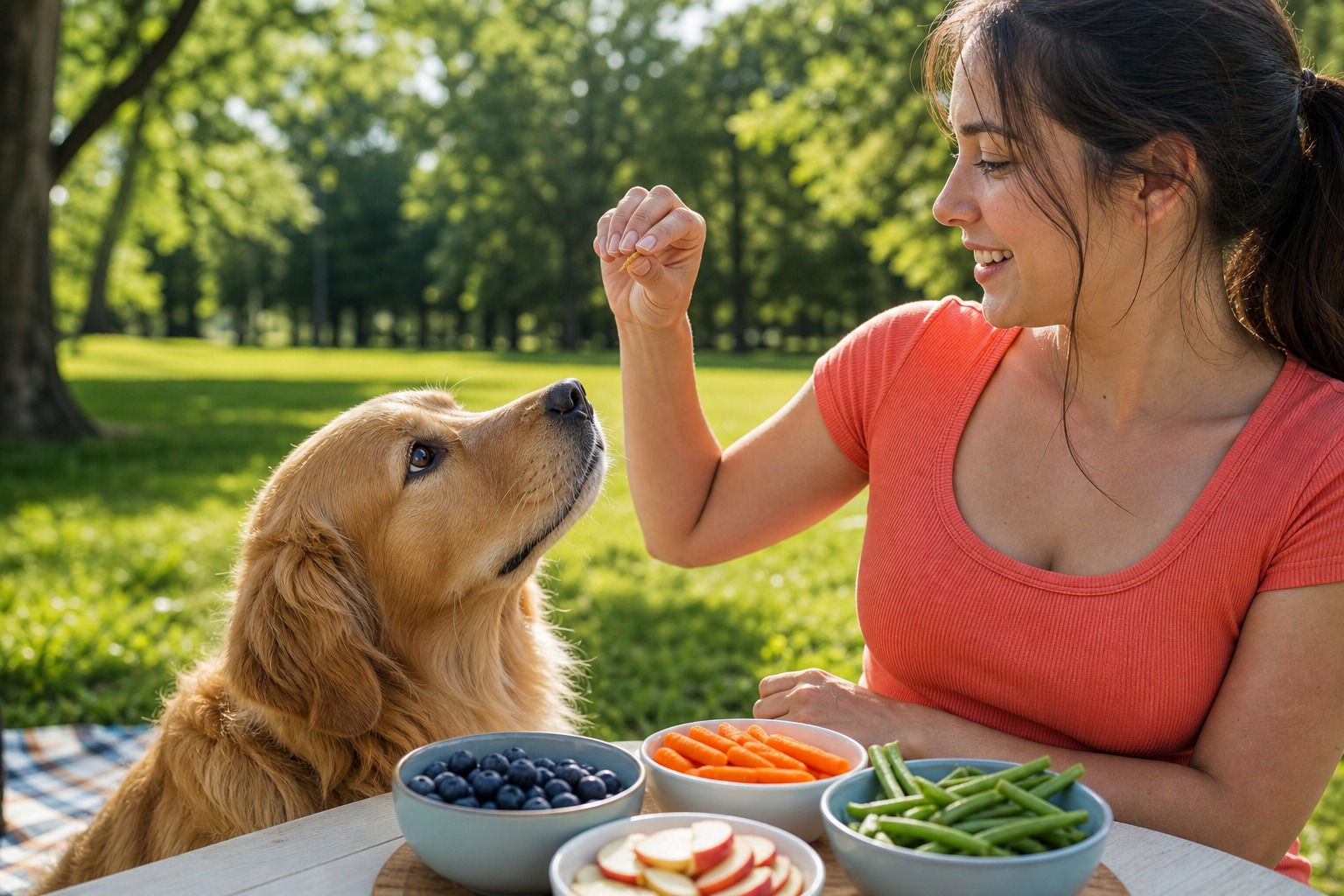
A blueberry is a superfood right up until you bake it into a muffin. Then it is sugar and flour with a garnish. That single example is the thing almost every “best human foods for dogs” list gets backward: they treat the ingredient as the point, when the part that actually decides whether a food helps or hurts is how you prepare it and how much you give. Carrots clean teeth raw and turn into a sugary mush if you glaze them. Pumpkin settles a stomach plain and upsets one as spiced pie filling. The produce is rarely the variable. The prep and the portion are.
So this guide is organized around those two levers, not around a ranking of vegetables. First the one rule that caps all of it, then ten genuinely useful foods grouped by what they actually do for your dog, with the prep that keeps each one on the right side of safe, and finally the toxic look-alikes that tend to arrive on the very same plate.
The one number that governs everything: 10 percent
Before any specific food, set the ceiling. Veterinary nutrition consensus, echoed by the American Animal Hospital Association and teaching hospitals like UC Davis, is the 10 percent rule: treats and extras, every food on this list included, should account for no more than 10 percent of your dog’s daily calories. The other 90 percent comes from a complete, balanced diet built to meet every nutrient requirement. Go past 10 percent and you start diluting that balance, swapping formulated nutrition for snacks, and quietly adding weight.
The math is friendlier than it sounds. A small dog eating about 400 calories a day has roughly 40 calories of room; a 50-pound dog eating around 900 has about 90. A medium carrot is around 25 calories, a blueberry is about one, and a tablespoon of plain pumpkin is roughly 5. That is why low-calorie, high-volume foods (green beans, cucumber, blueberries) are the easiest extras to fit, and why a chunk of sweet potato, healthy as it is, eats up the budget faster.
The question I get is always ‘is this food good for my dog,’ and it is almost the wrong question. Most of these foods are fine. What gets dogs into trouble is volume and what we add to them. I would rather a client feed five different plain vegetables inside the 10 percent ceiling than one ‘superfood’ by the cupful with a little butter on it.
For crunch and clean teeth
Carrots. Rich in beta-carotene, fiber, vitamin A, and antioxidants, raw carrots give a satisfying crunch that helps scrape soft plaque, and they support coat and eye health. Serve raw, cooked, or frozen, with no seasoning. The leafy tops are safe in small, well-washed amounts; baby carrots make ideal training treats because they are pre-portioned. Do not mistake a carrot’s dental help for a substitute for brushing; it scrapes, it does not replace.
Apples, seeds and core removed. A fiber-rich source of vitamins C and A that also helps freshen breath. The non-negotiable prep step: cut out the core and seeds, which contain amygdalin, a compound that releases cyanide. A slice or two is fine; a whole apple eaten core and all is a real call-your-vet situation. Skin is okay if washed well, and only plain, unsweetened applesauce qualifies.
For the gut
Pumpkin. The most reliable digestive helper here, useful for both diarrhea and constipation thanks to soluble fiber, plus potassium and vitamin A. Use 100 percent plain canned pumpkin or fresh cooked pumpkin, never pie filling or any spiced version with sugar or nutmeg. Mash or cube it once soft, or spread it on a lick mat and freeze for slow, enriching licking. Roasted, unsalted pumpkin seeds add antioxidants and omega-3s.
Sweet potatoes. Fiber, vitamins A, B6, and C, and potassium, all gentle on sensitive stomachs, and most dogs love the natural sweetness. Bake or boil until soft and serve plain, no salt, butter, or spices. Watch the portion: they are calorie-dense for a vegetable, so they eat into the 10 percent budget quickly. Dehydrated, additive-free sweet potato chews are a safe packaged option.
Plain Greek yogurt (a small spoonful). Unsweetened, plain, full of nothing but milk and live cultures, a small dollop can add probiotics and protein. Skip it entirely for dogs who are lactose-intolerant or react to dairy, and never use sweetened or flavored versions, which often hide xylitol. Start with a teaspoon and watch for loose stool.
For weight control and hydration
Green beans. Low calorie, high fiber, with iron, calcium, and vitamins A, C, and K. They are the classic vet-recommended swap for dogs on a diet because they add volume and crunch for very few calories. Steam, boil, or serve raw; if canned, only low-sodium, rinsed first.
Cucumber. Almost entirely water and nearly calorie-free, cucumber is a quiet workhorse for hot days and for dogs who need to lose weight without losing the ritual of a snack. Serve in coins or sticks, peel off any waxy supermarket coating, and keep pieces small for gulpers.
Watermelon, seeds and rind removed. Hydrating, with vitamins A, B6, and C and a lot of water. Cube the flesh, pull every seed, and discard the rind, which is hard to digest and a blockage risk in small dogs. Chill it for a summer treat.
For antioxidants
Blueberries. Low in calories, high in fiber and vitamin C, and packed with antioxidants that support brain and immune health. Rinse and serve fresh or frozen, as a treat or scattered over a meal. The one rule: the berry, not the muffin.
Kale (small amounts). Antioxidants plus vitamins A, C, and K and calcium, with anti-inflammatory benefits, but this is the one food on the list with a real upper limit: large quantities can contribute to bladder stones in susceptible dogs and may irritate the thyroid over time. Serve plain, washed, finely chopped, and lightly steamed, in genuinely small amounts. If your dog has a history of stones, skip it and ask your vet.
The toxic look-alikes that ride in on the same plate
Here is the part that makes the prep-and-portion framing matter most: the dangerous foods usually show up right next to the safe ones. A fruit salad has grapes in it. A roast has onions and garlic. A “healthy” muffin has xylitol. Keep these off the dog’s side of the counter entirely, in any amount:
Chocolate, grapes and raisins, onions and garlic (including powders), macadamia nuts, anything with xylitol (sugar-free gum, some peanut butters, baked goods), heavily salted or buttered anything, cooked bones, and the apple cores, peach pits, and cherry stones that hide cyanide. Grapes and raisins are especially unpredictable: even small amounts have caused kidney failure in some dogs, with no reliable “safe” dose.
When you add anything new, give a tiny amount first, watch for 24 hours for vomiting or loose stool, and check with your vet before adding any food if your dog has a health condition, is on a prescription diet, or takes medication. The goal is not to find a magic vegetable. It is to add small, well-prepped, well-portioned extras that do a specific job, and to keep the toxic neighbors off the plate.
References
- UC Davis Veterinary Medical Teaching Hospital. “Treats Guidelines for Dogs.” vetmed.ucdavis.edu, 2020.
- American Animal Hospital Association. “Nutritional Assessment Guidelines.” aaha.org.
- VCA Animal Hospitals. “True or False? Pet Treats Should Make Up 10% of Your Pet’s Daily Calories.” vcahospitals.com.
- ASPCA Animal Poison Control Center. “People Foods to Avoid Feeding Your Pets.” aspca.org.
- Merck Veterinary Manual. “Food Hazards (Chocolate, Grapes and Raisins, Onions and Garlic, Xylitol).” merckvetmanual.com.
Common questions
How much human food can I give my dog in a day?
Follow the 10 percent rule: treats and extras, including every people food on this list, should make up no more than 10 percent of your dog's daily calories, with the other 90 percent coming from a complete, balanced diet. For a 100-calorie-a-day toy breed that is roughly 10 calories of extras; for a 30-pound dog eating around 700 calories it is about 70. The exact food matters far less than staying under that ceiling, because going over dilutes a balanced diet and adds weight.
How many blueberries can I give my dog?
A few for a small dog and up to a small handful for a large one, counted inside the 10 percent rule. Blueberries are low calorie, so they are one of the easier extras to fit, but they still count. Serve them fresh or frozen and rinsed, never baked into a muffin, where the sugar and flour erase the benefit.
Which prep mistakes turn a safe food unsafe?
Salt, butter, oil, sugar, garlic, and onion powder are the usual culprits, plus seeds, cores, and rinds. Plain steamed green beans are great; canned salted ones are not. Seedless apple slices are fine; the core and seeds contain cyanide compounds. Watermelon flesh is hydrating; the seeds and rind can cause a blockage in a small dog. The food is rarely the problem, the way it is prepared usually is.
Are 'superfoods' actually better for my dog?
Superfood is a marketing word, not a veterinary one. The foods here are genuinely useful in small amounts, but none of them fixes an unbalanced diet or replaces a vet visit. Think of them as small, functional add-ons, crunch for teeth, fiber for digestion, water for hot days, rather than health insurance in a bowl.
Not a substitute for your vet. Our guidance is educational. For urgent symptoms, contact a vet or emergency clinic right away. Editorial standards
Dr. Mehta is a board-certified veterinary nutritionist who evaluates pet food formulations, ingredient quality, and the science behind dietary trends. He writes and reviews all nutrition content at The Pet Times, including our food rankings and feeding guides.
Meet our experts ↗Keep reading
 FoodSalmon Is Great for Your Dog. Raw Salmon Can Kill Them.Dr. Ravi Mehta · 7 min
 FoodSkittles Aren't the Candy That'll Send Your Dog to the ERDr. Lena Park · 6 min
 FoodYour Meatloaf Could Hospitalize Your Dog. This One Won't.Dr. Lena Park · 7 min
 Food"Dogs Are Basically Wolves" Is How Raw Chicken Gets Fed. Here's the Catch.Dr. Lena Park · 7 min
 FoodOne Tater Tot Won't Kill Your Dog. The Fifth One Might Ruin Your Night.Dr. Ravi Mehta · 5 min
 FoodKiwi Is Safe for Dogs. The Skin Is the Part to WatchDr. Mara Chen · 4 min