


Salmon Is Great for Your Dog. Raw Salmon Can Kill Them.
Cooked salmon is one of the most nutritious foods you can share with a dog. Raw salmon carries a parasite-borne disease that is fatal in most untreated dogs. The gap between the two is a hot pan.

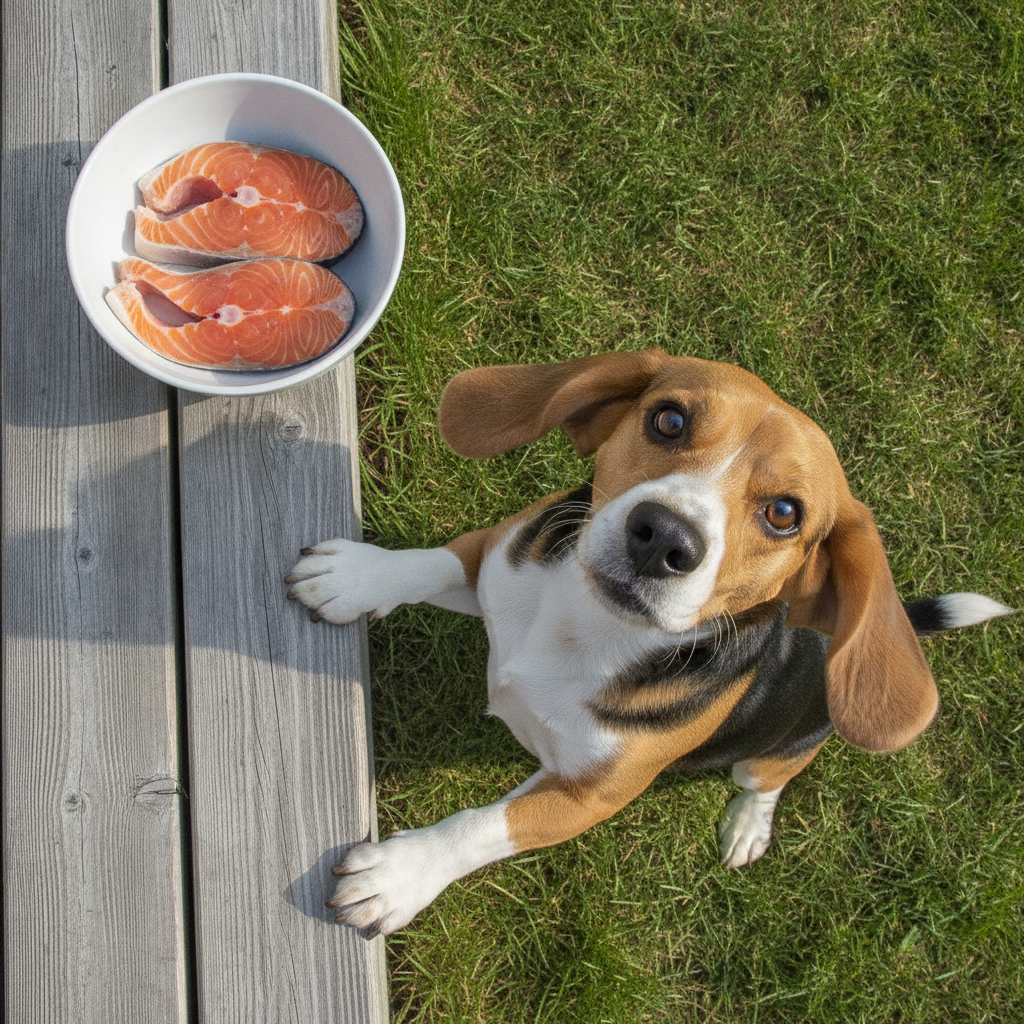
Most foods on the “can my dog eat this” list land somewhere in a mild yes or a mild no. Salmon is unusual because both answers are extreme. Cooked, it is close to a perfect dog treat: high-quality protein, brain- and skin-friendly omega-3s, and a nutrient list good enough that salmon anchors plenty of premium dog foods. Raw, it can trigger a disease that kills roughly nine out of ten untreated dogs. Almost nothing about salmon is a maybe. The entire safety question comes down to whether it saw heat.
Why cooked salmon is so good for dogs
Salmon is a cold-water fish prized worldwide for flavor and nutrition, and dogs benefit from it much the way people do. The protein is high quality, supplying the amino acids dogs use to build muscle, enzymes, and other proteins, plus energy. The fat is the standout: salmon is rich in omega-3 fatty acids, specifically EPA and DHA, which support healthy skin and coat, help calm inflammation, and may protect the heart and brain.
It also carries a strong lineup of micronutrients, including vitamins B6 and B12, selenium, niacin, and thiamin, which support everything from DNA repair to nerve and heart function. And it contains astaxanthin, a marine antioxidant, one of the compounds behind salmon’s color, that helps defend cells against free-radical damage. Whether it comes from wild or farmed fish, and most grocery salmon is farmed because many wild species are protected, the nutritional profile is genuinely impressive.
The reason raw salmon is a red line
Here is the part that makes salmon different from, say, raw chicken, where the concern is mostly bacteria and carrier risk. Salmon and some other fish can carry a fluke parasite that harbors an organism called Neorickettsia helminthoeca, and when a dog eats raw or undercooked infected fish, it can develop salmon poisoning disease. This is not a mild tummy ache. Untreated, salmon poisoning disease is fatal in about 90 percent of dogs, often within two weeks, with signs like fever, vomiting, diarrhea, loss of appetite, and swollen lymph nodes.
Two facts change how you should treat this. First, geography: dogs most often get sick in the Pacific Northwest, where they eat freshly caught salmon, but in principle any tissue from an infected fish can carry the parasite, and raw fish also carries a general risk of other pathogens like Salmonella. Second, and more hopeful, it is highly treatable when caught early. So the guidance is strict but not fatalistic: never feed raw or undercooked salmon, and if your dog eats some, whether off the counter or on a hike, call your vet immediately rather than waiting to see if symptoms appear.
Salmon poisoning is one of those diagnoses where the outcome is almost entirely about timing. A dog we see early, we can usually pull through with antibiotics and a dewormer. A dog whose owner waited a week hoping it would pass is a completely different, much scarier case. That’s why I never soften the ‘call me right away’ part.
Cooking closes this off entirely. Heating salmon to an internal temperature of 145 degrees Fahrenheit kills the organism, and, reassuringly, humans do not catch salmon poisoning from dogs or fish the way dogs do.
Cooking it right, and what to leave out
Serving salmon safely is mostly about restraint. Cook it plain, with no salt, high-fat dairy like cream or butter, onion, garlic, chives, or chili, since several of those are toxic and the rest are just hard on a dog. Bake or steam a piece and set it aside before you season your own.
Remove the skin and bones. Bones can be choking hazards and can injure or irritate the digestive tract, and the skin is very high in fat. That fat is the other thing to watch: salmon is a rich food, and while the omega-3s are a benefit, the calories add up, and some dogs prone to digestive upset or pancreatitis do not handle high-fat foods well. Factor salmon into your dog’s daily calories, start with a small portion the first time, and check with your vet if your dog has a history of fat sensitivity.
Keeping salmon in its lane
Salmon is a treat, not a diet. Dogs are omnivores with nutritional needs different from ours, and even a food this good should stay within the ten percent of daily calories reserved for treats, with the other ninety percent coming from a complete and balanced dog food. That balance is what prevents deficiencies and keeps a rich food from tipping a dog toward weight gain.
What’s new since this was written
The core science on salmon poisoning has held up, and recent clinical reviews reinforce the same striking numbers worth repeating for any owner near salmon country: untreated, the disease kills the large majority of affected dogs, but with prompt treatment, usually the antibiotic doxycycline plus a dewormer like praziquantel, the prognosis is excellent, with overall mortality in treated dogs dropping to roughly 14 percent. The lesson is unchanged and worth internalizing: the danger is almost entirely in delay.
The other development is about the good side of salmon. Omega-3 supplementation, the very fats salmon is rich in, has continued to gain support in veterinary medicine for conditions like osteoarthritis and certain skin diseases. That does not mean you should feed more salmon; concentrated, dosed fish oil is a more reliable and controllable source than fatty fish, and your vet can advise on whether and how much makes sense for your dog. Salmon at the dinner table stays a treat; the therapeutic version comes from a bottle.
References
- University of California, Davis School of Veterinary Medicine: Salmon Poisoning Disease in Dogs
- Merck Veterinary Manual: Salmon Poisoning Disease in Dogs
- Headley, S.A. et al. “Salmon poisoning disease in dogs: clinical presentation, diagnosis and treatment.” (clinical review)
- NOAA Fisheries: Salmon
- Bauer, J.E. “Therapeutic use of fish oils in companion animals.” Journal of the American Veterinary Medical Association, 2011.
This article covers a potentially fatal but highly treatable illness. If you suspect your dog has eaten raw or undercooked fish, contact your veterinarian immediately.
Common questions
Can dogs eat raw salmon?
No. Raw or undercooked salmon can carry the organism that causes salmon poisoning disease, which is fatal in about 90 percent of untreated dogs. If your dog eats raw salmon, call your vet right away, because early treatment is highly effective.
Can dogs eat smoked salmon?
No. Smoked salmon is very high in salt, and some forms are not heated enough to kill the organisms that cause salmon poisoning. Skip it.
How much salmon can a dog eat?
Keep it to a treat. Plain cooked salmon can make up part of the ten percent of daily calories reserved for treats. Start with a small amount, since salmon is high in fat and some dogs do not tolerate rich food well.
Not a substitute for your vet. Our guidance is educational. For urgent symptoms, contact a vet or emergency clinic right away. Editorial standards
Dr. Mehta is a board-certified veterinary nutritionist who evaluates pet food formulations, ingredient quality, and the science behind dietary trends. He writes and reviews all nutrition content at The Pet Times, including our food rankings and feeding guides.
Meet our experts ↗Keep reading
 Food"Dogs Are Basically Wolves" Is How Raw Chicken Gets Fed. Here's the Catch.Dr. Lena Park · 7 min
 FoodOne Slim Jim Has as Much Saturated Fat as a Whole Serving of FriesDr. Priya Nair · 6 min
 FoodSkittles Aren't the Candy That'll Send Your Dog to the ERDr. Lena Park · 6 min
 FoodThe Persimmon Rule for Dogs: Flesh Yes, Everything Else NoDr. Priya Nair · 7 min
 Food10 Human Superfoods for Dogs: The Prep Matters More Than the ProduceDr. Ravi Mehta · 8 min
 FoodOne Tater Tot Won't Kill Your Dog. The Fifth One Might Ruin Your Night.Dr. Ravi Mehta · 5 min