


"Dogs Are Basically Wolves" Is How Raw Chicken Gets Fed. Here's the Catch.
Cooked chicken is one of the best foods you can share with a dog. Raw chicken is a different story, and the reason has less to do with your dog's stomach than with what they can carry and pass on.

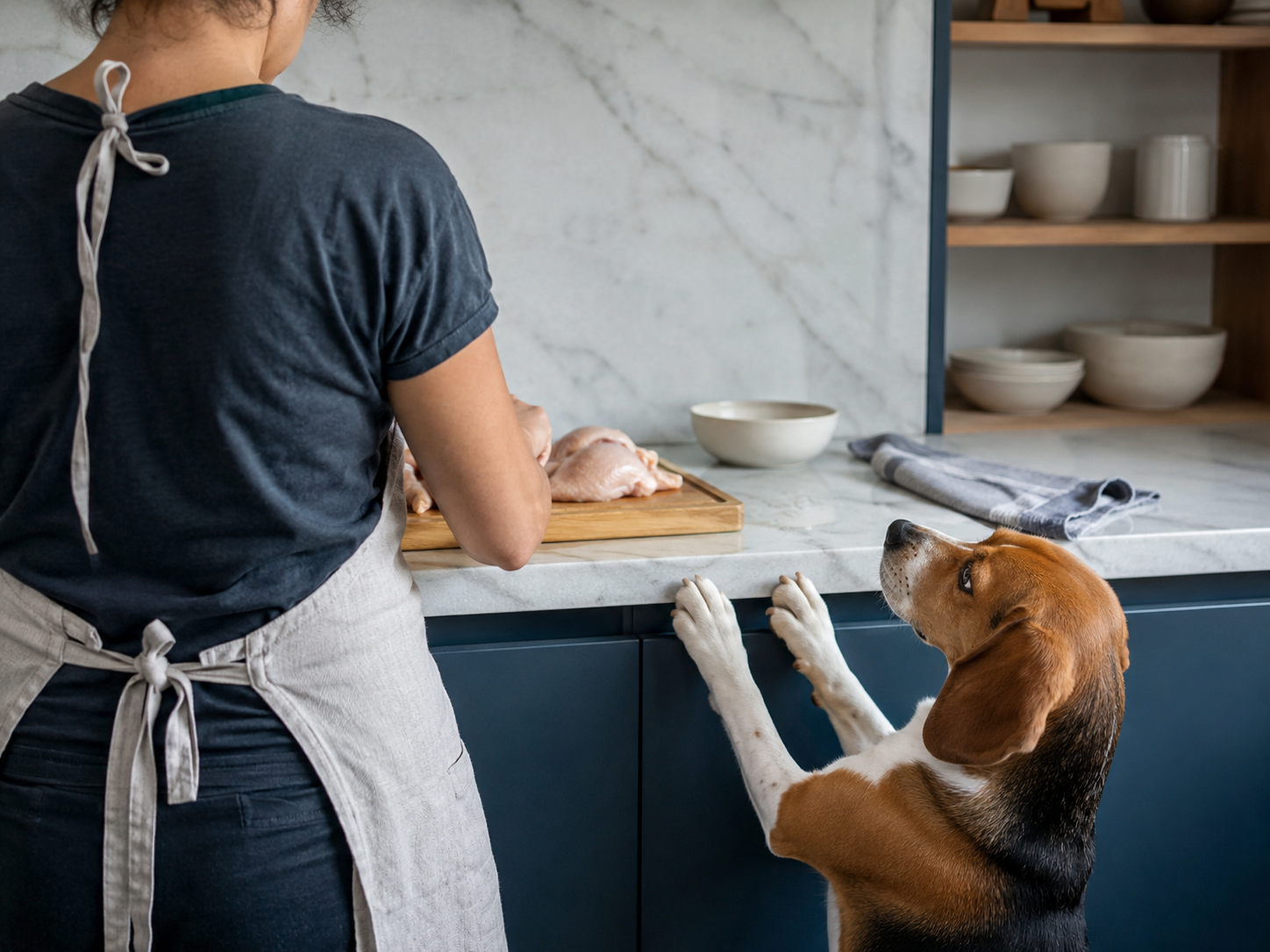
Almost every argument for feeding a dog raw chicken starts in the same place: dogs descend from wolves, and wolves ate raw prey. It sounds airtight until you look at an actual dog. Thousands of years of domestication have reshaped how dogs digest, live, and handle food, and the modern dog dozing on your couch is not running down raw birds. The real question is not whether a dog can choke down raw chicken, it is whether the risks are worth it when cooked chicken delivers the exact same nutrition. They are not, and the biggest reason is one most owners never think about.
Chicken is a great food for dogs. That part is real.
There is a reason chicken anchors the ingredient list of so many dog foods. It is high in protein, which supplies the amino acids dogs use to build muscle, enzymes, and hormones, and which also serves as fuel. It provides fat for energy, healthy skin and coat, insulation, and cushioning. And it carries meaningful vitamins and minerals, including iron, choline, and B12, that keep red blood cells, muscles, and the nervous system working the way they should.
None of that goodness depends on the chicken being raw. Cooking chicken keeps every one of those nutrients intact while removing the part that causes trouble. So when people say chicken is good for dogs, they are right. The disagreement is only ever about temperature.
The real problem: what your dog carries, not just what they catch
Raw chicken is notorious for carrying pathogens: Salmonella, Campylobacter, and Clostridium perfringens are the usual suspects. The CDC names undercooked chicken as a leading cause of Salmonella food poisoning in people, and the raw chicken sold at the grocery store or butcher is not required to be free of these bacteria, because the whole system assumes you will cook it to a safe temperature that kills them.
Here is the twist that changes how you should think about it. Many dogs who eat contaminated raw chicken never look sick at all. Instead they become carriers, shedding live bacteria in their stool and saliva and passing them to other pets and to people. That turns a “my dog seems fine” situation into a household health issue, and it is especially dangerous for anyone who is immunocompromised because of age, illness, or medication. A dog who gives you a face lick after a raw-chicken meal is a more realistic route to a human infection than most owners realize.
The line I keep coming back to with clients is that a raw-fed dog can be perfectly healthy and still be a walking source of Salmonella for the baby crawling on the same kitchen floor. Cooking the chicken closes that door completely, and your dog loses nothing nutritionally. That’s about as easy a trade as I ever get to offer.
Skin, bones, and feathers are their own hazards
Even setting bacteria aside, dogs should not eat every part of a chicken. Chicken skin is tough to chew and high in fat, which can cause vomiting or diarrhea and, in some dogs, tip into pancreatitis. Bones and feathers are worse. They are hard to chew and digest and can cause intestinal blockages that require emergency surgery, or impactions, a severe and painful form of constipation. Poultry bones are a specific danger because bird bones are hollow and splinter easily, creating sharp edges when a dog bites down. If chicken is going to your dog, it should be plain, boneless, skinless meat.
If your dog eats raw chicken anyway
A single stolen piece is usually not an emergency for a healthy adult dog, but it is worth watching for. Keep an eye out for vomiting, diarrhea, fever, or unusual tiredness over the next few days and call your vet if any of it appears or worsens. Be more cautious if anyone in the home is very young, elderly, pregnant, or immunocompromised, since the bacteria your dog can shed are the real concern for them. And wash your hands, along with any bowls and surfaces the raw chicken touched.
The safe way to feed chicken
Cook it plain, with no oil, butter, salt, garlic, or onion, and serve it boneless and skinless. That is a genuinely healthy, well-tolerated protein and a favorite for good reason. Keep chicken and other treats to under ten percent of your dog’s daily calories, with the rest coming from a complete and balanced dog food, so snacks never crowd out the nutrition a dog actually needs.
What’s new since this was written
The case against raw poultry for dogs got sharper in 2024 and 2025, and it is worth folding in. Highly pathogenic avian influenza, the H5N1 bird flu, spread widely through poultry and other animals, and it turned up in commercial raw pet food. Regulators and manufacturers documented cats becoming seriously ill and dying after eating H5N1-contaminated raw poultry products, and the FDA moved to require that pet food makers using uncooked poultry or cattle materials treat H5N1 as a known hazard in their safety plans.
Cats have borne the worst of it, but dogs can be infected by the virus too, and raw poultry is a plausible route. Cooking destroys the virus along with the bacteria, which makes the old advice sturdier than ever: if you want your dog to have chicken, cook it. The wolf-ancestor argument has not gotten any more convincing, and the risk column just got a new and serious line item.
References
- Centers for Disease Control and Prevention: Chicken and Food Poisoning
- Centers for Disease Control and Prevention: Salmonella and Pets
- U.S. Food and Drug Administration: Cat and Dog Food Manufacturers Required to Consider H5N1 in Food Safety Plans
- Freeman, L.M. et al. “Current knowledge about the risks and benefits of raw meat-based diets for dogs and cats.” Journal of the American Veterinary Medical Association, 2013.
- Tufts University Cummings Veterinary Medical Center, Petfoodology: Pondering Pet Protein
Common questions
My dog stole a piece of raw chicken. Will they be okay?
Most healthy dogs who grab a small piece will be fine, but watch for vomiting, diarrhea, fever, or lethargy over the next few days and call your vet if any of those show up. Households with young children, elderly, or immunocompromised people should be especially careful, since dogs can shed bacteria even without looking sick.
Can dogs eat chicken bones?
No. Cooked and raw poultry bones can splinter into sharp fragments, and hollow bird bones crack easily. They can cause choking, mouth and gut injuries, blockages, and painful bone impactions.
Is cooked chicken good for dogs?
Yes. Plain, cooked, skinless, boneless chicken is a high-protein, well-tolerated food that is a main ingredient in many dog foods and a great treat or bland-diet protein.
Not a substitute for your vet. Our guidance is educational. For urgent symptoms, contact a vet or emergency clinic right away. Editorial standards
Dr. Park is a board-certified emergency and critical care specialist. She reviews our health and safety content for clinical accuracy and contributes guides on recognising urgent conditions. Her focus is helping owners act quickly and correctly when it matters most.
Meet our experts ↗Keep reading
 FoodYour Meatloaf Could Hospitalize Your Dog. This One Won't.Dr. Lena Park · 7 min
 FoodSalmon Is Great for Your Dog. Raw Salmon Can Kill Them.Dr. Ravi Mehta · 7 min
 FoodBaked Sourdough Is a Fine Dog Snack. Raw Dough Is a 911 Call.Dr. Amara Solis · 6 min
 FoodThe Persimmon Rule for Dogs: Flesh Yes, Everything Else NoDr. Priya Nair · 7 min
 Food10 Human Superfoods for Dogs: The Prep Matters More Than the ProduceDr. Ravi Mehta · 8 min
 FoodOne Tater Tot Won't Kill Your Dog. The Fifth One Might Ruin Your Night.Dr. Ravi Mehta · 5 min