


One Slim Jim Has as Much Saturated Fat as a Whole Serving of Fries
Slim Jims look like a meaty dog treat and act like a health hazard. The salt, the fat, and the garlic hiding in some flavors add up to a snack your dog is better off never learning about.

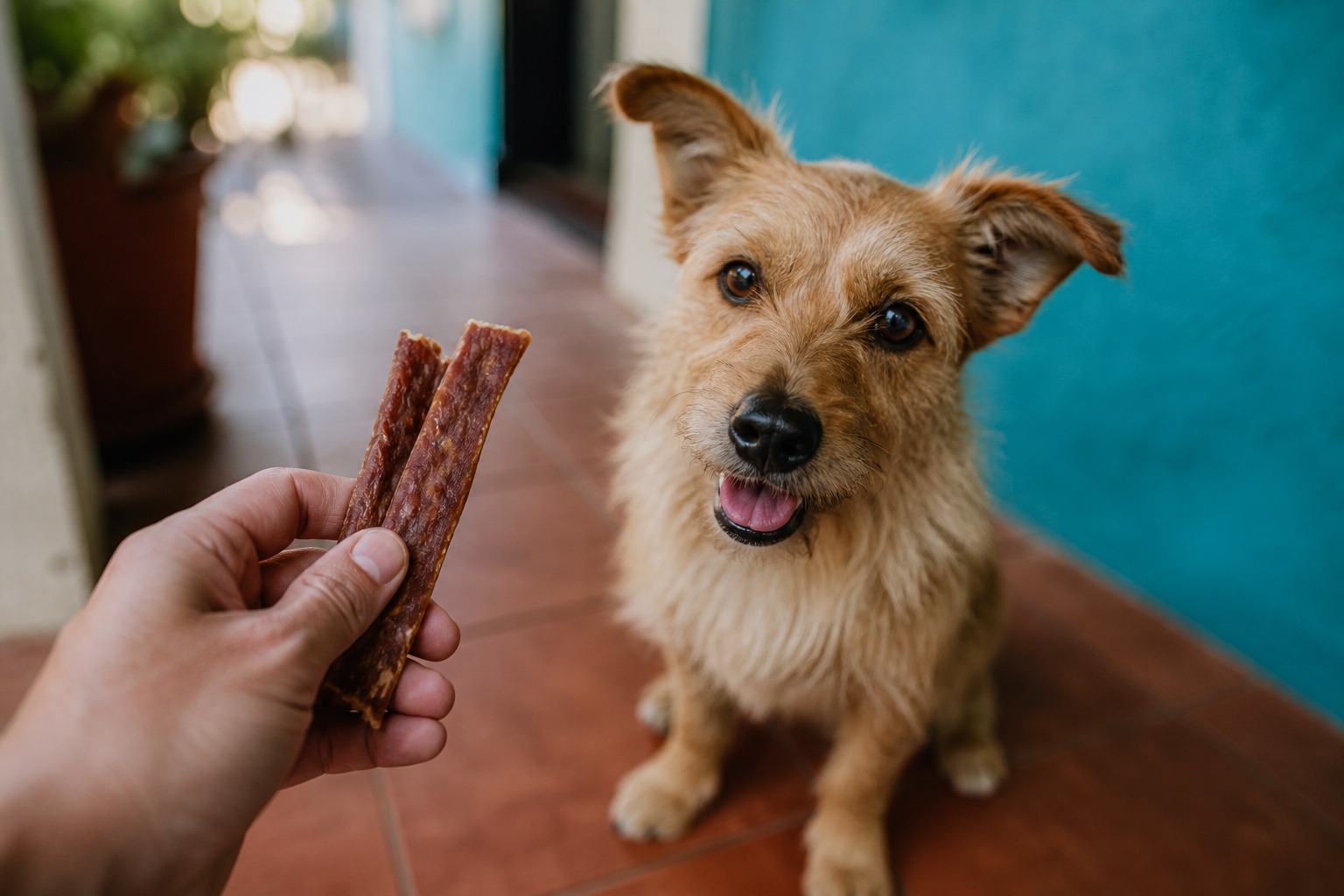
A Slim Jim seems like it should be dog-friendly. It is meat, mostly, in a convenient stick, and dogs go weak-kneed for anything savory. That instinct is exactly the trap. Slim Jims are engineered for human road-trip cravings, which means salt, fat, and preservatives dialed up far past what a dog should ever eat, plus, in some flavors, an ingredient that is outright toxic to them. This is not a “fine in moderation” treat. It is one worth keeping off the dog’s radar entirely, and the ingredient panel explains why better than any warning could.
What’s actually in the stick
Slim Jims are built from processed meats, beef, pork, and chicken, bound with soy flour and corn syrup and finished with salt, flavoring, and preservatives. Lean meat can be nutritious for dogs, but this is not lean meat in any meaningful sense; it is a highly processed snack where the seasoning is the point. A few numbers make the problem concrete.
A single regular Slim Jim stick contains about 450 milligrams of salt, close to a quarter teaspoon. That same stick has around 3.5 grams of saturated fat, which is roughly what you would get from an entire serving of french fries. There is added sugar, which contributes to obesity and diabetes in dogs. There is sodium nitrite, a salt-based meat preservative. And some flavors include spices like garlic powder. For a dog, that combination is a small package of several bad ideas at once.
Three ways it can go wrong
The more Slim Jims a dog eats, the more likely trouble becomes, and the trouble tends to take one of three forms.
The mildest is stomach upset. Any new, rich, salty treat can cause loose stool or vomiting, and Slim Jims, being especially salty and fatty, carry a higher chance of it. A single bout of runny poop is usually no crisis, but repeated vomiting or diarrhea can dehydrate a dog enough to need medical care.
More serious is pancreatitis. The richer the food, the higher the risk that the pancreas becomes inflamed. The pancreas both helps regulate blood sugar and makes digestive enzymes, and when it is inflamed a dog can develop abdominal pain, vomiting, diarrhea, a poor appetite, and lethargy. Pancreatitis is not rare after a fatty indulgence, and severe cases can land a dog in the hospital.
The one people overlook is hypernatremia, or dangerously high blood sodium. It develops when a dog takes in too much salt or loses too much water, and Slim Jims can drive both ends of that. Picture a dog who eats several salty sticks and then starts vomiting and having diarrhea, losing fluid at the same time sodium spikes. Signs include intense thirst, weakness, muscle tremors, dullness, and seizures, and correcting it takes careful fluid therapy from a vet. High-sodium foods are especially dangerous for dogs with underlying heart disease.
People assume the danger scales with the dog’s size, and mostly it does, but sodium is sneaky. A small dog, or one with a heart condition, can get into real trouble on an amount that a big Labrador would shrug off. That’s why my answer isn’t ‘a little is okay,’ it’s ‘there are so many safer ways to give your dog meat.‘
The garlic problem, specifically
The salt and fat would be reason enough to skip Slim Jims, but the garlic in some flavors moves them from unhealthy to potentially toxic. Garlic belongs to the allium family, along with onions and chives, all of which are poisonous to dogs and can damage red blood cells. Garlic powder is a concentrated form, so a seasoned meat stick can deliver more of it than its size suggests. Because you cannot always tell from the outside which flavor carries garlic, the safe assumption is that any Slim Jim might.
If your dog eats one
Start by taking away any remaining sticks so the dog cannot double down. Then watch closely. One bout of soft stool is usually fine, but get veterinary help if your dog develops continuous or bloody vomiting or diarrhea, abdominal pain, weakness, reduced alertness, or behavior changes. Be quicker to call if your dog is small, has heart disease, or ate more than a single stick, and mention the flavor if you know it, in case garlic was involved.
Give this instead
Dogs deserve savory treats; they just deserve better ones. Plain, cooked, lean, boneless, unseasoned meats like beef, turkey, or chicken hit the same craving without the salt-and-fat load. Other solid options include dog-safe vegetables like green beans, carrots, and sweet potato, low-sugar fruits like blueberries, watermelon, or cored apple, plain air-popped popcorn, and plain yogurt. If you want the jerky format specifically, choose jerky made for dogs, since jerky made for people is typically too salty and spiced. Whatever you pick, keep all treats under ten percent of your dog’s daily calories.
What’s new since this was written
The safety verdict on Slim Jims has not changed, but the broader concern behind it, sodium in ultra-processed foods, has only sharpened, and it is worth a plain-language update. Rising rates of canine obesity have pushed veterinarians to pay closer attention to the hidden salt and fat in “people snacks” shared with dogs, because those extras are a common, quiet driver of weight gain and the joint and metabolic problems that follow.
The other update is about xylitol, the sugar substitute now often labeled “birch sugar.” It is turning up in more sugar-free and “low-sugar” processed snacks, and it is dangerous to dogs even in small amounts. Standard Slim Jims are sweetened with sugar rather than xylitol, so they are not the concern here, but the habit the ingredient trend reinforces is: read the label on any human snack before it goes to your dog, and be especially wary of anything marketed as sugar-free. The safest meat treats remain the plainest ones.
References
- Slim Jim: Original Product Information
- ASPCA Animal Poison Control: People Foods to Avoid Feeding Your Pets
- Pet Poison Helpline: Garlic Toxicity in Dogs
- U.S. Food and Drug Administration: Paws Off Xylitol; It’s Dangerous for Dogs
This article covers salt, fat, and garlic toxicity. If your dog has eaten a large amount of a salty or garlic-containing snack, or shows vomiting, weakness, or tremors, contact your veterinarian.
Common questions
My dog ate a Slim Jim. What should I do?
Take away any remaining pieces and watch closely for vomiting, diarrhea, poor appetite, or behavior changes. One stick is unlikely to seriously harm a large, healthy dog, but call your vet if symptoms develop or if your dog is small, has heart disease, or ate several.
Why is the garlic in Slim Jims a problem?
Garlic is part of the allium family, which is toxic to dogs and can damage red blood cells. Some Slim Jim flavors include garlic powder, which is a concentrated form, so a savory meat stick can carry more risk than the salt and fat alone.
What are better meaty treats for dogs?
Plain, cooked, lean, unseasoned meats like beef, turkey, or chicken, or jerky made specifically for dogs. Human beef jerky is usually too salty and spiced to be a good choice.
Not a substitute for your vet. Our guidance is educational. For urgent symptoms, contact a vet or emergency clinic right away. Editorial standards
Dr. Nair is a veterinarian focused on diet and feeding. She covers everyday nutrition, treats, and the many "can they eat this?" questions owners ask, grounding each answer in what is actually safe and sensible for dogs and cats.
Meet our experts ↗Keep reading
 FoodBaked Sourdough Is a Fine Dog Snack. Raw Dough Is a 911 Call.Dr. Amara Solis · 6 min
 FoodYour Meatloaf Could Hospitalize Your Dog. This One Won't.Dr. Lena Park · 7 min
 FoodSalmon Is Great for Your Dog. Raw Salmon Can Kill Them.Dr. Ravi Mehta · 7 min
 FoodThe Persimmon Rule for Dogs: Flesh Yes, Everything Else NoDr. Priya Nair · 7 min
 FoodOne Tater Tot Won't Kill Your Dog. The Fifth One Might Ruin Your Night.Dr. Ravi Mehta · 5 min
 Food10 Human Superfoods for Dogs: The Prep Matters More Than the ProduceDr. Ravi Mehta · 8 min