


Kale Is a 'Superfood.' For Dogs, It Comes With a Catch.
Kale really is packed with nutrients for your dog, but the same leaf carries oxalates and thyroid-blunting compounds. Here's the honest line between a healthy topper and too much, plus how to prep it so the good stuff survives.

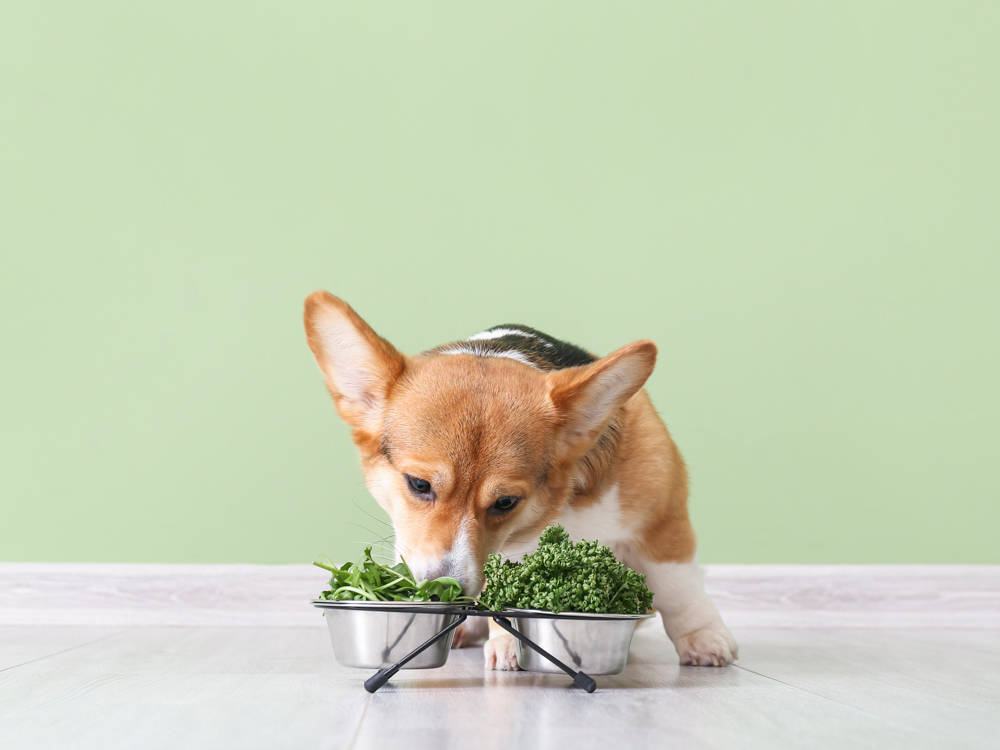
Kale gets talked about like a health-food miracle, so it is easy to assume that piling it into your dog’s bowl is doing them a favor. The truth is more interesting. Kale genuinely is one of the more nutrient-dense greens you can share with a dog. It is also a leaf that, in the wrong amount, can nudge a dog toward bladder stones and can press on the thyroid. Both of those things are true at the same time, and the difference between the good version and the bad version is almost entirely about quantity and prep.
So the real question is not “can dogs eat kale.” They can. The question is how to get the upside without tripping the downside, and that is what most feeding guides skate past.
What kale actually does for a dog
The nutrient case is real. Kale is a rich source of vitamins A, B6, C, and E, along with folate, manganese, and minerals like iron, potassium, and phosphorus. It also carries two antioxidants worth naming, lutein and zeaxanthin, which support eye health. A small amount of lightly cooked kale stirred into dinner adds bulk and a feeling of fullness without piling on calories, which is why it can be a useful topper for a dog who is trying to lose a little weight.
None of that is hype. The catch is that a dog gets almost all of its nutrition from a complete, balanced dog food. Kale is a bonus layer on top, not a food group your dog is missing.
People hear ‘superfood’ and picture kale doing something dramatic for their dog, but a spoonful on top of a balanced diet is a small, pleasant extra, not medicine. I’d rather an owner feed a little bit well than a lot hoping for a health effect that a teaspoon was never going to deliver.
The catch nobody mentions: oxalates and the thyroid
Here is the part that gets left out of the cheerful version. Kale is high in oxalates, and it belongs to the cruciferous family, which also brings compounds called isothiocyanates. Neither is a problem in a garnish. Both become a problem if kale turns into a daily, generous habit.
Oxalates can bind with calcium in the body to form crystals, and over time a steady, heavy kale habit raises the risk of calcium oxalate bladder and kidney stones. For a dog who has already had stones, that risk is not worth taking at all. The isothiocyanates, in large amounts, can irritate the gut and can blunt thyroid function. For a healthy dog eating a pinch now and then, this is a non-issue. For a dog with existing thyroid disease, or one being fed kale every single day, it stops being theoretical.
This is why the honest rule is small and occasional. It is not fear-mongering, and it is not a reason to skip kale. It is the reason kale is a topper and not a side dish.
How to prep it so the good survives and the risk drops
Cooking does real work here, and it works in your favor twice. Lightly steaming or blanching kale lowers its oxalate content and makes the leaf gentler on the stomach, while keeping most of the vitamins intact. Long boiling, on the other hand, leaches the nutrients into the water, so it gives you the softened texture without the payoff.
A few ways to serve it well:
- Steam or blanch, don’t boil. To blanch, dunk the leaves briefly in boiling water, then straight into ice water. It cleans off grit, keeps color and nutrients, and softens the leaf.
- Chop it small. Finely slice the leaves. Big pieces are harder to digest and, for a small dog, a choking hazard.
- Handle stems carefully. You can chop or pulverize the ribs and lightly sauté or roast them, but leave stems out entirely for any dog prone to stones, since they concentrate the compounds you are trying to limit.
- Skip the extras. No garlic, onion, oil, or salt. Those do more harm than the kale ever does good.
How much is actually right
Keep kale and every other treat combined under 10 percent of your dog’s daily calories. In practice, that means a small amount: think roughly a teaspoon of chopped, cooked kale per 10 pounds of dog, once or twice a week, not a daily handful. Start with less than that the first time and watch for gas or loose stool before making it a habit.
And there are dogs who should skip kale altogether: any dog with a history of bladder or kidney stones, and any dog with thyroid disease, unless your own vet specifically clears it.
What newer research adds
The broader picture on canine weight is part of why greens like kale get so much attention as low-calorie toppers. The Association for Pet Obesity Prevention’s most recent surveys put a large majority of dogs in the overweight-to-obese range by body condition score, and in 2024 the share of owners who recognized their own dog was carrying extra weight jumped sharply from the year before. That growing awareness is real, and it is fueling interest in vegetable toppers that add volume without calories.
Kale can play that role. Just remember what the same research community stresses: the fix for a heavy dog is smaller portions and more movement, measured against a balanced diet. A spoon of kale is a nice tool inside that plan, not a substitute for it.
The bottom line
Yes, dogs can eat kale, and a little of it is a genuinely good topper. Keep it small, keep it cooked, keep it occasional, and keep it away from dogs with stones or thyroid trouble. Do that and you get the superfood’s upside without the catch that the marketing never mentions.
References
- Can Dogs Eat Kale? — American Kennel Club
- Kale for Dogs: benefits and cautions (vet-reviewed) — PawPulse
- 2024 Pet Obesity Survey Results — Association for Pet Obesity Prevention
Common questions
How much kale can a dog eat?
A rough guide is no more than about a teaspoon of chopped, cooked kale per 10 pounds of body weight, once or twice a week. It is a garnish, not a serving of greens.
Do I need to cook kale for my dog?
Cooking helps. Lightly steaming or blanching kale lowers its oxalate load and makes it easier to digest than raw leaves, while keeping most of the nutrients. Boiling for a long time washes those nutrients away, so steam or blanch instead.
Can dogs eat kale stems?
Yes, if they are chopped or pulverized and lightly cooked so they are not a choking hazard. Leave the stems out for any dog prone to bladder or kidney stones, since they concentrate the compounds you want to limit.
Not a substitute for your vet. Our guidance is educational. For urgent symptoms, contact a vet or emergency clinic right away. Editorial standards
Dr. Nair is a veterinarian focused on diet and feeding. She covers everyday nutrition, treats, and the many "can they eat this?" questions owners ask, grounding each answer in what is actually safe and sensible for dogs and cats.
Meet our experts ↗Keep reading
 FoodThat Lemon Face Your Dog Makes Is a 40,000-Year-Old Survival TrickDr. Lena Park · 6 min
 Food7 Foods the Internet Swears Are Bad for Dogs. They Aren't.Dr. Amara Solis · 6 min
 FoodThe Fruit Is Never the Problem. It's the Pit, the Skin, and the Seasoning.Dr. Priya Nair · 8 min
 FoodBaked Sourdough Is a Fine Dog Snack. Raw Dough Is a 911 Call.Dr. Amara Solis · 6 min
 FoodA Cashew Won't Poison Your Dog. That's Not the Same as 'Go Ahead'Dr. Ravi Mehta · 7 min
 FoodOne Tater Tot Won't Kill Your Dog. The Fifth One Might Ruin Your Night.Dr. Ravi Mehta · 5 min