


Blueberries Are the Rare 'Superfood' Your Dog's Aging Brain Actually Uses
Most superfood claims are marketing. Blueberries for dogs have real research behind them, including a study linking antioxidant-rich diets to sharper cognition in older dogs. A vet on the one benefit that's earned.

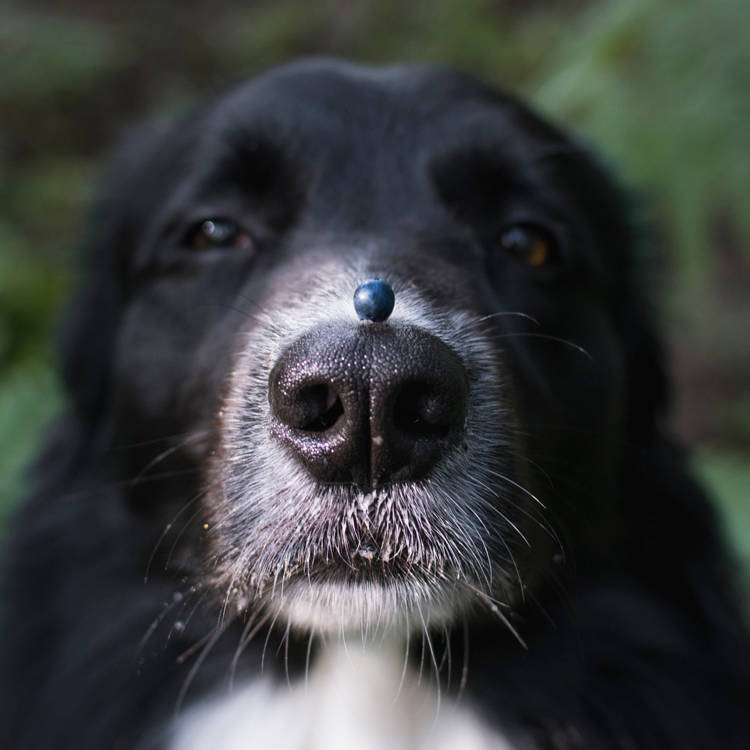
“Superfood” is a word that has been sanded smooth by marketing, and most of the time it means nothing more than “we’d like you to buy this.” So when a fruit actually has research behind its headline benefit, that’s worth pausing on. Blueberries are that rare case. The claim you’ll see everywhere, that blueberries are good for a dog’s brain, is not fluff. It traces back to real work on aging dogs and cognition, and that specific, earned benefit is what makes the blueberry more than just another safe snack.
They’re also, conveniently, one of the easiest and best treats to hand a dog. But let’s lead with the part that’s actually backed up, because it’s the part that gets asserted and never explained.
The brain benefit is real, and here’s where it comes from
A blueberry’s deep blue color comes from anthocyanidins, potent antioxidants. Antioxidants matter because they help neutralize free radicals, the reactive molecules that damage cells over time, and the brain is one of the organs most vulnerable to that kind of oxidative wear as an animal ages.
This is where the research comes in. Studies on aging dogs have found that a diet enriched with antioxidants, the same class of compounds blueberries are loaded with, was associated with meaningful improvements in cognitive function in older dogs. In plain terms: antioxidant-rich diets appeared to help aging dogs stay mentally sharper. That finding is the actual backbone of the “blueberries are brain food” claim. It’s not that a handful of berries is a proven memory pill, the studies looked at antioxidant-enriched diets overall, not blueberries in isolation, but blueberries are a concentrated, dog-safe, whole-food source of exactly the compounds involved. So the benefit you keep hearing about has a real research lineage, which is more than most superfood claims can say.
I’m skeptical of most ‘superfood’ talk, so I like that with blueberries there’s genuine cognition research to point at. I especially like them for my senior patients. A few blueberries a day won’t reverse aging, but they’re a low-calorie way to work more antioxidants into an older dog’s routine, and for a graying muzzle, that’s a small, sensible thing to do.
The rest of the resume
The brain angle is the standout, but blueberries earn their keep on the basics too. They’re loaded with vitamin C and fiber, which is part of why they’re often called one of the most nutritious berries for dogs. They supply phytochemicals, plant compounds studied for helping protect against some cancers. And they are genuinely low in calories, roughly 84 in a whole cup, which makes them an excellent treat for a dog you’d rather not fatten up. Most dogs, for their part, simply love them, they’re sweet, plump, and satisfyingly poppable.
Put together, that’s a treat that’s low-cost, low-calorie, easy to portion into single-berry training rewards, and carrying a real, research-supported upside. Few snacks check all those boxes.
How to serve them
Almost no prep required, which is half the appeal. Wash them and serve whole or lightly mashed. Scatter a few over your dog’s kibble as a topper, or hand them over one at a time as training treats. Freeze them for a cool summer snack. Or try freeze-dried blueberries, whose crunchy texture a lot of dogs go for.
Two cautions and you’re set. First, introduce them slowly and in small amounts, because gorging on any fruit can give a dog an upset stomach, the fiber loosens things up if there’s suddenly a lot of it. Second, keep them plain. Skip blueberry muffins, pancakes, and baked goods, which carry sugar, fat, and sometimes worse, and avoid yogurt-coated or sweetened dried blueberries. And as always, treats overall should stay under about 10 percent of your dog’s daily calories, sitting on top of a complete and balanced diet, not replacing part of it. For the very smallest dogs, a whole blueberry is a mild choking size, so mash or halve them.
What’s new since this was written
Canine cognitive dysfunction, essentially dementia in older dogs, has become a much more openly discussed condition among vets in recent years, and with it, interest in the nutritional side of brain aging. Antioxidants, along with omega-3 fatty acids and MCT oils, now feature in “brain aging” and senior diets and supplements built specifically to support cognition in older dogs. That’s the current context that makes the humble blueberry more relevant than ever: it’s a whole-food, dog-safe source of the antioxidant compounds the research keeps circling back to. It doesn’t replace a veterinary plan for a dog showing signs of cognitive decline, disorientation, changed sleep, house-soiling, but it fits neatly alongside one.
The one steady caution is the same as with any berry: keep it whole and unsweetened. As xylitol and added sugars spread through more processed snacks, the gap between “a bowl of plain blueberries” and “a blueberry-flavored treat” has only widened, and only the first one carries the benefit.
The bottom line
Blueberries are the unusual superfood that lives up to a piece of its billing: antioxidant-rich, low-calorie, beloved by most dogs, and backed by real research linking antioxidant-rich diets to sharper cognition in aging dogs. Serve them plain, fresh, frozen, or freeze-dried, introduce them gradually, keep the portions modest, and they’re one of the smartest small things you can add to your dog’s day, especially as that dog gets older.
References
- Milgram, N.W., et al. “Brain aging in the canine: a diet enriched in antioxidants reduces cognitive dysfunction.” PubMed
- Phytochemicals Fact Sheet — UC Davis Nutrition Department
- Can Dogs Eat Blueberries? — American Kennel Club
- Cognitive Dysfunction Syndrome in Dogs — VCA Animal Hospitals
Common questions
Are blueberries actually good for a dog's brain?
There's real research behind this one. A study in aging dogs found that a diet enriched with antioxidants, the kind blueberries are full of, was linked to improvements in cognitive function. It's a genuine, evidence-backed benefit, not just a marketing claim.
How many blueberries can a dog have?
A small handful is plenty for most dogs. Like all treats, blueberries should make up no more than about 10 percent of your dog's daily calories. Introduce them slowly, since a big serving can loosen a dog's stool.
Can dogs have frozen or dried blueberries?
Plain frozen blueberries make a great cool treat, and freeze-dried ones offer a crunchy texture many dogs enjoy. Just avoid anything with added sugar, yogurt coatings, or sweeteners, and skip blueberry muffins and baked goods.
Not a substitute for your vet. Our guidance is educational. For urgent symptoms, contact a vet or emergency clinic right away. Editorial standards
Dr. Nair is a veterinarian focused on diet and feeding. She covers everyday nutrition, treats, and the many "can they eat this?" questions owners ask, grounding each answer in what is actually safe and sensible for dogs and cats.
Meet our experts ↗Keep reading
 FoodShrimp for Dogs: The Cooking Rule Protects You BothDr. Lena Park · 7 min
 FoodStrawberries Are the One Fruit Treat Even a Dieting Dog Can KeepDr. Priya Nair · 5 min
 FoodThe Carrot Is the Rare Treat You Can Feed Freely. AlmostDr. Priya Nair · 5 min
 FoodWatermelon Is a Great Dog Treat. Two Parts Are NotDr. Priya Nair · 5 min
 FoodThe Bread Is Never the Problem. What's Baked Into It IsDr. Mara Chen · 5 min
 FoodYour Dog Can Have the Potato. It's the Fry That's the ProblemDr. Amara Solis · 5 min