


Shrimp for Dogs: The Cooking Rule Protects You Both
Cooked, plain, shelled shrimp is a great treat for most dogs. The raw-shrimp danger is a two-way street that puts the human cook at risk too. A vet on serving it, and the dogs who should skip it.

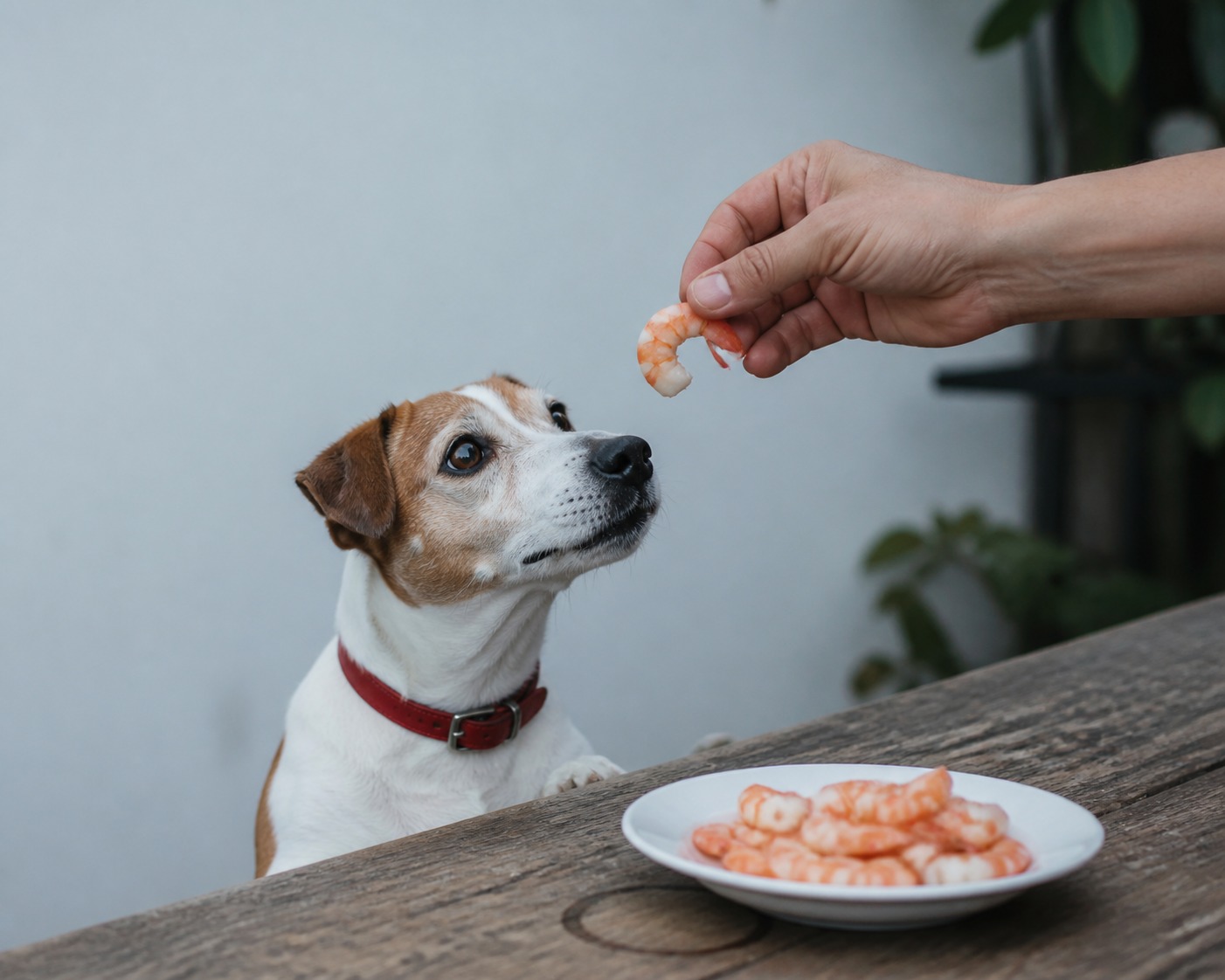
Most food-safety advice for dogs is about protecting the dog. Shrimp is one of the rare cases where the single most important rule, cook it thoroughly, protects you just as much as your dog, because raw shrimp is a hazard to the human standing at the counter deveining it. That two-way risk is the thread that ties this whole article together, and it is the reason “cook it” is not a fussy preference but the one line that matters. Get that right, remove the shell and tail, and shrimp becomes one of the better treats you can share. Here is the full picture, starting with why raw is the real problem.
The cooking rule, and why it’s a two-way street
Raw shrimp can harbor bacteria that cause foodborne illness, Salmonella, E. coli, and Vibrio among them. In a dog, that shows up as vomiting, diarrhea, abdominal pain, loss of appetite, and lethargy. But those same pathogens do not care whose hands they land on. Food-safety surveillance of farmed shrimp has repeatedly turned up these bacteria, including antibiotic-resistant strains, in raw product, which is exactly why raw shrimp is a documented risk to the people preparing it, not just the pet eating it.
That is what makes the cooking rule so clean. Fully cooking shrimp neutralizes the hazard for both parties at once. You are not choosing between your convenience and your dog’s safety, you are doing the one thing that covers everyone in the kitchen. Boil or grill it plain, all the way through, and the central danger is gone.
The shell and the tail: off before it goes down
After cooking, the next rule is physical, not microbial. Remove the shell and tail before serving. They can scratch the esophagus on the way down or become a choking hazard, and eating a pile of shells can lead to an intestinal obstruction. When you discard them, keep them out of the dog’s reach, a trash-diving dog can find enough shell to cause trouble.
What shrimp actually offers
With raw risk and shells handled, the upside is real. Shrimp is low in calories but nutrient-dense, which makes it a smart special-occasion treat:
- Protein for cell formation, growth, and repair.
- Omega-3 fatty acids, which support skin, joints, and heart health and help absorb fat-soluble vitamins.
- Vitamin B12 for red blood cells and brain function.
- Iodine for thyroid function.
- Astaxanthin, the antioxidant that gives shrimp its color, which helps protect cells from free-radical damage.
- Potassium and phosphorus for muscle function and bone health.
One honest caveat on the omega-3s: an occasional shrimp treat delivers only a modest amount, so think of shrimp as a tasty, nutrient-containing snack rather than a therapeutic dose of anything. If your dog needs omega-3s for a skin or joint condition, that is a conversation about supplements, not shrimp.
The dogs who should be careful
Shrimp is relatively high in cholesterol, and that is the reason it is not a universal yes. Dogs with a history of pancreatitis or a sensitive, easily-upset stomach are the ones to hold back.
Shrimp is one of those treats I am happy to green-light for most dogs, as long as it is cooked, plain, and shelled. The high cholesterol gives me pause for dogs prone to pancreatitis, so for those pups I would keep it to a rare taste or skip it and pick a leaner protein like plain cooked chicken.
There is also the question of allergy. Shellfish allergy in dogs is possible but poorly documented and rarely diagnosed. If your dog vomits once or gets loose stool after shrimp, treat it as an intolerance and stop offering it. True anaphylaxis, hives, facial swelling, severe itching, breathing changes, weakness, or collapse, is a medical emergency: get to a veterinarian immediately.
How to serve it
Keep it simple and plain. Cook the shrimp fully, boiled or grilled, and save the deep-frying, butter, and Old Bay for the humans, seasonings and oils are where shrimp goes wrong for dogs. Remove the head, shell, and tail, then cut the shrimp into small, bite-sized pieces. Keep portions small, about one to two shrimp for a medium dog, and offer them only occasionally, under the 10 percent of daily calories all treats share.
The bottom line
Shrimp is a safe, nutritious, low-calorie treat for most dogs when it is fully cooked, plain, and free of shell and tail. The reason the cooking rule matters so much is that raw shrimp threatens you and your dog alike, so cooking it thoroughly is the one step that protects the whole household. Keep portions small, skip it or go easy for dogs prone to pancreatitis given the cholesterol, and treat it as an occasional indulgence rather than a staple.
References
- FDA. “Selecting and Serving Fresh and Frozen Seafood Safely.” https://www.fda.gov/food/buy-store-serve-safe-food/selecting-and-serving-fresh-and-frozen-seafood-safely.
- Bakr, W. M. K., et al. “Detection of Antibiotic-Resistant Bacteria in Farmed Shrimp.” Journal of Food Protection. https://pubmed.ncbi.nlm.nih.gov/.
- Bauer, J. E. “Therapeutic Use of Fish Oils (Omega-3 Fatty Acids) in Companion Animals.” Journal of the American Veterinary Medical Association. https://avmajournals.avma.org/.
- U.S. Department of Agriculture, FoodData Central. “Shrimp, Cooked.” https://fdc.nal.usda.gov/.
Common questions
Why can't dogs eat raw shrimp?
Raw shrimp can carry Salmonella, E. coli, and Vibrio, bacteria that cause foodborne illness in dogs and in the people handling it. Thorough cooking is the dependable safeguard for both of you.
Which dogs should avoid shrimp?
Dogs with a history of pancreatitis or sensitive stomachs should be cautious or skip it, because shrimp is relatively high in cholesterol. Check with your vet for these dogs.
How much shrimp can a dog have?
Small portions, roughly one to two cooked shrimp for a medium dog, offered occasionally and kept under the 10 percent of daily calories all treats share.
Not a substitute for your vet. Our guidance is educational. For urgent symptoms, contact a vet or emergency clinic right away. Editorial standards
Dr. Park is a board-certified emergency and critical care specialist. She reviews our health and safety content for clinical accuracy and contributes guides on recognising urgent conditions. Her focus is helping owners act quickly and correctly when it matters most.
Meet our experts ↗Keep reading
 FoodCranberries Won't Cure Your Dog's UTI. The Science Is Blunt About It.Dr. Nina Kohl · 6 min
 FoodThe Avocado Panic Is Half Wrong. Here's the Half That's Real.Dr. Ravi Mehta · 7 min
 FoodWith Peanuts, Read the Jar Before You Read the DogDr. Lena Park · 7 min
 FoodOne Lick of Cool Whip Won't Hurt Your Dog. The Habit Will.Dr. Amara Solis · 6 min
 Food"Dogs Are Basically Wolves" Is How Raw Chicken Gets Fed. Here's the Catch.Dr. Lena Park · 7 min
 FoodThe Bread Is Never the Problem. What's Baked Into It IsDr. Mara Chen · 5 min