


Your Dog Can Have the Potato. It's the Fry That's the Problem
The potato in a french fry is harmless to dogs. What makes fries a bad idea is everything we do to the potato: the frying oil and the salt. Here's the line between a stolen fry and a vet visit.

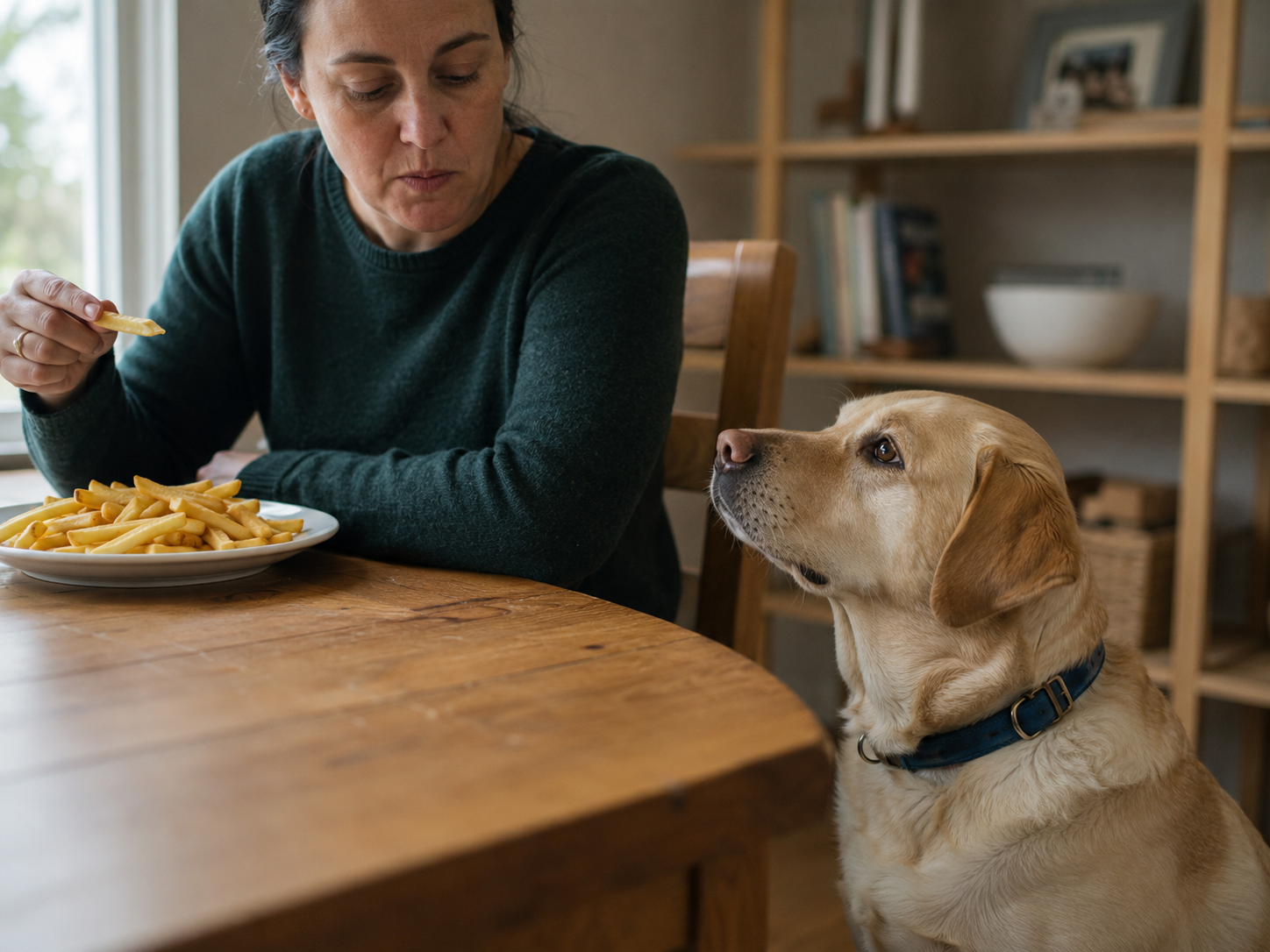
Here is the part people get backwards about fries. When a dog owner panics after their pup steals a fry, they are usually worried about the potato, and the potato is the one ingredient in the whole fry that is not a problem. Plain cooked potato is fine for dogs. What turns a potato into a food you should not share is what happens to it on the way to becoming a fry: it gets dropped in oil and dusted with salt.
Keep that straight and the whole topic gets simpler. Your dog can have the potato. It is the fry they can’t.
A fry or two versus a pile of them
Nobody needs to panic over one stolen fry. If your dog nabs one at the drive-through, that is not a poisoning, it is a small indulgence. The trouble is dose. The same fry becomes a real problem when it is one of many, or a regular habit, because the things that make fries delicious are the things that wear on a dog’s body.
So the honest framing is “very occasional, very small,” not “never a single one.” The reason to hold that line lives entirely in the oil and the salt.
What the oil does
Deep frying, in corn, sunflower, canola, or other vegetable oil, is what gives a fry its golden crunch, and it is a heavy load of fat. A big hit of fatty food can cause vomiting, diarrhea, and belly pain that lingers a couple of days. More seriously, it can set off pancreatitis, an inflamed pancreas that is painful and can require emergency care. Over time, a diet padded with greasy food drives weight gain, and the extra weight brings its own risks, from diabetes to joint disease.
Pancreatitis is the diagnosis I dread telling an owner about, because it often traces back to one big fatty splurge they didn’t think twice about. A dog that hoovers up a dropped carton of fries isn’t just going to have a bad night. That fat load is exactly the kind of thing that lands a dog in the hospital.
What the salt does
A little salt is a normal part of a dog’s diet. A lot of it is not. Heavy salt can cause dehydration, vomiting, and diarrhea, and in extreme cases salt toxicity, which affects the nervous system. Fries are salted for human taste, which is more than a dog needs. And gourmet or seasoned fries raise the stakes further, because toppings like garlic and onion are toxic to dogs in moderate to high amounts.
The ingredient breakdown
It helps to see the fry as three parts. The potato is the harmless one, offering antioxidants, vitamins, minerals, and a starch that helps regulate blood sugar. The cooking oil is the fat that upsets digestion and adds weight. The seasoning is where a little salt is tolerable but excess salt, garlic, and onion become genuine hazards. Only one of the three is a problem for the potato itself, and it isn’t the potato.
If your dog eats fries
For a fry or two, you generally do not need to do anything. For more than that, watch for digestive upset, and see a vet if vomiting or diarrhea lasts beyond 24 hours, both to prevent dehydration and to catch anything more serious.
If your dog really gets into a large serving, call your vet proactively rather than waiting. Doing so can head off pancreatitis and a possible hospital stay. And if those fries were seasoned with garlic or onion, call ahead regardless of how your dog seems, because toxicity signs can lag behind the meal.
Better ways to treat your dog
If your fries are drawing a puddle of drool, you do not have to leave your dog out. Plenty of foods scratch the same itch without the grease. Reach first for fruits and vegetables, which satisfy the snacking urge without piling on calories or additives: plain popcorn, carrots (raw or cooked), apple slices, banana, cucumber, berries, melon, and green beans or broccoli, raw or cooked. Serve everything plain, remove rinds, stems, and seeds, wash well, and cut into bite-sized chunks.
And if it is specifically the potato your dog wants, give them the good version. Plain boiled or baked potato or sweet potato, with nothing on it, is genuinely nutritious, sweet potato especially. Just never raw, since raw potato’s solanine can cause digestive and neurological problems and large raw pieces are a choking risk for small dogs.
What’s new since this was written
The context that has shifted most is weight. Recent veterinary surveys put the majority of U.S. dogs in the overweight-to-obese range, which changes how a “harmless” fry adds up. It is not that one fry matters, it is that treats like fries are a leading source of the extra daily calories quietly pushing dogs past a healthy weight. Swapping the fry for a low-calorie vegetable is a small, repeatable choice that actually helps.
The pancreatitis link also remains one of the clearest food-to-illness stories in veterinary medicine: sudden high-fat meals are a well-recognized trigger. That is the strongest single reason to keep fries an exception rather than a habit, no matter how convincing the puppy-dog eyes get.
References
- Thompson, Larry, DVM, PhD, DABVT. “Salt Toxicosis in Animals.” Merck Veterinary Manual. https://www.merckvetmanual.com/toxicology/salt-toxicosis/salt-toxicosis-in-animals
- Brooks, Wendy, DVM, DABVP. “Pancreatitis in Dogs.” Veterinary Partner. https://veterinarypartner.vin.com/default.aspx?pid=19239&id=4952412
- “Potatoes.” The Nutrition Source, Harvard T.H. Chan School of Public Health. https://nutritionsource.hsph.harvard.edu/food-features/potatoes/
- Association for Pet Obesity Prevention. “2024 Pet Obesity Survey Results.” https://www.petobesityprevention.org/2024-survey
Common questions
What happens if my dog eats a lot of fries?
Watch for vomiting, diarrhea, and belly pain. A large, greasy load can also trigger pancreatitis, and gourmet fries seasoned with garlic or onion add a toxicity risk. If your dog eats a big serving or shows signs lasting more than a day, call your vet.
Can dogs eat potatoes or sweet potatoes?
Yes, when they're plain and cooked. Boiled or baked potato and sweet potato, without butter or seasoning, are fine and even nutritious. Never feed raw potato, which contains solanine and can cause digestive and neurological problems.
Not a substitute for your vet. Our guidance is educational. For urgent symptoms, contact a vet or emergency clinic right away. Editorial standards
Dr. Solis is a board-certified veterinary dermatologist with over twelve years of clinical experience. She advises on skin conditions, allergies, and grooming practices that affect coat and skin health. All dermatology and allergy content at The Pet Times is reviewed by her team before publication.
Meet our experts ↗Keep reading
 FoodBeef Jerky and Dogs: The Word Tells You Nothing, the Label Tells You EverythingDr. Mara Chen · 7 min
 FoodButternut Squash Is a Cozy Win for Dogs. Skip One PartDr. Amara Solis · 5 min
 FoodThe Bread Is Never the Problem. What's Baked Into It IsDr. Mara Chen · 5 min
 FoodPretzels and Dogs: The Number That Matters Isn't One BiteDr. Priya Nair · 5 min
 FoodThe Persimmon Rule for Dogs: Flesh Yes, Everything Else NoDr. Priya Nair · 7 min
 FoodShrimp for Dogs: The Cooking Rule Protects You BothDr. Lena Park · 7 min