


Your Cat Can Learn to High-Five. The Secret Is a Sticky Note.
The high-five is the perfect first cat trick, and it comes down to one clever prop. A step-by-step, force-free guide to teaching it, plus how to troubleshoot the paw-versus-nose problem and why trick training is real enrichment.

Affiliate disclosure. This article contains affiliate links. We may earn a small commission if you buy through a link, at no extra cost to you. How we handle recommendations.
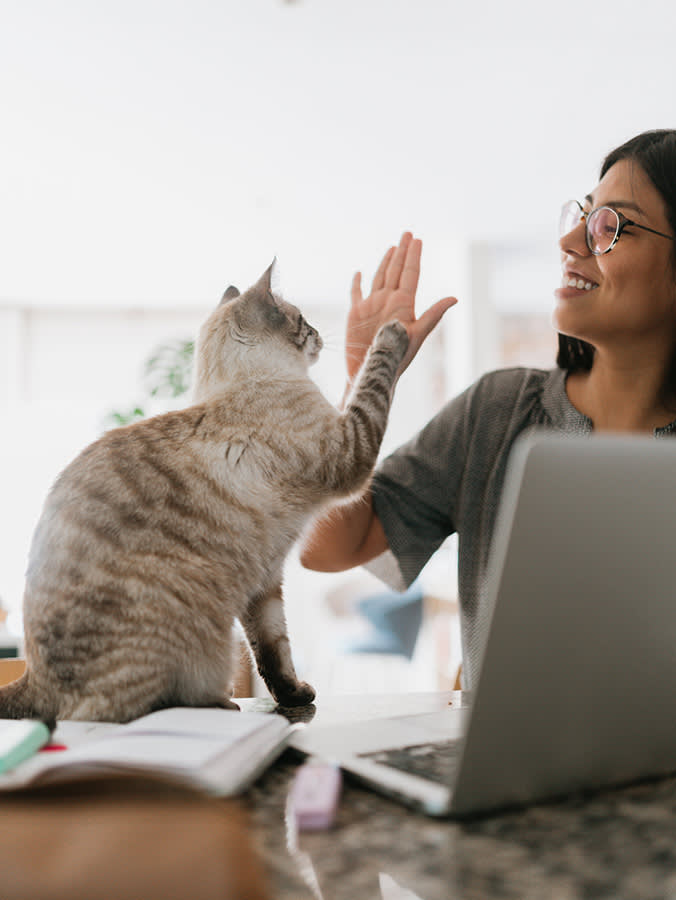
You’re at a gathering and someone’s dog is running through its party tricks, sit, shake, roll over, while you, a cat person, quietly assume your cat would never lower themselves to such theatrics. Here’s the thing: your cat absolutely could. Cats aren’t above tricks; they’re just rarely asked in a way that works for them. And the single best trick to start with, the one that’s genuinely useful for bonding and reliably lands a laugh, is the high-five.
The whole thing hinges on one humble prop: a sticky note. Here’s how to use it.
First, the one rule that makes cat training work
Cat training runs entirely on positive reinforcement. In practice, that looks like this: the moment your cat does the thing you’re after, a high-value treat appears, and when they don’t, nothing unpleasant follows. You’re teaching, not correcting. A correct response pays out; a wrong one just means another try. Because learning any new skill takes lots of repetition, give both the student and yourself, the teacher, plenty of grace.
This is also the hard line on method: it is never okay to spray a cat with water or lean on any method that works through fear, pain, or plain discomfort. That’s not just ineffective, it’s unethical, and it damages the relationship you’re trying to build. Treats and patience only.
Set your expectations
Two questions come up before anyone starts. First, what age? You can begin teaching a kitten tricks the day they come home, but expect a very short attention span, sometimes 30 seconds before a distant sound or a passing bug wins out. As a cat approaches a year old, they can reasonably focus for several minutes, even up to ten, as long as you keep it engaging and the treats keep coming. And it is genuinely never too late: a senior cat can learn to high-five just fine.
Second, how long will it take? It depends. Some cats have a new trick down in a few sessions; others take days or weeks. The variables are your skill as a trainer, especially your timing in delivering a click or treat and your judgment about when to make things harder, how focused your cat is, and how much prior training experience they have. Here’s the encouraging part: a cat who already has a couple of tricks banked picks up the next one far quicker, because they’ve cracked the underlying game. They get that performing some action is what unlocks the treat; the only puzzle left is which action.
The high-five, one sticky note at a time
Be generous with treats through all of this. Every reward makes the behavior more likely to happen again, and early on the goal is simply to convince your cat that pawing at things pays.
Start on the floor. With your cat sitting, let them see a treat, set it down, and lay a sticky note over the top of it. The instant they swat or drag the note aside to reach the treat, hand it over (clicker trainers: click the moment the paw makes contact, then treat). This opening move barely resembles a high-five, but it’s the foundation: you’re teaching “touch this with your paw.” Repeat until pawing the note is automatic.
Now lift the target. Hold the sticky note just above the floor and reward paw-touches there, then raise it a little at a time across sessions until your cat is reaching upward to touch it at roughly hand height. Next, transfer the note to your open palm and present your hand. Every paw-touch now looks like an actual high-five, and every one earns a treat.
Then fade the prop. Tear the sticky note in half, press one half onto your palm, and reward the high-five. Keep making the piece smaller and smaller, but only shrink it once your cat is really solid at the current size, rewarding the touch at every stage. Finally, present your bare hand with nothing on it. When your cat’s paw meets your palm, that’s the trick, treat it, then keep practicing until your cat is smoothly, proudly high-fiving on cue.
When it doesn’t go to plan
Training rarely runs perfectly, so here’s how to fix the two most common snags. If your cat starts poking the note with their nose rather than a paw as it rises, you’ve climbed too fast. Drop your hand, bank more reps at that easier height, and then inch upward in smaller steps this time.
Sometimes the note peels loose and clings to your cat’s paw or fur, which looks alarming and isn’t a problem at all. Just offer a treat as you peel it off and go straight into another rep. And if your cat checks out mid-session, that’s your cue to make the next session extremely short, ending it while your cat still wants more rather than after they’re already “done.”
The habits that make any trick stick
A few training principles apply to the high-five and to anything else you teach. Cats do far better with lots of short sessions than with occasional long ones, so aim for a couple of one-to-two-minute sessions a day rather than a single marathon. Keep them fun with treats, and consider switching up which treats you use, a fresh, high-value treat at the start of a session can noticeably boost a cat’s motivation. Always end on a positive note, on a rep your cat nailed. And don’t get discouraged if it doesn’t click right away; the time itself is well spent. A cat-friendly clicker can sharpen your timing, but your hand and a treat pouch are enough to start.
What newer thinking adds
Trick training isn’t just a party gag; it’s some of the best enrichment you can give a cat. Modern feline-welfare guidance treats short, positive training sessions as valuable mental stimulation and a relationship-builder, and there’s a practical payoff beyond the fun. The exact skill behind the high-five, teaching a cat to deliberately touch a target on cue, is the same foundation used in “cooperative care,” where cats learn to participate willingly in nail trims, medication, and vet handling instead of being restrained. So the sticky-note trick that impresses your friends is also quietly building the calm, willing cat who makes the next vet visit dramatically less stressful. Force-free, treat-based training is now the standard that veterinary and feline organizations recommend precisely because it works and protects the bond at the same time.
The high-five is my favorite starter trick because it teaches the cat the single most useful idea in training: my paw doing a thing makes good stuff happen. The sticky note does the heavy lifting, it gives the cat an obvious target, and then you just make it smaller until it disappears. Keep the sessions short, quit while they’re still into it, and never, ever reach for a spray bottle. A cat who learns to high-five is a cat who’s learned that working with you is the best game in the house.
Grab a stack of sticky notes and a handful of treats, and give it a week of two-minute sessions. Then, yes, show everyone what your amazing cat can do.
References
- American Association of Feline Practitioners & International Society of Feline Medicine. Feline-friendly handling and low-stress training guidelines.
- Fear Free Pets. Cooperative care and force-free training principles.
- Vitale Shreve, K. R., Mehrkam, L. R., & Udell, M. A. R. (2017). Social interaction, food, scent or toys? A formal assessment of domestic pet and shelter cat preferences. Behavioural Processes, 141, 322–328.
Common questions
Can you really train a cat to high-five?
Yes. Cats are as trainable as they are adorable, and the high-five is one of the easiest tricks to start with. Using treats and a sticky note as a target, most cats can learn it, though some pick it up in a few sessions and others take days or weeks.
What's the best age to start training a cat?
Any age. You can start with a kitten the day you bring them home, though their attention span may be 30 seconds at first. By around a year old, a cat can focus for several minutes at a time. And it's never too late; cats of any age can learn tricks.
How long does it take to teach a cat a trick?
It varies. Some cats learn a trick in just a few sessions; others need days or weeks. It depends on your timing as a trainer, how focused your cat is, and how much training experience they already have. Once a cat has learned a few tricks, new ones come faster.
Should I ever spray my cat with water during training?
No. It's not okay to spray your cat with water, and any training method that relies on pain, fear, or discomfort is unethical. Effective cat training is entirely positive: your cat earns treats for getting it right and simply gets to try again if they don't.
Tom Hadley writes about training and behavior, helping owners understand what their pets are trying to tell them. His work covers everyday manners, decoding common behaviors, and the small changes at home that make dogs and cats easier to live with.
Meet our experts ↗Keep reading
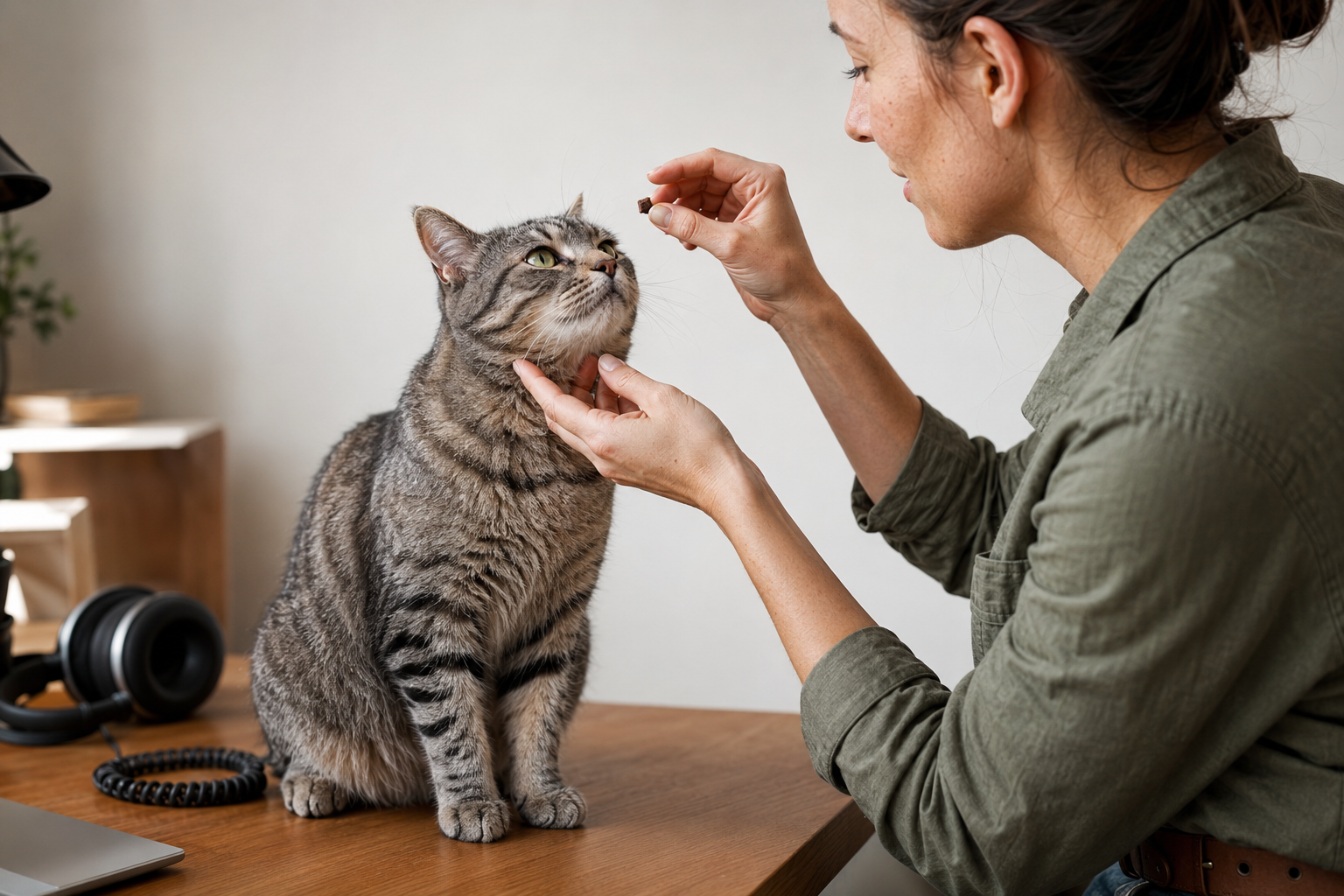 Health & WellnessStop Wrestling Your Cat for Pills. Train Them Instead.Dr. Lena Park · 9 min
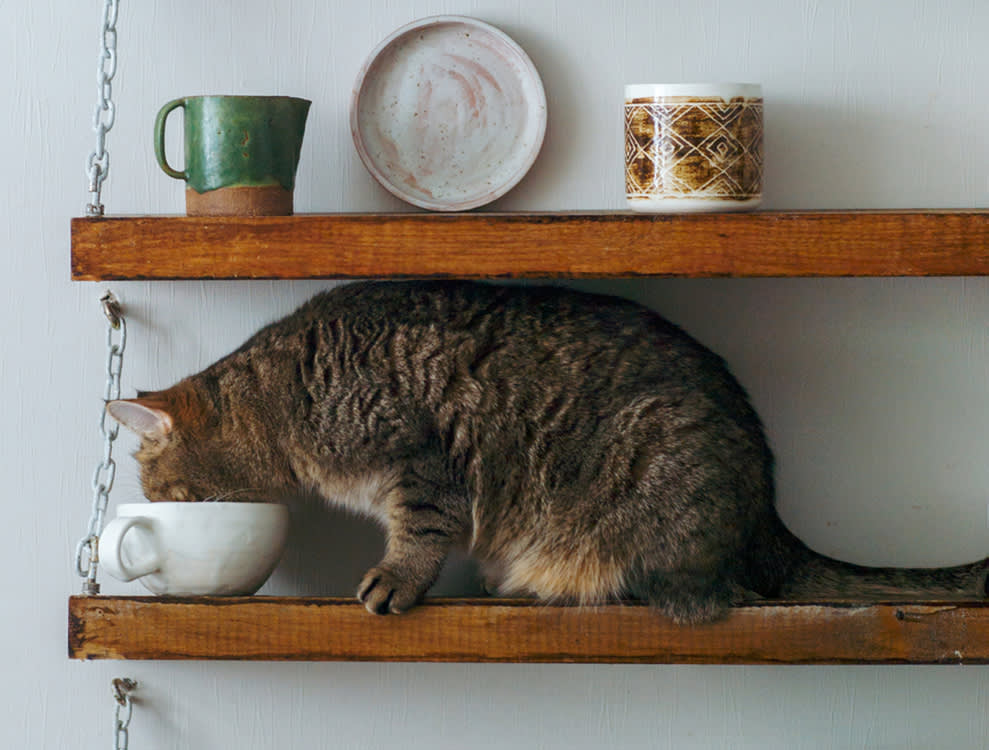 TrainingYour Cat's Bowl Is Boring. Make Her Hunt for Dinner.Dr. Amara Solis · 7 min
 TrainingCats Are Not the Loners We Made Them Out to BeDr. Nina Kohl · 4 min
 TrainingYes, You Can Train a Cat. You've Just Been Offering the Wrong Deal.Tom Hadley · 7 min
 TrainingThe Laser Pointer Isn't the Problem. The Missing Ending IsDr. Ravi Mehta · 5 min
 TrainingYour Cat's Paws Feel Everything. That's Why the Tin Foil Trick Fails.Dr. Nina Kohl · 5 min