


Your Cat Is Built to Eat Pork. The Deli Counter Is Where It Goes Wrong
Pork is a fine protein for an obligate carnivore, and cat food companies use it for a reason. The danger isn't the meat, it's the salt, the seasoning, and the raw-versus-cooked question. Here's how to share it safely.

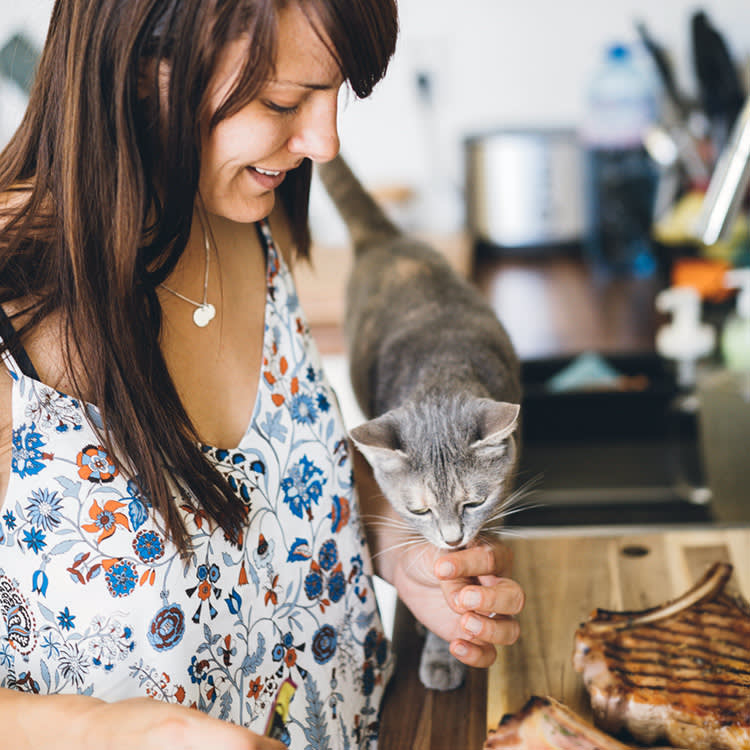
There is a small irony in worrying about whether cats can eat pork. Cats are obligate carnivores, animals whose entire biology is organized around eating meat, and pork is meat. On paper, a pig is exactly the kind of thing a cat’s body is designed to run on. The reason “can cats eat pork” is even a question is that almost nobody eats pork plain. We cure it, salt it, smoke it, and season it, and that is where the trouble starts. The honest answer is that the meat is fine and the deli counter is the problem, so this piece is really about telling those two apart.
Why pork suits a carnivore in the first place
Cats need animal protein in a way people do not. Protein is their main energy source and supplies amino acids their bodies use as building blocks for nearly everything, and pork delivers it. That is not a fringe claim; plenty of commercial cat foods use pork precisely because it is a good source of certain nutrients. Beyond protein, pork carries fat that cats use for energy, healthy skin and coat, and insulation, plus B vitamins, potassium, and zinc that support growth, immune function, blood pressure, and dozens of everyday biological reactions.
The one caveat that applies even to good pork is that it cannot be the whole diet. Pork alone does not supply everything a cat needs, most importantly taurine at the levels a cat requires, so it belongs on top of a complete and balanced cat food, never in place of one.
Owners are often surprised when I tell them the pork itself is not the issue. A cat is a meat specialist. What trips cats up is everything we do to pork before it reaches the plate. A plain cooked cube is a reasonable treat. A strip of bacon is basically a salt and fat delivery system, and a small cat has very little margin for either.
The cure is the catch
Here is the distinction that matters most. Cured pork products, bacon, ham, prosciutto, chorizo, and the like, are loaded with salt, and often fat and preservatives on top of it. Too much salt is a real problem for a small animal: it can raise blood pressure, strain the heart, upset the stomach, and in extreme cases cause dangerous swelling in the brain. Many cured meats also carry nitrates and other preservatives that are not something you want a cat eating regularly, with some preservatives linked to cancer risk when consumed often. None of that is about the pig. It is about what curing does to the meat.
The seasoning problem is just as important and easier to overlook. Pork cooked for people is frequently prepared with onion or garlic, both of which are genuinely toxic to cats and damage their red blood cells, along with heavy salt, dairy, or sugar. A plain pork chop is fine; a pork chop that spent the afternoon in a garlic marinade is not. The safest move is to set aside a plain, unseasoned piece for your cat before the seasoning goes on, or cook a small separate portion just for them.
Raw pork is a hard no
Cats should not eat raw or undercooked pork. Undercooked meat can carry pathogens, and pork specifically can harbor parasites, including the organisms behind toxoplasmosis and trichomonosis. Commercially raised pork in the United States is usually free of these because of deworming practices on large farms, but pigs raised on small free-range farms or in other countries can be higher risk, and you often cannot tell by looking. The reliable fix is heat: cook pork all the way to an internal temperature of 160 degrees Fahrenheit, which kills the pathogens, before any of it goes to your cat.
Serving it without creating a new problem
Even good, plain, cooked pork can go wrong at the moment of serving. Offer it in small, bite-sized pieces a cat can easily chew and swallow. Skip large chunks of tough meat, anything with bones or skin, and every inedible extra that comes with cooked pork, the skewers, toothpicks, and cooking twine, because those are choking hazards and can cause life-threatening intestinal blockages. A cube of plain lean pork the size of a treat is the whole idea; a hunk off the roast with the string still on is an emergency waiting to happen.
Where pork fits in the bigger picture
The rule that governs pork governs every human food for a cat: it is a supplement, not a staple. As long as at least ninety percent of a cat’s diet comes from a balanced cat food formulated for their carnivore needs, the occasional plain treat is fine. Cats also have sensitivities that surprise people, reacting badly to foods heavy in dairy, salt, or fat that seem harmless to us, and some human foods are outright toxic, including onions, garlic, grapes, and chocolate. So the pork question folds into a single habit: before you share anything off your plate, confirm it is safe and unseasoned, and when in doubt, ask your vet or a pet poison hotline rather than guessing.
The bottom line
Cats are carnivores, so pork is a natural fit as a protein, and cat food makers use it for good reason. What makes pork risky is never the meat itself but the salt of curing, the toxicity of seasonings like onion and garlic, the parasite risk of undercooked meat, and the choking and blockage hazards of bones, skin, and skewers. Serve small pieces of plain, fully cooked, unseasoned pork as an occasional treat, keep the bacon and ham for yourself, and let a complete cat food do the real work.
References
- U.S. Department of Agriculture, FoodData Central. “Pork, Fresh, Ground, Cooked: Nutrients.” https://fdc.nal.usda.gov/
- Companion Animal Parasite Council. “Toxoplasma gondii.” https://capcvet.org/
- Journal of Feline Medicine and Surgery. “The Conundrum of Feline Trichomonosis.” https://journals.sagepub.com/home/jfm
- ASPCA. “People Foods to Avoid Feeding Your Pets.” https://www.aspca.org/pet-care/animal-poison-control/people-foods-avoid-feeding-your-pets
Common questions
Can cats eat raw pork?
No. Raw or undercooked pork can carry parasites and bacteria. Cook pork to an internal temperature of 160 degrees Fahrenheit to make it safe before offering any to your cat.
Is bacon or ham OK for cats?
Skip it as a routine treat. Cured pork like bacon, ham, and prosciutto is very high in salt and fat and often contains preservatives, all of which make it a poor choice for a small animal. A rare tiny nibble is unlikely to harm a healthy cat, but it should not be a habit.
How much pork can a cat have?
Treat it as an occasional extra, not a meal. All treats and table foods together should stay under about ten percent of your cat's daily calories, with the rest coming from a complete and balanced cat food.
Not a substitute for your vet. Our guidance is educational. For urgent symptoms, contact a vet or emergency clinic right away. Editorial standards
Dr. Solis is a board-certified veterinary dermatologist with over twelve years of clinical experience. She advises on skin conditions, allergies, and grooming practices that affect coat and skin health. All dermatology and allergy content at The Pet Times is reviewed by her team before publication.
Meet our experts ↗Keep reading
 FoodYour Cat Can't Taste Sweet. So Which Fruits Are Even Worth Offering?Dr. Amara Solis · 6 min
 FoodPeanut Butter Is a Dog Trick. Here's Why It's Riskier for Your CatDr. Mara Chen · 4 min
 FoodYogurt Won't Fix Your Cat's Gut. Here's What Actually Might.Dr. Lena Park · 6 min
 FoodYour Cat Can Eat Sweet Potato. Your Cat Also Doesn't Care About ItDr. Mara Chen · 6 min
 Food'Superfood' Means Nothing to Your Cat. Spinach Included.Dr. Nina Kohl · 5 min
 FoodCats Can Eat Eggs. Just Never Raw.Dr. Mara Chen · 4 min