


Peanut Butter Is a Dog Trick. Here's Why It's Riskier for Your Cat
Peanut butter isn't toxic to most cats, but it's a habit borrowed from dog people, and the 'sugar-free' label is the part that can actually hurt your cat. Read this before you scoop.

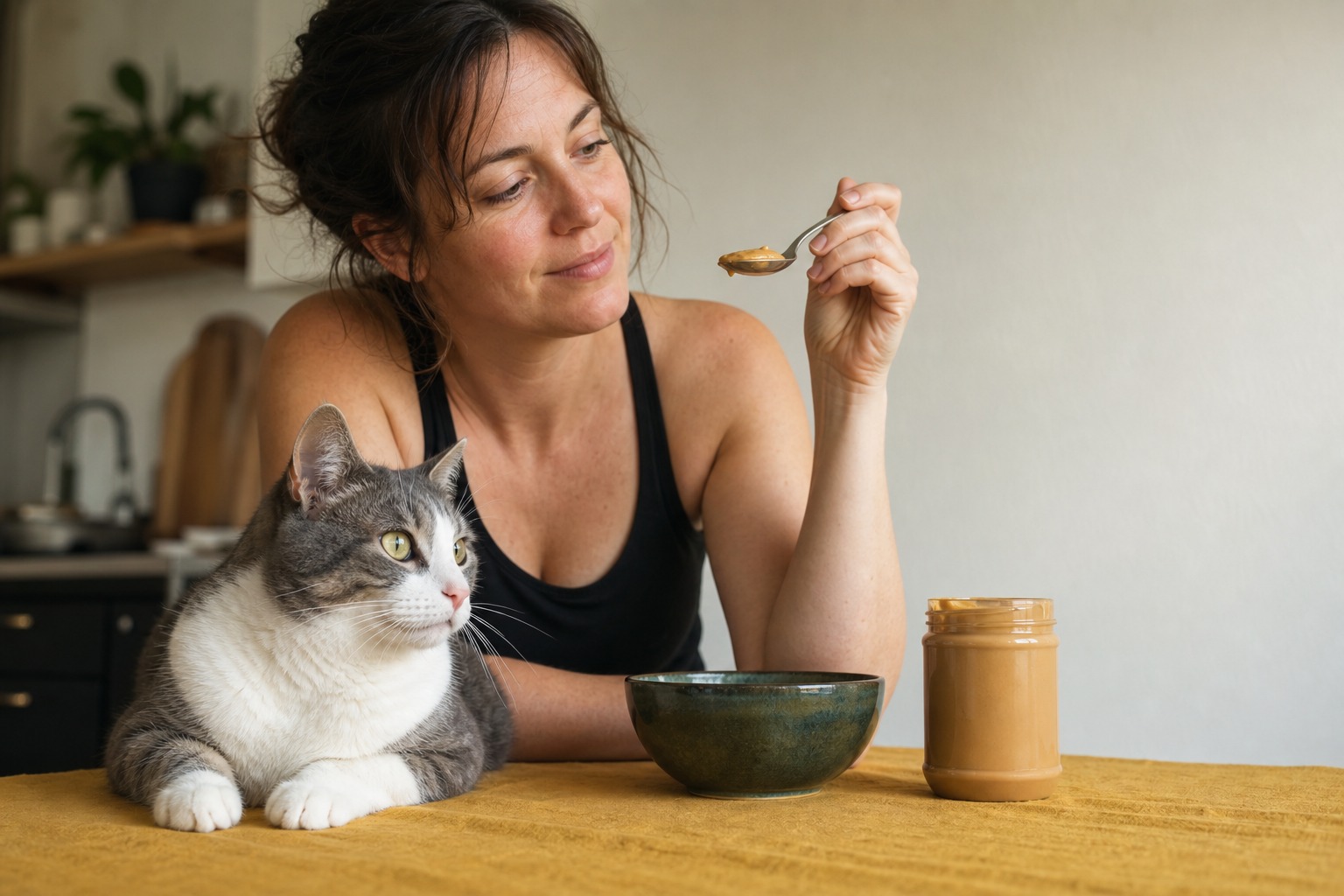
Watch enough dog content and you start to believe peanut butter is a universal pet hack. It coats the lick mat, hides the pill, stuffs the chew toy. So when a cat needs medicating, the jar is right there, and the logic feels obvious. It isn’t. Peanut butter is a habit cats inherited from dogs, and it travels over to felines worse than people assume, not because it’s poisonous, but because almost everything that makes it useful for a dog makes it a marginal call for a cat.
The honest answer is that a tiny lick of plain peanut butter won’t hurt most cats. The catch is what “plain” really means, and it’s a bigger catch than the fat or the calories everyone fixates on.
The label is the real hazard, not the peanut
The single most dangerous thing in a jar of peanut butter isn’t the peanut. It’s xylitol, an artificial sweetener that increasingly hides in “sugar-free,” “no sugar added,” and protein-forward spreads, and that now turns up on ingredient lists under the friendlier alias “birch sugar.”
In dogs, xylitol is unambiguously toxic: it triggers a surge of insulin that drops blood sugar dangerously low and can cause liver failure. The picture in cats is murkier. A clear, proven link to harm in cats hasn’t been established, and cats may be partly spared simply because they don’t care about sweet flavors and won’t seek the stuff out. But “probably less affected” is not “safe,” and you don’t want your cat to be the data point that settles the question.
I treat xylitol as a hard no for every pet in the house, cats included, even though the evidence in cats is thinner. It costs you nothing to read the label and pick a plain peanut butter. If your cat does get into a xylitol product, that’s a call to your vet or animal poison control, not a wait-and-see.
This is not a fading concern. In the ASPCA Animal Poison Control Center’s accounting of 2024, human foods and drinks were the second-most-common category of pet-poisoning calls, and xylitol-sweetened gum sat squarely inside that group alongside grapes, raisins, onions, and garlic. The sweetener is spreading into more snack foods, not fewer, which is exactly why checking the jar matters more now than it did a few years ago.
Why the same dab does less for a cat than a dog
Set xylitol aside, and plain peanut butter still earns only a shrug for cats, for reasons that come down to feline biology.
Cats are obligate carnivores wired around protein and savory “umami” tastes. They famously can’t taste sweetness at all, so the flavor that makes peanut butter a jackpot for a dog lands flat for a cat. What they do get is a concentrated dose of fat and, in most commercial brands, a slug of salt, in a body that’s a fraction of a dog’s size. The math is unforgiving:
- It’s calorie-dense. The oils that make peanut butter spreadable are pure energy, and weight creeps onto cats fast. A daily dab adds up.
- It’s often salty. Excess sodium can cause vomiting, diarrhea, or excessive thirst, and over the long haul contributes to heart strain.
- It’s a genuine choking risk. That thick, claggy texture is hard for a cat to manage, which is why a “little” really has to mean little.
- Allergies happen. Nut allergies, including to peanuts, are rare in cats but real, and a severe reaction can escalate to anaphylaxis. Introduce any new food once, alone, so you can spot a reaction.
None of that makes a single lick an emergency. It makes peanut butter a treat with poor returns: real downside, no nutritional upside, and a better alternative sitting in the fridge.
If you only want to hide a pill, skip the jar
This is where the dog-borrowed habit really shows. The most common reason people reach for peanut butter with a cat is medication, and it’s the use case where peanut butter is the weakest choice. A meat-based pill pocket, a pea-sized smear of a cat-formulated lickable treat, or a dab of plain meat paste hides a pill just as well, carries no xylitol question, and actually tastes like something your carnivore wants. Save yourself the label-reading and use a tool built for the species.
If you still want to offer peanut butter as an occasional novelty, choose a plain butter whose only ingredients are peanuts (and maybe salt), keep the portion to a single small lick, and never make it routine.
The bottom line
Cats can have peanut butter, but it’s a borrowed trick that fits them poorly. The fat and salt count for more in a small carnivore, the sweet payoff they’d get from it doesn’t exist, and the “sugar-free” jars carry a xylitol risk that’s well-proven in dogs and simply unproven in cats. Read every label for xylitol and birch sugar, keep any taste tiny and rare, and for the job you probably bought it for, hiding medication, reach for a meat-based treat instead.
References
Common questions
Why is peanut butter a bigger deal for cats than dogs?
It isn't more toxic to cats, but cats are small, indifferent to sweets, and gain weight easily, so the fat and salt hit harder per pound and the treat offers them less in return. The xylitol risk applies to any pet in the house.
Is peanut butter good for cats?
Not really. It's high in fat and often salt, poses a choking risk because it's so sticky, and gives an obligate carnivore nothing it actually needs. A meat-based treat is a better choice.
Not a substitute for your vet. Our guidance is educational. For urgent symptoms, contact a vet or emergency clinic right away. Editorial standards
Dr. Chen is a small-animal veterinarian who leads health and safety coverage at The Pet Times. She writes and reviews the bulk of our illness, condition, and safety content, translating clinical guidance into clear, practical advice owners can act on at home.
Meet our experts ↗Keep reading
 FoodYour Cat Doesn't Want a Popsicle. It Wants What the Popsicle Pretends to Be.Dr. Ravi Mehta · 5 min
 FoodFor a Carnivore, 'Is It Safe?' Is the Wrong Question About Human FoodDr. Priya Nair · 6 min
 FoodCan Cats Eat Ice Cream? They Can't Even Taste Why You'd ShareDr. Lena Park · 6 min
 FoodThe 'Superfood' Strawberry Does Nothing for Your Cat. They Can't Even Taste ItDr. Priya Nair · 5 min
 FoodYour Cat Is Built to Eat Pork. The Deli Counter Is Where It Goes WrongDr. Amara Solis · 6 min
 Food'Superfood' Means Nothing to Your Cat. Spinach Included.Dr. Nina Kohl · 5 min