


Can Cats Eat Ice Cream? They Can't Even Taste Why You'd Share
Ice cream is high in fat, sugar, and dairy, and some flavors are outright toxic to cats. But the real twist is that cats can't taste sweetness at all, so they're not missing the thing you think they're missing.

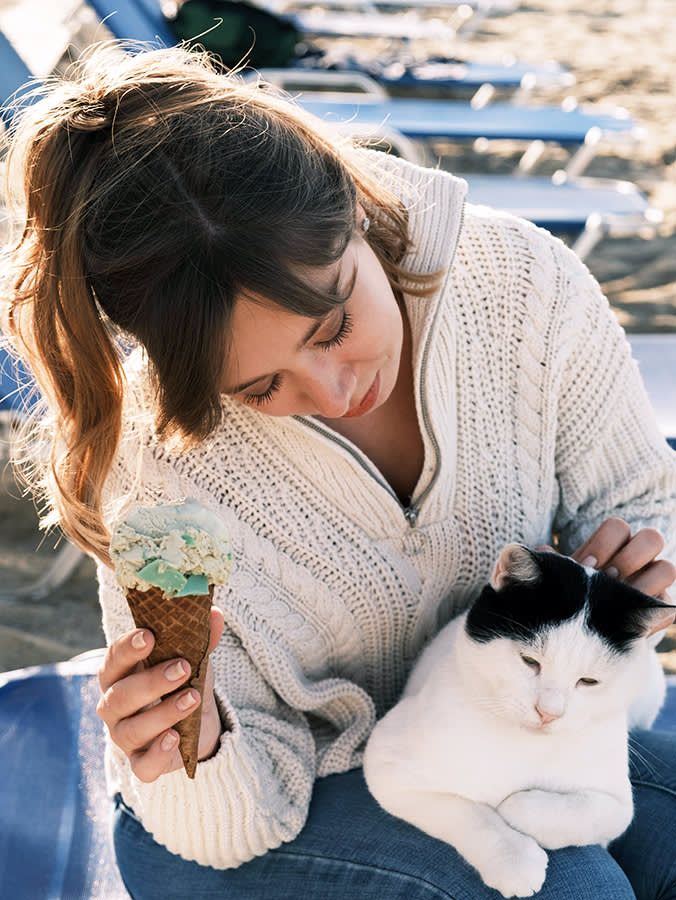
Picture the guilt scene: you’re eating ice cream, your cat is staring, and you feel like a monster for not sharing. Here’s the twist that should let you off the hook completely. Your cat cannot taste sweetness. They are physically missing the receptor for it. That decadent sugary flavor you imagine they’re longing for? It doesn’t exist for them. So the honest answer to “can cats eat ice cream” is no, they shouldn’t, but the deeper answer is that they’re not actually missing out on the part you think they are.
Let’s take that apart, because once you understand what a cat does and doesn’t experience with ice cream, both the “is it safe” question and the “am I being cruel” question pretty much answer themselves.
The taste twist, first, because it reframes everything
Cats are obligate carnivores, evolved to hunt and eat whole prey, animals that are high in protein and fat and contain essentially no sugar. Somewhere along that evolutionary road, cats lost a functioning sweet taste receptor. They simply don’t register sweetness the way we do.
That single fact rearranges the whole picture. The thing that makes ice cream irresistible to you, the sugar, is invisible to your cat. If a cat shows interest in your scoop, they’re almost certainly drawn to the fat and the creamy texture, not the flavor you’re enjoying. Research also shows cats generally prefer food that’s warm and moist, like fresh prey, which is roughly the opposite of a cold sweet dessert. In other words, you can eat your ice cream in front of your cat with a clear conscience. They aren’t pining for it.
So why not share anyway, if they’re mildly curious? Because the parts of ice cream a cat can’t taste are exactly the parts that cause problems.
What’s actually in the bowl that works against a cat
Ice cream is, by design, a high-fat, high-sugar, dairy-heavy food, and each of those pillars is a strike against feline biology.
Dairy. This is the big one, and it’s worth getting precise about. Most adult cats are lactose intolerant: they don’t produce enough lactase, the enzyme that breaks down milk sugar, so dairy ferments in the gut and causes vomiting, gas, and diarrhea. A tiny lick may pass without incident, but any real quantity tends to end badly.
Sugar. As covered, cats can’t taste it and aren’t built to process much of it. A regular sugar load raises the risk of weight gain and diabetes in an animal whose metabolism never expected it.
Toxic mix-ins. This is where ice cream stops being merely unhealthy and becomes dangerous. Chocolate, certain nuts, raisins, and spices like nutmeg are toxic to cats, and they ride into the bowl on flavors people don’t think twice about. Chocolate ice cream isn’t a sugar problem; it’s a poison problem.
Why “dairy-free” isn’t the loophole it looks like
It’s tempting to think a vegan or dairy-free scoop solves this. It removes exactly one of the three problems.
Dropping the dairy does eliminate the lactose issue. But non-dairy ice creams still need a rich, creamy base, so manufacturers reach for coconut cream, cocoa butter, soy, or nut milks, all high in fat. Cats actually tolerate dietary fat better than humans or dogs do, but the fat in ice cream usually runs higher than what they’re used to, which can still upset their stomach. And the sugar is still there, and the toxic mix-ins are still there. A dairy-free chocolate-almond pint is no safer for a cat than the regular kind; it just fails for different reasons.
What to offer the staring cat instead
If you want to give your cat a little something while you have your dessert, skip the ice cream and reach for a snack that fits their biology:
- Shrimp, plain and cooked, a high-protein bite cats genuinely enjoy
- A few low-sugar berries like a strawberry or a blueberry, in moderation and cut small
- Watermelon, mostly water, useful hydration for a cat who never drinks enough, with rind and seeds removed
- Plain cooked tuna, fine as an occasional treat, not an everyday staple
And keep the genuinely dangerous foods well clear: garlic and onions and the rest of the allium family, grapes and raisins, cheese, and anything chocolate.
Above all, remember that treats of any kind should stay minimal. Indoor cats are often sedentary, so even small regular extras add up fast. The backbone should always be a complete, balanced cat food in the right portion, paired with plenty of play, interactive toys, food puzzles, and things to climb, which gives your cat something far better than a dessert they can’t even taste.
What newer research adds
There’s a useful detail behind the lactose story that the “cats are lactose intolerant” headline skips: cats aren’t born that way. Kittens produce plenty of lactase to digest their mother’s milk. That enzyme production drops sharply as they wean, by roughly 90 percent between about six and twelve weeks of age, which is why kittens can handle milk and most adult cats can’t. Estimates of how many adult cats are meaningfully lactose intolerant vary, but the Cornell Feline Health Center puts it around two-thirds.
The practical upshot reinforces everything above. That carton of “cat milk” or the saucer of regular milk is rooted in a kitten’s biology, not an adult cat’s, which is the same reason the dairy in ice cream tends to backfire on a grown cat. The wholesome-looking bowl of milk is a myth your adult cat’s gut never signed off on.
References
- Li, Xia, et al. “Pseudogenization of a Sweet-Receptor Gene Accounts for Cats’ Indifference Toward Sugar.” PLOS Genetics, vol. 1, no. 1, 2005, e3.
- Bradshaw, John W. S. “Sensory and Experiential Factors in the Design of Foods for Domestic Dogs and Cats.” Proceedings of the Nutrition Society, vol. 75, no. 3, 2016, pp. 357–365.
- Cornell Feline Health Center. “Feeding Your Cat.”
- ASPCA Animal Poison Control Center. “People Foods to Avoid Feeding Your Pets.”
Common questions
Why shouldn't cats have sugar?
Cats are obligate carnivores built to eat protein and fat, not sugar. They metabolize it poorly, which over time raises the risk of weight gain and diabetes. They also lack the taste receptor for sweetness entirely, so they can't even appreciate the flavor.
Is dairy-free ice cream safe for cats?
Not really. Going dairy-free removes the lactose problem but keeps the high sugar and fat, and the creamy non-dairy bases plus mix-ins like chocolate or nuts can still cause stomach upset or toxicity. It's not a meaningful upgrade for a cat.
Not a substitute for your vet. Our guidance is educational. For urgent symptoms, contact a vet or emergency clinic right away. Editorial standards
Dr. Park is a board-certified emergency and critical care specialist. She reviews our health and safety content for clinical accuracy and contributes guides on recognising urgent conditions. Her focus is helping owners act quickly and correctly when it matters most.
Meet our experts ↗Keep reading
 FoodCats and Marshmallows: The Bag Your Dog Should Worry About MoreDr. Priya Nair · 6 min
 FoodYour Cat Can Eat Sweet Potato. Your Cat Also Doesn't Care About ItDr. Mara Chen · 6 min
 Food'Superfood' Means Nothing to Your Cat. Spinach Included.Dr. Nina Kohl · 5 min
 FoodPopcorn Is Safe for Cats. The Stuff We Put on It Is the ProblemDr. Ravi Mehta · 6 min
 FoodRaspberries Are Safe for Your Cat. Your Cat Just Doesn't Care.Dr. Priya Nair · 5 min
 FoodPeanut Butter Is a Dog Trick. Here's Why It's Riskier for Your CatDr. Mara Chen · 4 min