


'Superfood' Means Nothing to Your Cat. Spinach Included.
Spinach is a human superfood that's mostly wasted on an obligate carnivore. It's safe in tiny amounts, but there's one real caveat that matters for some cats: oxalates.

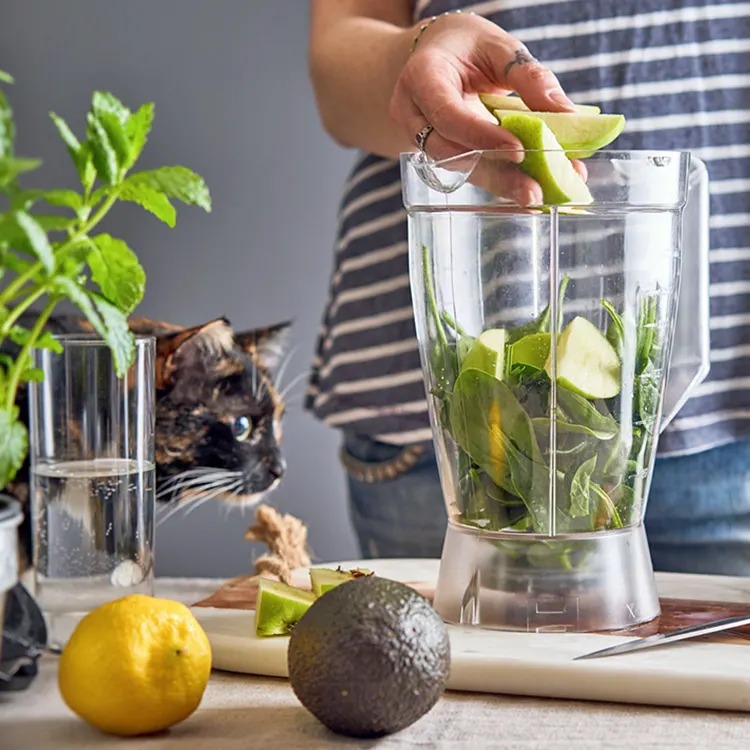
Spinach wears a health halo. It’s shorthand for eating well, the vegetable Popeye built a personality around, celebrated for iron, vitamins, and antioxidants. So it’s natural to wonder whether some of that goodness could rub off on your cat. The honest answer reframes the whole question: “superfood” is a human nutrition concept, and it means almost nothing to an obligate carnivore. Spinach is safe for most cats in tiny amounts, but it isn’t good for them in any meaningful sense, and for one specific group of cats it’s a food to skip entirely.
Why the superfood label doesn’t transfer
A superfood is food dense in the nutrients humans benefit from: vitamin C, folate, fiber, plant antioxidants. Cats are wired completely differently. As obligate carnivores, they extract what they need from animal tissue and have little use for plants in the diet. A cat eating a complete, balanced food is already getting its vitamins and minerals in the right amounts, so the iron, calcium, vitamin A, vitamin K, and folate in spinach mostly land as redundant. Even the antioxidants, spinach’s headline feature, don’t have an established feline requirement.
None of that makes spinach harmful. It just means the reasons spinach is good for you don’t carry over to your cat. Whatever a cat gets from a leaf of spinach is, at best, a small bonus on top of a diet that already has the bases covered.
The genuinely useful bits, kept in proportion
To be fair, spinach isn’t nutritionally empty for cats. It’s high in mostly insoluble fiber, which can add a little bulk to stool and a sense of fullness, and it carries a lot of water, which is a minor plus for cats who don’t drink enough. But these are the same modest perks you’d get from several safe vegetables, and they’re perks, not needs. If your cat’s stool or hydration is genuinely a concern, there are better, more targeted tools than a mouthful of greens.
When someone tells me they want to add spinach because it’s a superfood, I gently point out that their cat isn’t a person. A carnivore doesn’t run on leafy greens. A shred of spinach as an occasional nibble is harmless for most cats, but I’d never want an owner to think they’re doing something nutritionally important. The one time I do get specific is with cats who’ve had oxalate stones, and there the answer is just no.
The caveat that actually matters: oxalates
Here’s the part worth remembering long after you’ve forgotten the vitamin list. Spinach is high in oxalates, compounds that can bind with calcium in the body and form crystals. For a typical healthy cat eating a tiny amount, this is a non-issue. But some cats have a history of calcium oxalate crystals in their urine, or have had bladder stones, kidney stones, or urinary blockages. For those cats, adding an oxalate-rich food is exactly the wrong move, and it can contribute to the very problem they’re prone to. If your cat has any urinary stone history, spinach comes off the menu, full stop, and it’s worth a quick word with your vet before offering it to any cat you’re unsure about.
The other, more common risk: what’s on the spinach
Beyond oxalates, most spinach trouble comes from preparation rather than the leaf itself. Spinach dishes are frequently cooked with butter, cream, garlic, or onion, and garlic and onion are toxic to cats while heavy dairy causes digestive upset. So the creamed spinach on your plate is off-limits even though plain spinach isn’t. If you share, share plain: a small piece of washed raw leaf or plain steamed spinach, nothing else. And because spinach is very high in fiber for a cat unaccustomed to it, too much at once can cause gas, bloating, vomiting, or diarrhea, so start with a bite or two and stop there. Wash any fresh produce well to remove dirt and pesticide residue, and if your cat grazes on greens in the garden, watch that they’re not also swallowing mulch, plant markers, or genuinely toxic plants.
What’s new since this was written
The broader trend in feline nutrition has been away from “add healthy human foods” and toward tight calorie discipline, and cat obesity data explains why. The Association for Pet Obesity Prevention’s 2024 survey found a third of owners now report an overweight or obese cat, up from 28 percent the year before. In that light, the appeal of a near-zero-calorie green like spinach is understandable, but the smarter play is portion control of the main diet plus vet-guided tools for weight and stool, rather than leaning on greens a carnivore can’t really use.
Research on oxalates and urinary stones has also kept reinforcing the caution above: dietary oxalate is one contributor to calcium oxalate stone formation, which remains a common and painful problem in cats. That’s the piece to carry forward. For a healthy cat, spinach is a harmless novelty; for a stone-prone cat, it’s a food to avoid.
Vegetables and treats that are safer bets
If you enjoy sharing produce, a few options are gentler than spinach: a small piece of plain cooked, mashed pumpkin (useful fiber, no oxalate worry), a bite of steamed carrot, or a couple of blueberries. Better yet, spend the treat budget on something a carnivore genuinely values, like a bit of plain cooked chicken or a small piece of plain cooked shrimp.
Foods to keep away
Garlic and other allium plants are toxic to cats. Grapes and raisins can damage the kidneys. And cured or seasoned meats like hot dogs bring salt and often onion or garlic, so they’re not a safe share even though the meat underneath is.
FAQs
How much spinach can a cat eat? Only a small nibble. A bite or two of plain spinach is safe for most cats, but larger amounts can cause digestive upset from the fiber.
Why is my cat interested in spinach? Likely the texture or smell of the leaves rather than the taste. Cats can’t detect sweetness and often investigate greens out of curiosity.
Is spinach ever a health food for cats? Not really. Any benefit is minor and already covered by a complete cat food. Its main relevance to cat health is the oxalate caution for stone-prone cats.
References
- Mitchell T, et al. “Dietary Oxalate and Kidney Stone Formation.” American Journal of Physiology-Renal Physiology, 2019.
- Merck Veterinary Manual. Urinary Stones (Uroliths, Calculi) in Cats.
- National Research Council. Nutrient Requirements of Dogs and Cats. National Academies Press, 2006.
- Association for Pet Obesity Prevention. 2024 Pet Obesity Survey Results.
Not a substitute for your vet. Our guidance is educational. For urgent symptoms, contact a vet or emergency clinic right away. Editorial standards
Dr. Kohl is a board-certified veterinary dentist with a particular interest in preventive oral care. She reviews all dental health content at The Pet Times and contributes practical guides on home dental routines, professional cleaning, and oral disease prevention.
Meet our experts ↗Keep reading
 FoodWatermelon Won't Hydrate Your Cat the Way You ThinkDr. Ravi Mehta · 5 min
 FoodPumpkin Is the Rare 'Human Food' Your Cat Might Actually NeedDr. Lena Park · 5 min
 FoodCats Can Eat Eggs. Just Never Raw.Dr. Mara Chen · 4 min
 FoodRice and Cats: Safe to Share, but Not for the Reason You ThinkDr. Ravi Mehta · 7 min
 FoodBlueberries Are a 'Superfood' for You. To Your Cat, They're Barely FoodDr. Priya Nair · 5 min
 FoodThe Real Problem With Feeding Your Cat Ham Isn't Toxicity. It's MathDr. Ravi Mehta · 4 min