


The Real Problem With Feeding Your Cat Ham Isn't Toxicity. It's Math
Ham isn't poisonous to cats, so the usual 'safe in moderation' answer misses the point. One slice of deli ham can carry more sodium than a cat should get in an entire day. Here's the math, plus when ham should stay off the plate completely.

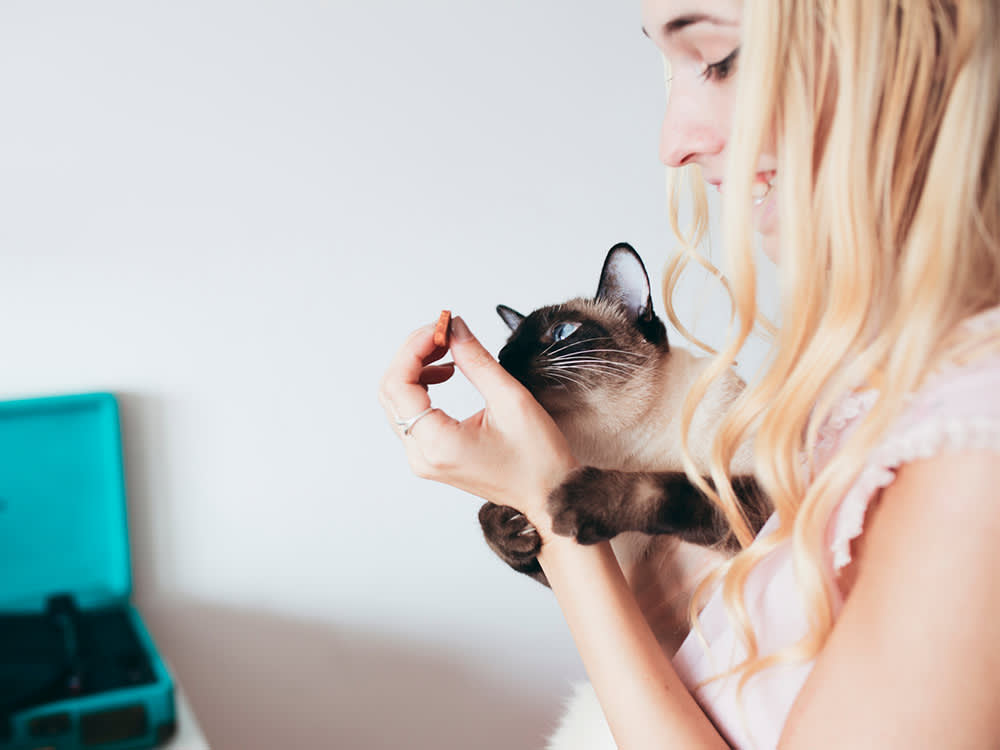
Ask the internet whether cats can eat ham and you get the same shrug every time: “It’s not toxic, so it’s fine in moderation.” That answer is technically true and almost useless, because it never tells you what “moderation” actually means for an animal that weighs a tenth of what you do. The honest way to think about ham and cats is not toxicity. It is arithmetic, and once you run the numbers, the “occasional treat” framing gets a lot more cautious.
Run the sodium math, and one slice is a lot
Start with what a cat needs. For a healthy ten-pound cat eating around 250 calories a day, the National Research Council puts the minimum required sodium at roughly 42 milligrams, and most veterinary guidance treats a few hundred milligrams a day as the comfortable ceiling, with well under 250 milligrams a reasonable target for an ordinary cat.
Now look at the ham. A single slice of deli ham, about one ounce, commonly carries somewhere between 250 and 365 milligrams of sodium, and some brands run higher. In other words, one slice of lunch meat can hand your cat its entire day’s worth of sodium, or more, in a single bite, on top of the salt already in its regular food.
People picture a treat as a rounding error, but for a cat, a slice of ham isn’t a rounding error, it’s the whole sodium budget. The fix is portion size. A thin strip torn into a few pieces is a treat. A full slice is a sodium load the kidneys have to deal with.
This is why the right serving is so small. If you want to share, tear off a thin strip of plain, fully cooked ham, break it into a few pea-sized pieces, and stop there. That keeps the sodium hit minor and turns ham back into the occasional indulgence it should be.
The fat is the other half of the story
Sodium gets the attention, but ham is also a fatty meat, and a sudden hit of fat is its own problem for cats. Too much can irritate the digestive tract and, in some cases, inflame the pancreas, which means a real risk of vomiting, diarrhea, and the kind of stomach upset that ends with a vet visit.
“A cat’s pancreas doesn’t love a greasy surprise,” Dr. Mehta says. “If you’re going to offer ham at all, pick a lean piece off the bone and skip the fatty edges entirely. Smaller than an inch, fully cooked, plain.”
When ham should stay off the plate completely
For some cats, the answer is not “a little.” It is “none.” Cats already tend to under-drink water, so a salt-heavy snack pushes them further toward dehydration, which is exactly the wrong direction for a cat with an existing condition. Skip ham altogether if your cat has:
- Kidney disease, where extra sodium adds strain the kidneys can’t easily clear.
- Heart disease, where sodium can affect fluid balance and blood pressure.
- Urinary problems, where hydration is part of management and salt works against it.
There is also the seasoning trap, which turns an unhealthy snack into a dangerous one. Holiday and deli hams are frequently glazed or cooked with onion and garlic, both of which are toxic to cats and can damage red blood cells, causing a serious anemia. Never let a cat eat ham that was prepared with either. If you are unsure what is in it, treat it as off-limits.
A useful side benefit: the pill trick
There is one place ham genuinely earns its keep. Because it is soft and easy to mold, a tiny scrap of plain ham makes an excellent hiding spot for a pill when your cat needs medication and refuses everything else. Used that way, once in a while, the sodium cost is trivial and the payoff (a dosed cat) is real. It is one of the few times the math comes out clearly in ham’s favor.
The bottom line
Ham is not poison, but “not poison” is a low bar. The thing that actually matters is the salt, and the numbers are stark enough that a single deli slice can match or exceed everything a cat should get in a day. Keep any taste to a thin, plain, fully cooked strip broken into a few pieces, never share anything seasoned with onion or garlic, and skip ham entirely for cats with kidney, heart, or urinary trouble. Shared that carefully, ham is a rare indulgence. Shared by the slice, it is a sodium problem wearing a treat costume.
References
- National Research Council: Nutrient Requirements of Dogs and Cats (sodium)
- Nguyen, P., et al. “Sodium in feline nutrition.” Journal of Animal Physiology and Animal Nutrition, 2017.
- U.S. Department of Agriculture FoodData Central: Ham, sliced, prepackaged deli meat
- Merck Veterinary Manual: Nutrition in Cats
- ASPCA: People Foods to Avoid Feeding Your Pets (onion and garlic)
Common questions
How much ham can a cat eat?
Think in terms of a thin strip torn into a few small pieces, plain and unseasoned, as a rare treat. A whole slice of deli ham is too much sodium for a cat in one sitting.
Can ham make my cat sick?
A large or repeated amount can. The fat can trigger stomach upset or pancreatitis, and the salt can worsen dehydration. Ham seasoned with onion or garlic is genuinely dangerous and should never be shared.
Which cats should never have ham?
Cats with kidney, heart, or urinary disease should avoid ham entirely, because the high sodium can directly worsen those conditions.
Not a substitute for your vet. Our guidance is educational. For urgent symptoms, contact a vet or emergency clinic right away. Editorial standards
Dr. Mehta is a board-certified veterinary nutritionist who evaluates pet food formulations, ingredient quality, and the science behind dietary trends. He writes and reviews all nutrition content at The Pet Times, including our food rankings and feeding guides.
Meet our experts ↗Keep reading
 FoodYour Cat Is Built to Eat Pork. The Deli Counter Is Where It Goes WrongDr. Amara Solis · 6 min
 FoodPeanut Butter Is a Dog Trick. Here's Why It's Riskier for Your CatDr. Mara Chen · 4 min
 Food'Superfood' Means Nothing to Your Cat. Spinach Included.Dr. Nina Kohl · 5 min
 FoodYogurt Won't Fix Your Cat's Gut. Here's What Actually Might.Dr. Lena Park · 6 min
 FoodYour Cat Doesn't Want a Popsicle. It Wants What the Popsicle Pretends to Be.Dr. Ravi Mehta · 5 min
 FoodYour Cat Can Eat Sweet Potato. Your Cat Also Doesn't Care About ItDr. Mara Chen · 6 min