


Yogurt Won't Fix Your Cat's Gut. Here's What Actually Might.
Yogurt gets sold to cat owners as a probiotic health food. The truth: a lick is a fine treat, but it's not gut medicine, and if your cat needs probiotics there's a better way to deliver them.

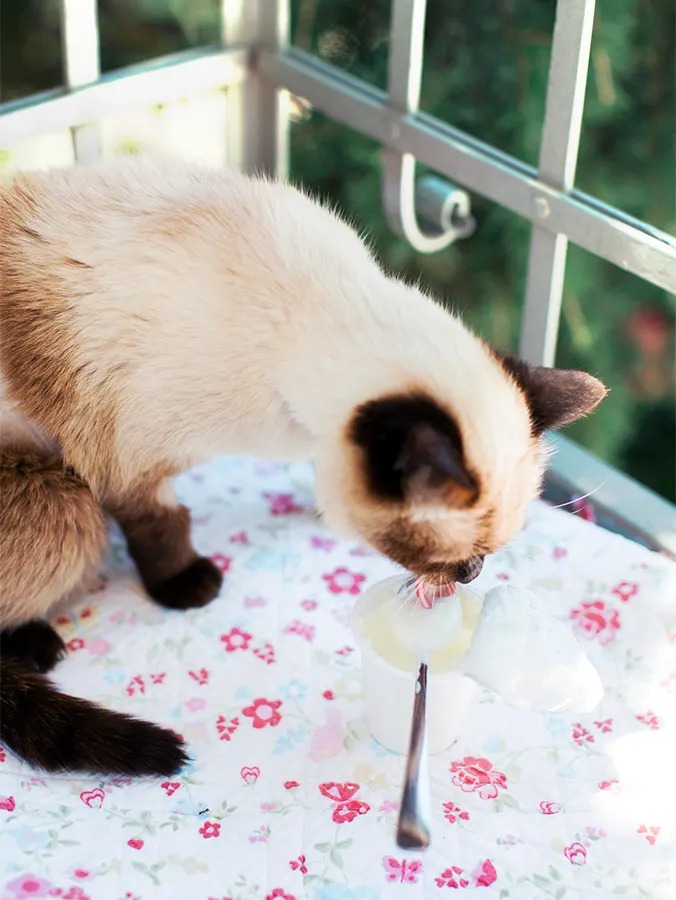
Yogurt has ridden the probiotic wave straight into the pet aisle. Somewhere along the way, “a lick of yogurt is a nice treat” quietly became “yogurt is good for your cat’s gut,” and that upgrade isn’t supported by how yogurt or cats actually work. The accurate version is less exciting and more useful: a small amount of plain yogurt is a fine occasional treat that most cats tolerate, but it is not gut medicine. If your cat genuinely needs probiotic support, yogurt is the wrong tool, and there’s a better one.
Why the probiotic promise falls apart
Yogurt is milk fermented with bacteria, commonly Streptococcus thermophilus and Lactobacillus acidophilus, sometimes with Bifidobacterium. Those live cultures are real, and in the right amounts, gut bacteria can influence digestion, immunity, and more. That’s the kernel of truth the marketing is built on.
The problem is everything between the kernel and your cat. For probiotics to help, a large number of live organisms has to survive production and storage, then survive the trip through stomach acid, and then reach the intestines in meaningful quantity. Both animals and people generally need a substantial dose for a real effect. A cat-sized lick of commercial yogurt simply doesn’t deliver that dose, and some of the cultures are destroyed during processing before the yogurt ever reaches the fridge. So a small serving of yogurt probably doesn’t hurt, but it almost certainly isn’t doing the gut work people imagine.
Owners tell me they give yogurt for their cat’s digestion, and I never want to crush the instinct, it’s a caring one, but I have to be straight. The amount of live culture a cat gets from a lick of yogurt is nowhere near what you’d need to change the gut. If a cat actually has a digestive problem I want to address, I reach for a probiotic made for cats with a known, guaranteed count of organisms. Yogurt is a treat. A veterinary probiotic is a tool. They’re not the same thing, and conflating them can delay real help.
What yogurt is genuinely good for: being a treat
Set the health halo aside and yogurt is a perfectly nice snack. It can be a source of protein, which cats value as carnivores, and fat, which gives them energy and makes food satisfying. It contains calcium, potassium, B vitamins, and vitamin D, though a cat on a complete diet already gets these. In other words, yogurt’s real role is exactly what it looks like: a small, palatable treat many cats enjoy, not a supplement.
The lactose question, handled
The obvious worry with any dairy is lactose, since most adult cats are lactose intolerant and a real serving of milk means bloating, gas, or diarrhea. Yogurt gets a partial pass here because fermentation is the point: the bacteria break down much of the lactose, so properly fermented yogurt with live active cultures is lower in lactose than milk. That’s why many lactose-intolerant cats can handle a small lick without trouble. “Can handle a small lick” is the operative phrase, though, keep the amount tiny and watch for digestive upset, because tolerance varies cat to cat.
Reading the label like it matters
If you do share yogurt, the ingredient list is where safety lives. Choose plain, unsweetened yogurt. Many flavored yogurts are loaded with added sugar, which cats don’t metabolize well and which nudges them toward weight gain and diabetes, and some carry flavorings or sweeteners that can be unsafe. For dairy yogurt, confirm it’s fermented with live active cultures, both for the lower lactose and because not everything sold as “yogurt” is actually cultured. Non-dairy yogurts from soy, cashew, coconut, or almond are usually non-toxic, but double-check every ingredient, since they’re often lower in protein and fat and can carry additives cats shouldn’t have. Above all, avoid anything containing xylitol.
And go for low-fat where you can. Most cats handle fat well, but a sudden high-fat snack can upset a sensitive stomach, and the extra calories add up fast in a sedentary indoor cat.
When your cat actually needs probiotics
If the real reason you’re eyeing yogurt is a cat with recurring soft stool, diarrhea after antibiotics, or ongoing digestive trouble, skip the dairy detour and talk to your vet about a cat-specific probiotic. These are formulated with strains studied in cats and a guaranteed count of live organisms, delivered in a dose actually capable of affecting the gut. That’s the difference between hoping a treat helps and using a product designed to.
What’s new since this was written
The gut microbiome has become one of the hottest areas in feline health, and the research has largely reinforced the point above: general-purpose human yogurt is not a reliable way to shift a cat’s gut flora, while species-appropriate probiotics with documented strains and doses have a growing evidence base for specific problems like antibiotic-associated or stress-related diarrhea. The practical upshot is to match the tool to the job, yogurt for enjoyment, a vet-recommended probiotic for gut trouble.
Weight is the other current thread. With cat obesity climbing, roughly a third of owners now report an overweight cat, the case for choosing plain, low-fat yogurt in tiny amounts (or skipping it in favor of a zero-calorie option) has gotten stronger. A treat that’s also a stealth source of sugar and fat is worth portioning carefully.
Treats that pull double duty
If you want a treat with real payoff, a bit of plain cooked chicken or a small piece of plain cooked shrimp gives a carnivore protein it can use. For something creamy, a very small lick of plain unsweetened yogurt is fine for most cats. And a couple of blueberries are lower in sugar than many fruits.
Foods to keep away
Grapes and raisins are toxic to cats. Garlic and onion can cause anemia. Chocolate is a hard no. And any yogurt or dessert containing xylitol should be kept far from your cat.
FAQs
How much yogurt can a cat have? Only a small lick of plain, low-fat yogurt, kept under 10 percent of daily calories. It should never be a real portion.
Can cats eat non-dairy yogurt? Yes, many soy, cashew, coconut, or almond yogurts are non-toxic, as long as every ingredient is cat-safe and there’s no xylitol or added sugar. They’re often lower in protein and fat.
Will yogurt help my cat’s diarrhea? Probably not meaningfully. The live-culture dose is too low. For real digestive issues, ask your vet about a cat-specific probiotic.
References
- Harvard T.H. Chan School of Public Health, The Nutrition Source. Yogurt.
- Marshall-Jones ZV, et al. “Effects of Lactobacillus acidophilus DSM13241 as a probiotic in healthy adult cats.” American Journal of Veterinary Research, 2006.
- Cornell Feline Health Center. Feeding Your Cat.
- Association for Pet Obesity Prevention. 2024 Pet Obesity Survey Results.
Not a substitute for your vet. Our guidance is educational. For urgent symptoms, contact a vet or emergency clinic right away. Editorial standards
Dr. Park is a board-certified emergency and critical care specialist. She reviews our health and safety content for clinical accuracy and contributes guides on recognising urgent conditions. Her focus is helping owners act quickly and correctly when it matters most.
Meet our experts ↗Keep reading
 FoodApples Won't Hurt Your Cat. Your Cat Just Won't CareDr. Priya Nair · 4 min
 FoodYour Cat Doesn't Want a Popsicle. It Wants What the Popsicle Pretends to Be.Dr. Ravi Mehta · 5 min
 FoodYour Cat Begs for Olives and Cheetos. There's a Chemical Reason Why.Dr. Priya Nair · 7 min
 FoodWhy Your Cat Runs From Bananas (and Whether a Bite Is Safe)Dr. Priya Nair · 5 min
 FoodCats Can Eat Pineapple. They Literally Can't Taste the Point.Dr. Ravi Mehta · 3 min
 FoodThe Real Problem With Feeding Your Cat Ham Isn't Toxicity. It's MathDr. Ravi Mehta · 4 min