


Cats Can Eat Pineapple. They Literally Can't Taste the Point.
Fresh pineapple isn't toxic to cats, but here's the twist most feeding guides miss: cats can't taste sweetness at all. So they get none of the appeal and all of the sugar.

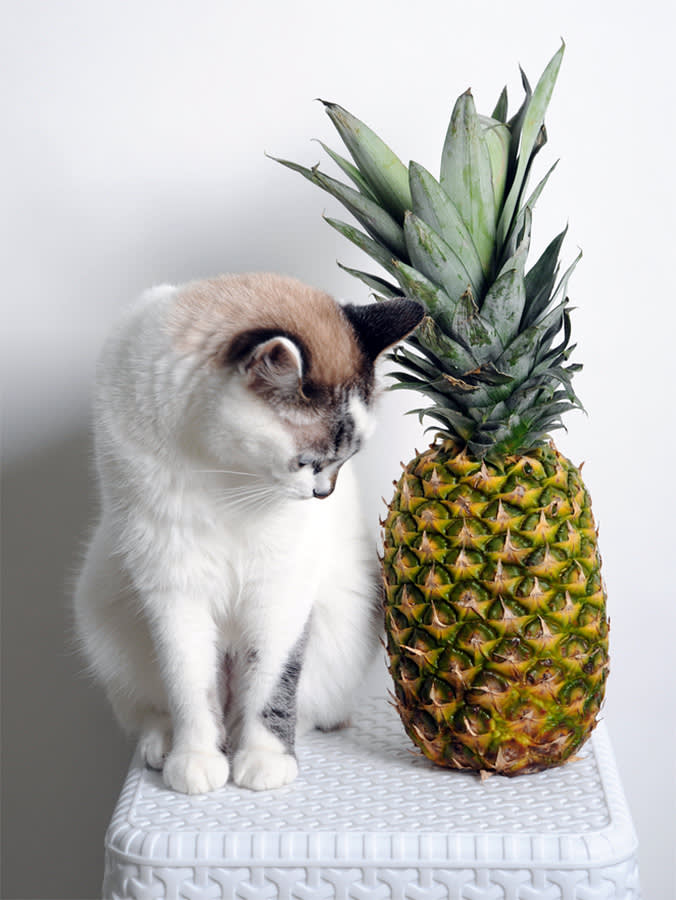
Every “can cats eat pineapple” guide walks you through the fruit’s vitamins and its fiber and its one exotic enzyme, then lands on “safe in moderation.” All true. All beside the point. Here is the fact that reframes the whole question: cats cannot taste sweetness. They are missing the receptor for it entirely. So the very thing that makes pineapple a treat for you registers as nothing to them, while the sugar behind that sweetness still hits their body the same way. Pineapple for cats is all cost, no payoff.
Safe, but for a carnivore that’s a low bar
Let’s clear the safety question first. The ripe inner flesh of a pineapple is non-toxic to cats. A small, occasional bite will not hurt a healthy cat. If yours steals a fingernail-sized piece off your plate, there is nothing to do but note that your cat has strange taste.
Pineapple does contain a few things a cat can technically use: insoluble fiber, potassium, manganese, some B vitamins, and bromelain, an enzyme that helps break down protein. But “technically use” is doing heavy lifting. Cats are obligate carnivores with a low need for carbohydrates and a diet designed around whole prey. Notably, they make their own vitamin C, so the nutrient people prize citrusy fruits for is one cats do not need from food at all. Whatever pineapple offers, a cat is already getting from good cat food, in a form built for them.
The part everyone gets backwards
So why do so many articles treat pineapple as a fun little cat snack? Because they are describing the fruit from a human’s point of view, where sweet equals appealing.
Cats do not share that point of view, and not by preference. Somewhere in their evolution, the gene for the sweet taste receptor went dark. A cat physically cannot detect sugar as flavor. That single fact quietly dismantles the case for feeding pineapple. There is no enjoyment to give them, because the sweetness they would supposedly enjoy is invisible to their tongue. What is left is the sugar itself, and cats handle sugar poorly. They do not metabolize it as efficiently as we do, so a habit of sugary snacks nudges them toward weight gain and the problems that follow it, including diabetes and joint strain.
The fiber is a smaller version of the same story. A little supports healthy digestion, but too much, too fast, causes bloating, gas, and diarrhea. A cat’s gut is not built to take on a fibrous fruit in any real quantity.
What to keep well away
If you do offer a taste, the rules are strict about which part.
- Only the ripe flesh. The spiky rind and the tough leaves can cut and irritate a cat’s mouth and digestive tract, and the fibrous core is hard to pass.
- Never unripe pineapple. Green, underripe fruit is toxic and can cause severe vomiting and diarrhea in both pets and people.
- Skip the can. Canned pineapple usually swims in sugar syrup, which turns a marginal treat into a genuinely bad one, and some processed pineapple products carry additional additives you do not want your cat eating.
If you grow a pineapple plant at home, keep it out of reach for the same reasons.
The honest bottom line
Fresh, ripe pineapple is safe for cats in a tiny, rare amount, and that is the most generous thing that can be said about it. Your cat cannot taste why it is a treat, gains nothing nutritionally that their regular food does not already provide, and takes on sugar their body would rather skip. If you love watching your cat investigate a new smell, a sniff of pineapple is harmless fun. As actual food, there are far better ways to treat them, ideally something meaty they can actually appreciate.
References
- Monell Chemical Senses Center. “Cats Lack a Sweet Taste Receptor.” monell.org
- ASPCA. “People Foods to Avoid Feeding Your Pets.” aspca.org
- Merck Veterinary Manual. “Nutrition in Cats.” merckvetmanual.com
Common questions
Why isn't pineapple recommended for cats?
It's high in sugar, which cats don't process well, and high in fiber, which can upset their stomach. Cats also can't taste sweetness, so the treat does nothing for them that a bit of meat wouldn't do better.
Can cats eat canned pineapple?
Better to skip it. Canned pineapple is usually packed in sugary syrup, and some products contain other additives. If you share pineapple at all, use a small piece of fresh, ripe fruit.
Is any part of the pineapple plant dangerous?
Yes. The spiky rind and leaves can injure and irritate the mouth and gut, and unripe pineapple is toxic. Only the ripe inner flesh is safe.
Not a substitute for your vet. Our guidance is educational. For urgent symptoms, contact a vet or emergency clinic right away. Editorial standards
Dr. Mehta is a board-certified veterinary nutritionist who evaluates pet food formulations, ingredient quality, and the science behind dietary trends. He writes and reviews all nutrition content at The Pet Times, including our food rankings and feeding guides.
Meet our experts ↗Keep reading
 FoodThe Tomato Is Safe for Your Cat. The Plant Can Poison Them.Dr. Priya Nair · 6 min
 FoodYour Cat's Plate-Begging Isn't Always Wrong. 8 Foods You Can Share.Dr. Mara Chen · 8 min
 FoodRaspberries Are Safe for Your Cat. Your Cat Just Doesn't Care.Dr. Priya Nair · 5 min
 FoodYour Cat Can Eat Pomegranate. That's Not the Same as Should.Dr. Priya Nair · 5 min
 FoodYour Cat Can Eat Sweet Potato. Your Cat Also Doesn't Care About ItDr. Mara Chen · 6 min
 FoodCats and Marshmallows: The Bag Your Dog Should Worry About MoreDr. Priya Nair · 6 min