


Your Cat Can Eat Pomegranate. That's Not the Same as Should.
Pomegranate isn't toxic to cats, but it earns zero of the nutrients a carnivore actually needs. Here's how to think about 'safe but pointless' cat snacks.

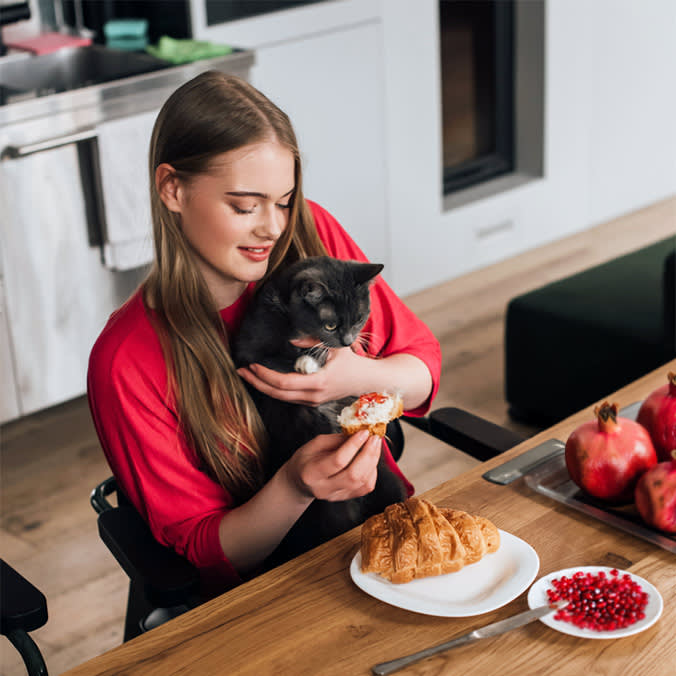
There’s a certain kind of question that sounds like it’s about danger but is really about value. “Can my cat eat pomegranate?” is one of them. The honest answer is yes, a cat can eat pomegranate without being poisoned. The more useful answer is that it doesn’t do a single thing for them, and understanding why is the best way to make good calls about every “people food” your cat begs for.
Pomegranate is a genuine superfood for humans. It’s the poster child for antioxidant-rich eating, loaded with vitamin C and polyphenols. Almost none of that transfers to a cat, and the reason is baked into what a cat is.
The safety question is the easy part
Pomegranate is non-toxic to cats. If your cat noses a stray aril off the counter, or licks the juice from a plate, nothing bad happens. The two real cautions are mechanical rather than chemical. Whole seeds can be a choking hazard for a cat who bolts several at once, and because a cat’s gut isn’t set up to process much plant fiber, a larger helping can cause loose stool or a little vomiting as their system deals with something it wasn’t designed for.
So the fruit clears the safety bar. It just doesn’t clear any other bar.
Why “non-toxic” and “worth feeding” are different questions
Here’s the part most feeding guides skip. Cats are obligate carnivores, which is not a lifestyle label but a hard metabolic fact. Their bodies are tuned to extract what they need from animal tissue: complete protein, specific amino acids like taurine and arginine, preformed vitamin A, and animal fat. The nutrients that make pomegranate a health food for us are largely irrelevant to them.
Take vitamin C, pomegranate’s headline nutrient. A cat’s liver makes its own vitamin C, so dietary vitamin C is not just unnecessary, it can be counterproductive in excess. The plant antioxidants get a lot of marketing attention, but there’s no established feline requirement for them, and a cat eating a complete diet is already covered. Pomegranate brings sugar, water, fiber, and a pleasant tartness cats can’t even taste as sweet, because cats lack functional sweet-taste receptors entirely.
People assume anything labeled a superfood must help their cat too, but a cat’s metabolism just isn’t reading the same nutrition label we are. Pomegranate won’t hurt a healthy cat in a small amount, and it also won’t move the needle. I’d rather see those few bites go to something that actually fits how a carnivore is built.
The real cost is opportunity, not poison
A cat’s stomach is small and their daily calorie budget is smaller than most people think. Every bite of a low-value snack is a bite not spent on the complete, balanced food that carries the protein, taurine, and vitamins they can’t get anywhere else. That’s the actual argument against pomegranate: not that it’s dangerous, but that it’s a distraction dressed up as a treat.
The standard guardrail here is the 90/10 rule. At least 90 percent of a cat’s daily intake should come from a complete and balanced cat food, leaving 10 percent or less for treats and table snacks. Filling that narrow treat window with watery, sugary fruit that the cat can’t nutritionally use is a poor trade when a few flakes of cooked chicken or a purpose-made cat treat would do more.
If your cat is genuinely curious
Some cats really will investigate a pomegranate seed, usually because it rolls and pops rather than because it’s delicious. If yours is one of them, keep it to a seed or two, deseeded from any pith, and never leave a bowl of arils unattended where a determined cat can gorge. Store the rest in the fridge, out of reach. And skip it entirely for kittens, who have even less room in their diet for filler.
What’s new since this was written
Newer clinical data underscores why treat quality matters for cats specifically. The Association for Pet Obesity Prevention’s 2024 survey found that 33 percent of cat owners reported their cat was overweight or obese, up from 28 percent the year before, and primary-care records covering more than a million cats show overweight rates peaking near half of all adult and mature cats. The story those numbers tell is that extra calories from “harmless” snacks add up fast in an animal that spends most of the day resting.
The practical takeaway hasn’t changed, but the stakes have gotten clearer. A safe-but-pointless food isn’t neutral once you account for the calories. If you want to give your cat something, spend the treat budget on protein they can use, and let pomegranate stay in your smoothie.
Fruits that are actually worth a nibble
A few fruits at least bring hydration or fiber a cat can use in small amounts. Blueberries offer a little fiber and are easy to portion. A bite of watermelon flesh, seeds and rind removed, is mostly water and fine on a hot day. A sliver of apple without seeds is safe in tiny amounts. None of these are necessary, but they’re friendlier filler than pomegranate if your cat wants to share.
Fruits and foods to keep away
Grapes and raisins are genuinely dangerous and should be kept off the counter and out of reach entirely. Citrus contains essential oils that are irritating and can be toxic to cats. And anything cooked with onion, garlic, or a lot of added sugar belongs to you, not your cat.
FAQs
Is pomegranate toxic to cats? No. The flesh and seeds are non-toxic. The risks are a choking hazard from whole seeds and possible stomach upset from a large amount.
Does pomegranate give cats any health benefit? Essentially none. Cats can’t use the vitamin C or plant antioxidants that make pomegranate healthy for people.
Why is my cat interested in pomegranate at all? Usually the movement and the pop, not the taste. Cats can’t detect sweetness, so a curious cat is playing with a novel object as much as eating it.
References
- Li X, et al. “Cats Lack a Sweet Taste Receptor.” The Journal of Nutrition, 2006.
- National Research Council. Nutrient Requirements of Dogs and Cats. National Academies Press, 2006.
- Association for Pet Obesity Prevention. 2024 Pet Obesity Survey Results.
- ASPCA Animal Poison Control Center. People Foods to Avoid Feeding Your Pets.
Not a substitute for your vet. Our guidance is educational. For urgent symptoms, contact a vet or emergency clinic right away. Editorial standards
Dr. Nair is a veterinarian focused on diet and feeding. She covers everyday nutrition, treats, and the many "can they eat this?" questions owners ask, grounding each answer in what is actually safe and sensible for dogs and cats.
Meet our experts ↗Keep reading
 FoodYour Cat Can Eat Sweet Potato. Your Cat Also Doesn't Care About ItDr. Mara Chen · 6 min
 FoodApples Won't Hurt Your Cat. Your Cat Just Won't CareDr. Priya Nair · 4 min
 FoodBlueberries Are a 'Superfood' for You. To Your Cat, They're Barely FoodDr. Priya Nair · 5 min
 FoodYour Cat's Plate-Begging Isn't Always Wrong. 8 Foods You Can Share.Dr. Mara Chen · 8 min
 FoodCats Can Eat Eggs. Just Never Raw.Dr. Mara Chen · 4 min
 FoodRice and Cats: Safe to Share, but Not for the Reason You ThinkDr. Ravi Mehta · 7 min