


Your Cat Can Eat Sweet Potato. Your Cat Also Doesn't Care About It
Plain cooked sweet potato is non-toxic for cats, but the more interesting truth is that your cat is biologically wired to shrug at it. Here's where the real risk hides, and it isn't the potato.

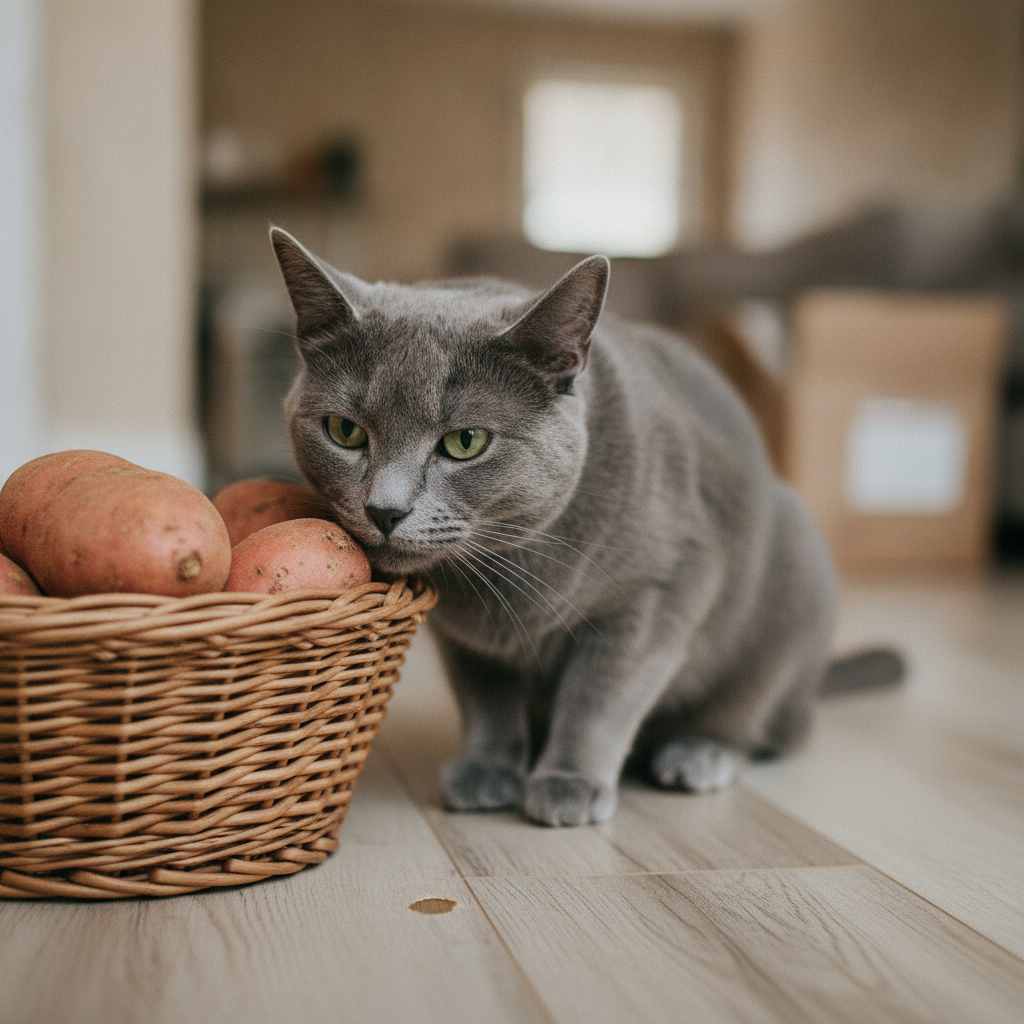
Every fall the same question surfaces: the sweet potatoes are out, the cat is underfoot, can they have a bite? The technically correct answer is yes, plain cooked sweet potato is non-toxic and a few mashed bites won’t hurt a cat. But that answer skips the more useful fact, the one that reframes the whole thing: your cat is built to be indifferent to sweet potato. The reason matters, because it tells you exactly where the real risk lives, and it isn’t in the orange flesh on the cutting board.
Start with the punchline: your cat can’t taste it
Cats carry a non-functional version of the gene that builds the sweet-taste receptor. The receptor that lets you enjoy a candied yam simply doesn’t work in a cat. They are, in a real biological sense, blind to sugar.
That single fact explains a lot. It’s why your cat investigates the sweet potato and then walks away unimpressed. Whatever interest a cat shows is about the warmth of a fresh mash, the soft texture, or the savory and “umami” notes their palate is actually tuned to, never the sweetness people are chasing. It also explains why sweet potato earns a hard “occasional, at most” verdict: a cat that can’t taste the reward is getting only the starch.
The thing people underestimate is the carbohydrate load. Sweet potato is starchy, and cats are protein machines. Too much of any plant-based filler can push a cat toward obesity and crowd out the food that actually meets their needs. A spoonful as a novelty is fine. A regular side dish is not.
Where the danger actually is: the prep, not the potato
Because the vegetable itself is non-toxic, every real hazard is something a human added or left on. Sort the preparations and the rules become obvious.
| Preparation | Verdict | Why |
|---|---|---|
| Plain, cooked, mashed, peeled | Okay in moderation | Soft, digestible, no toxins, no additives |
| Raw | No | Tough to chew (choking risk) and hard to digest, though not poisonous |
| Skins | No | Especially fibrous; can trigger nausea, GI upset, and diarrhea |
| Fries | No | Salt, oil, and spices, often skin-on, and the long shape is a choking hazard |
| Canned | Sometimes | Only if plain; many are packed in sugary syrup with preservatives. Read the label |
| Holiday-style (butter, brown sugar, marshmallow) | No | The fats and sugars are the whole problem |
If your cat snags a stray bite of dropped raw sweet potato, don’t panic, there’s no toxin to worry about, just keep an eye out for stomach upset. The thing to internalize is that “sweet potato is safe” and “the way humans actually eat sweet potato is safe” are two very different statements.
How to serve it, if you bother
Cook it until soft, peel it, mash it, and serve it completely plain, no salt, oil, sugar, or spice. Offer a spoonful or less, once in a while, and treat it like the rounding error it is in a cat’s diet. Human food of any kind should stay under about 10 percent of what a cat eats, and sweet potato is squarely in the “special-occasion novelty” tier, not the “adds something to the diet” tier.
A quick map of other people-foods worth knowing
Since the sweet-potato question almost never arrives alone, here’s the surrounding terrain, with a bit more detail than the usual list.
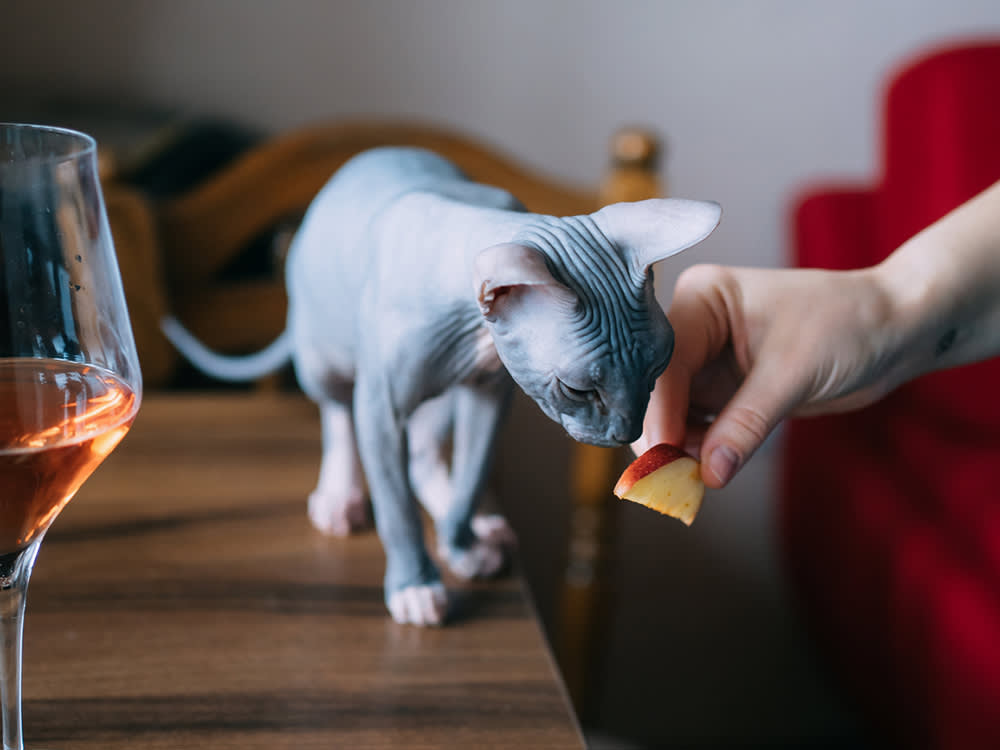
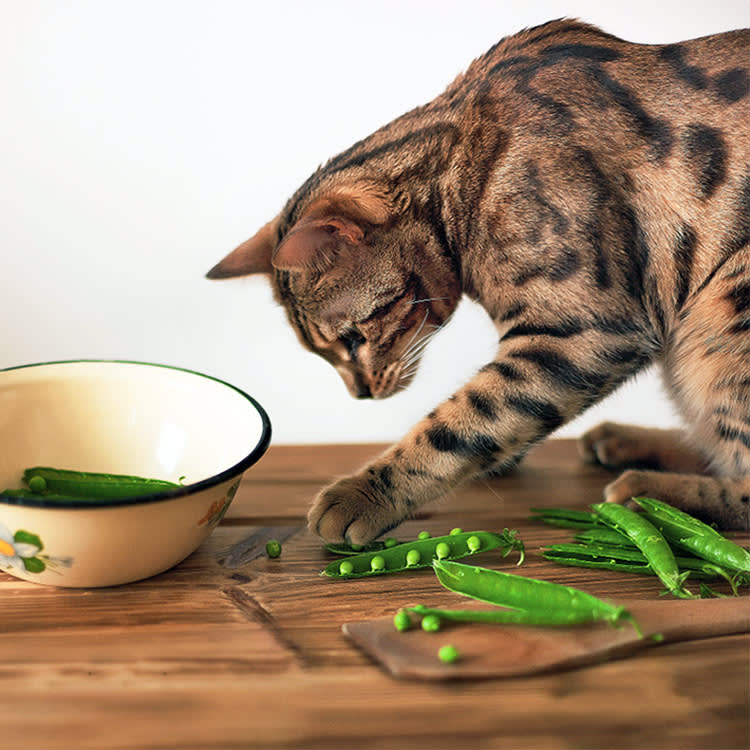
Generally fine in tiny, plain amounts: plain cooked lean meats are the standout, because that’s where a carnivore actually wants to get its calories, so a little unseasoned chicken breast is a genuinely good treat. Skinless apple is harmless in small bits, though without sweet taste your cat may not be impressed, and skip it for diabetic cats since the sugar still acts on the body even if it isn’t tasted. Plain cooked peas, a common cat-food ingredient, are safe in their unseasoned form, but supervise, because larger peas can lodge in a throat.
Never, under any circumstances: grapes and raisins are seriously toxic and there’s no safe amount, store them locked away and call your vet immediately on any suspected ingestion. Garlic and onions are toxic to cats and dogs both, which is the real reason “never feed seasoned food” is a rule, those two are base seasonings in countless dishes. Citrus carries potent essential oils that are toxic to cats whether eaten or absorbed through skin and fur, so the less contact, the better.
What the latest science adds
The biology behind your cat’s indifference has only gotten better documented. Researchers established years ago that cats carry a pseudogenized, non-working copy of the sweet-receptor gene, and more recent work on feline taste continues to map how cats experience flavor, reinforcing that they’re built around protein and savory notes rather than sweetness. So when your cat sniffs the mash and stalks off, that’s not pickiness. That’s a few million years of carnivore evolution telling you it didn’t come for dessert.
On the nutrition side, the conversation around plant ingredients in cat food has grown more careful as feline obesity stays stubbornly common. Veterinary nutritionists keep landing on the same line: fillers like sweet potato can contribute fiber and a few micronutrients, but a cat’s diet should stay firmly protein-forward, and a starchy treat is something to ration, not encourage.
The bottom line
Plain, cooked, mashed sweet potato is safe for cats, but “safe” and “worth it” aren’t the same thing. Your cat can’t taste the sweetness that makes the vegetable appealing to you, so it’s all starch and no payoff, which is exactly why it stays an occasional novelty. Keep every preparation that humans actually enjoy, the fries, the skins, the buttered and sugared holiday versions, away from your cat, and if your cat has any digestive or dietary issues, clear new foods with your vet first.
References
Common questions
Are sweet potatoes good for cats?
They carry vitamins A and C and potassium, but a cat gets the nutrition it needs from animal protein. Sweet potato is a starchy extra, not a benefit a cat is missing without it.
Why does my cat ignore sweet potato?
Cats carry a broken sweet-taste receptor gene, so they literally cannot taste sweetness. Any interest is about warmth, texture, or savory aromas, not the flavor people enjoy.
Not a substitute for your vet. Our guidance is educational. For urgent symptoms, contact a vet or emergency clinic right away. Editorial standards
Dr. Chen is a small-animal veterinarian who leads health and safety coverage at The Pet Times. She writes and reviews the bulk of our illness, condition, and safety content, translating clinical guidance into clear, practical advice owners can act on at home.
Meet our experts ↗Keep reading
 FoodCan Cats Eat Ice Cream? They Can't Even Taste Why You'd ShareDr. Lena Park · 6 min
 FoodThe 'Superfood' Strawberry Does Nothing for Your Cat. They Can't Even Taste ItDr. Priya Nair · 5 min
 FoodFor a Carnivore, 'Is It Safe?' Is the Wrong Question About Human FoodDr. Priya Nair · 6 min
 FoodApples Won't Hurt Your Cat. Your Cat Just Won't CareDr. Priya Nair · 4 min
 FoodPeas Off Your Plate Are Fine for Cats. Peas in the Bag Are the Ones to Read AboutDr. Amara Solis · 6 min
 FoodBlueberries Are a 'Superfood' for You. To Your Cat, They're Barely FoodDr. Priya Nair · 5 min