


The 'Superfood' Strawberry Does Nothing for Your Cat. They Can't Even Taste It
Strawberries are safe for cats, but the health halo doesn't transfer to an obligate carnivore who is physically unable to taste sweetness. Here's what that means for whether you should bother, and when a berry is a bad idea.

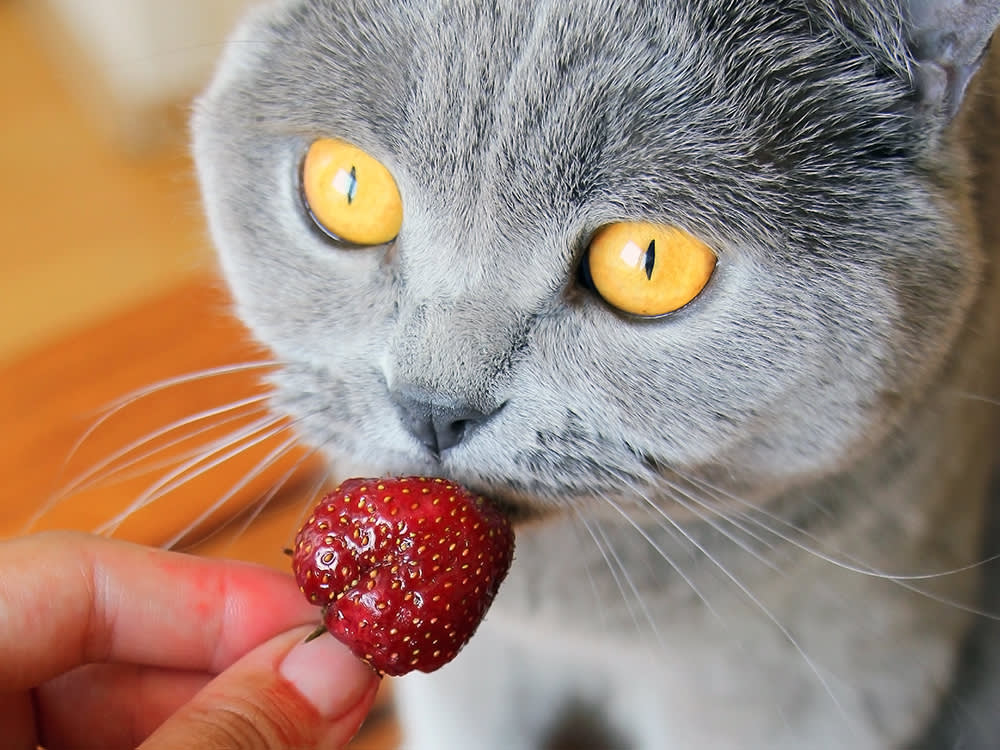
Strawberries wear a health halo. They are the poster fruit for “superfood,” stuffed with fiber, vitamin C, potassium, and antioxidants, and it is easy to assume that goodness carries over to your cat. It mostly does not, and the reason is more interesting than a simple “cats are different.” Your cat is physically unable to taste the sweetness that makes a strawberry appealing in the first place, and their carnivore body has little use for what a strawberry offers. So the real question is not whether cats can eat strawberries. They can. It is whether there is any point, and the answer reshapes how you should think about fruit for a cat.
Safe, yes. Useful, not really.
Let’s clear the safety question first, because it is the easy part. Strawberries are non-toxic to cats and fine in moderation. They do contain fiber, vitamin C, potassium, and antioxidants, and that nutritional punch packed into a low-calorie berry is exactly what earned strawberries their superfood reputation for humans. In theory the fiber could even help with the occasional constipated cat, though there is no real research showing strawberries do anything special for feline gut health.
The catch is that a cat is not a small person. Cats are obligate carnivores, and the nutrients that make strawberries valuable to us are largely ones a cat already gets, or does not particularly need, from a proper diet. What a cat does need, protein, the amino acid taurine, vitamin A, a strawberry simply does not provide. So a strawberry is not doing your cat any nutritional favors. It is a harmless novelty at best.
The part most articles skip: your cat can’t taste it
Here is the fact that reframes the whole topic. Cats are “sweet-blind.” They lack the receptors that let them taste sugar, the result of a genetic quirk that switched off the sweet receptor somewhere in their evolution as dedicated meat-eaters. Where a dog will happily chase down a strawberry to satisfy a sweet tooth, your cat gets none of that reward, because the sweetness that defines a strawberry to us is invisible to them.
That does not mean every cat ignores strawberries. Some are drawn to the smell, the juiciness, or the texture, and will investigate a berry the way they investigate anything interesting. But the pull is curiosity, not craving. It is worth knowing this before you go to any trouble: you may hold out a beautiful ripe strawberry and be met with a sniff and a walk-away, and nothing is wrong with your cat. They are simply not built to find it delicious.
People imagine they are treating their cat to something special, and the cat is basically shrugging. A cat cannot taste sweet at all, so the strawberry is not the little gift we think it is. I tell owners there is no harm in offering a nibble if the cat is curious, but do not feel you are depriving a cat by not sharing your fruit. You are not.
When a strawberry is actually a bad idea
Safe in general does not mean safe for every cat, and there are real limits. Because strawberries are high in sugar, eating too many can push a cat toward weight gain or, over time, contribute to diabetes risk. Diabetic and overweight cats should skip strawberries altogether, since the sugar can spike blood glucose and pile on calories they do not need. For any cat, the ceiling is low: no more than about half a strawberry at a sitting, and only now and then, with all treats combined kept under roughly ten percent of daily calories.
A few other cautions are worth holding onto. Cats can develop a food allergy after repeated exposure, so watch a berry-eating cat for a runny nose, itchy skin, diarrhea, swollen eyes, coughing, wheezing, or vomiting. Even without a true allergy, some cats are simply intolerant and will get an upset stomach. And while strawberry stems and leaves are technically non-toxic, they are hard to digest and can cause a gastrointestinal obstruction, so remove them; signs of a blockage include vomiting, loss of appetite, straining, and pain. Finally, stick to fresh berries. Canned strawberries and jams are packed in sugary syrup that a cat has no business eating.
The bottom line
Strawberries are safe for cats but nearly pointless for them: the superfood benefits are aimed at a human body, not a carnivore’s, and your cat cannot even taste the sweetness that makes the fruit appealing. If a curious cat wants a small nibble of fresh strawberry, half a berry now and then does no harm to a healthy cat. But keep it away from diabetic and overweight cats, remove the stems and leaves, watch for stomach upset, and let a complete, balanced cat food do the nutritional work a strawberry never could.
References
- Li, Xia, et al. “Cats Lack a Sweet Taste Receptor.” The Journal of Nutrition, vol. 136, no. 7, 2006. https://doi.org/10.1093/jn/136.7.1932S
- Salaün, Franck, et al. “Impact of Macronutrient Composition and Palatability in Wet Diets on Food Selection in Cats.” Journal of Animal Physiology and Animal Nutrition. https://onlinelibrary.wiley.com/
- ASPCA. “People Foods to Avoid Feeding Your Pets.” https://www.aspca.org/pet-care/animal-poison-control/people-foods-avoid-feeding-your-pets
- Zoran, Debra L. “The Carnivore Connection to Nutrition in Cats.” Journal of the American Veterinary Medical Association, vol. 221, no. 11, 2002. https://avmajournals.avma.org/
Common questions
Are strawberries good for cats?
Not especially. Strawberries lack the protein, taurine, and vitamin A that are essential for cats, and they are high in sugar. They are safe as an occasional novelty, not as a health food.
How many strawberries can a cat have?
Very little. No more than about half a strawberry at a time, and only occasionally. Treats of any kind should stay under roughly ten percent of your cat's daily calories.
Which cats should avoid strawberries entirely?
Diabetic and overweight cats, because the sugar can spike blood glucose and add unwanted calories. When in doubt with those cats, skip the berry and ask your vet.
Not a substitute for your vet. Our guidance is educational. For urgent symptoms, contact a vet or emergency clinic right away. Editorial standards
Dr. Nair is a veterinarian focused on diet and feeding. She covers everyday nutrition, treats, and the many "can they eat this?" questions owners ask, grounding each answer in what is actually safe and sensible for dogs and cats.
Meet our experts ↗Keep reading
 FoodCats Can Eat Eggs. Just Never Raw.Dr. Mara Chen · 4 min
 FoodRaspberries Are Safe for Your Cat. Your Cat Just Doesn't Care.Dr. Priya Nair · 5 min
 FoodPeas Off Your Plate Are Fine for Cats. Peas in the Bag Are the Ones to Read AboutDr. Amara Solis · 6 min
 Food'Superfood' Means Nothing to Your Cat. Spinach Included.Dr. Nina Kohl · 5 min
 FoodMango and Cats: The Flesh Is Fine, the Family Tree Is the CatchDr. Nina Kohl · 6 min
 FoodYour Cat Is Built to Eat Pork. The Deli Counter Is Where It Goes WrongDr. Amara Solis · 6 min