


Cats Can Eat Eggs. Just Never Raw.
Eggs are one of the few human foods that genuinely earn a spot in a cat's bowl. But the cooked-versus-raw line isn't fussiness, it's the whole safety story, and it got sharper in the last two years.

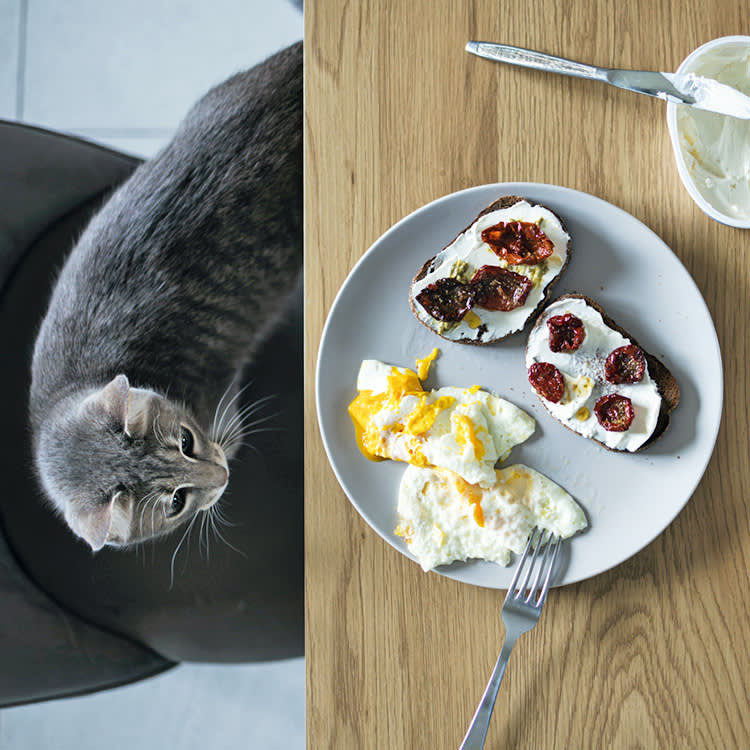
Most “can cats eat this” foods land somewhere between harmless and pointless. Eggs are the rare exception that are actually worth it. They are a high-quality, complete protein, and protein is the thing an obligate carnivore is built around. The catch is not whether cats can eat eggs. It is that the safe version and the risky version look almost identical on the counter, and only one of them belongs in your cat’s bowl.
That line, cooked versus raw, is the entire point of this article. Everything else is detail.
Why eggs are genuinely good for cats
A cooked egg delivers a dense package of nutrition that suits a cat’s biology well. You get complete protein with all the essential amino acids, plus fatty acids that support skin and coat health, vitamin B12, selenium, and a spread of other micronutrients. For a small carnivore, that is a lot of useful material in a couple of bites.
The important caveat is proportion. An egg is a supplement to a good diet, not a replacement for one.
Eggs are a great topper, not a meal. The trouble I see is a cat that fills up on egg and then walks away from the balanced food that actually covers all their nutritional bases. A tablespoon is a treat. Half an egg every day is a diet problem.
That is the reasoning behind the standard limit: treats of any kind should stay under about 10 percent of a cat’s daily calories. For most cats, a tablespoon or less of cooked egg, offered now and then, sits comfortably inside that budget.
Whites, yolks, and what each one does
The two parts of an egg are not interchangeable.
Egg whites are almost pure protein and low in fat, which makes them the better pick for a cat watching their weight. But they carry the single most important rule in this whole topic: they must be cooked. Raw egg white contains avidin, a protein that binds up biotin (a B vitamin) and blocks your cat from absorbing it. A steady diet of raw whites can push a cat toward a genuine biotin deficiency. Cooking denatures the avidin and makes the problem disappear.
Yolks are the nutrient-dense, higher-fat half, rich in vitamins A, D, and E. They are nutritious, but the fat is why they should stay occasional. Too much fatty food can trigger digestive upset, and in some cats it raises the risk of pancreatitis, an inflammation of the pancreas that is painful and sometimes serious.
The raw-egg problem, and why it got bigger
Raw eggs bring two hazards. The first is avidin, above. The second is Salmonella, which can cause vomiting, diarrhea, and more serious illness, and which an infected cat can also shed into your household.
There is now a third reason to cook, and it is newer than most feeding guides. Highly pathogenic avian influenza, H5N1 bird flu, has spread through poultry, and cats are strikingly susceptible to it. Over the past two years, cats have become sick and died after eating raw poultry-based pet foods, prompting a string of voluntary recalls and new federal guidance requiring raw pet-food makers to treat H5N1 as a real hazard. Cooking inactivates the virus. Raw does not.
The upshot: whatever appeal a “raw and natural” egg has, cooking is the move. It solves the avidin problem, the Salmonella problem, and the newest problem all at once, and it costs you thirty seconds at the stove.
The safe way to feed an egg
Serve it fully cooked and completely plain. Scramble it dry or hard-boil it, with no oil, butter, salt, or seasoning, since those additions do more harm than the egg does good. Let it cool, set aside a tablespoon or less, and offer it on its own or mixed into your cat’s usual food. The first time, especially with a kitten, give a tiny amount and watch for any stomach upset before making it a repeat treat.
Allergies to egg do exist, but they are uncommon compared with beef or fish sensitivities, and they usually show up as itchy skin or a queasy stomach. If you see either after egg, drop it and check with your vet.
What’s new since this was written
The biggest change is the bird-flu picture. In 2024 and 2025, veterinary and food-safety agencies documented cats becoming seriously ill or dying from H5N1 after eating raw or undercooked poultry products, and the FDA began requiring raw pet-food manufacturers to account for the virus in their safety plans. Several raw cat foods were recalled after testing positive.
None of this changes the good news about cooked eggs. It just retires any lingering argument for raw ones. If you feed your cat eggs, or any poultry, cook it through. That one habit closes off the oldest risks and the newest one in a single step.
References
- U.S. Food and Drug Administration. “Cat and Dog Food Manufacturers Required to Consider H5N1 in Food Safety Plans.” fda.gov
- American Veterinary Medical Association. “Cat deaths linked to bird flu-contaminated raw pet food, sparking voluntary recall.” avma.org
- National Institutes of Health. “Biotin deficiency and avidin in raw egg white.” pubmed.ncbi.nlm.nih.gov
- Cornell Feline Health Center. “Feeding Your Cat.” vet.cornell.edu
Common questions
Can cats eat raw eggs?
No. Raw eggs carry a real risk of Salmonella, and raw egg whites contain avidin, which blocks the absorption of the B vitamin biotin. Recent bird-flu findings in raw poultry products add another reason to cook.
How much egg can I give my cat?
Treats should stay under about 10 percent of your cat's daily calories. In practice that's a tablespoon or less of cooked egg, offered occasionally, not a daily portion.
Are eggs good for kittens?
A little cooked egg alongside a complete kitten food is fine, but introduce it slowly and in tiny amounts, since kittens have developing digestive systems.
Not a substitute for your vet. Our guidance is educational. For urgent symptoms, contact a vet or emergency clinic right away. Editorial standards
Dr. Chen is a small-animal veterinarian who leads health and safety coverage at The Pet Times. She writes and reviews the bulk of our illness, condition, and safety content, translating clinical guidance into clear, practical advice owners can act on at home.
Meet our experts ↗Keep reading
 FoodThe Tomato Is Safe for Your Cat. The Plant Can Poison Them.Dr. Priya Nair · 6 min
 FoodYour Cat's Plate-Begging Isn't Always Wrong. 8 Foods You Can Share.Dr. Mara Chen · 8 min
 FoodWhy Your Cat Runs From Bananas (and Whether a Bite Is Safe)Dr. Priya Nair · 5 min
 FoodPopcorn Is Safe for Cats. The Stuff We Put on It Is the ProblemDr. Ravi Mehta · 6 min
 FoodYour Cat Begs for Olives and Cheetos. There's a Chemical Reason Why.Dr. Priya Nair · 7 min
 FoodBlueberries Are a 'Superfood' for You. To Your Cat, They're Barely FoodDr. Priya Nair · 5 min