


The Tomato Is Safe for Your Cat. The Plant Can Poison Them.
People ask if cats can eat tomatoes and picture the fruit. The real hazard is the rest of the plant: leaves, stems, and unripe green tomatoes carry a toxin the ripe fruit doesn't. Here's the line that matters.

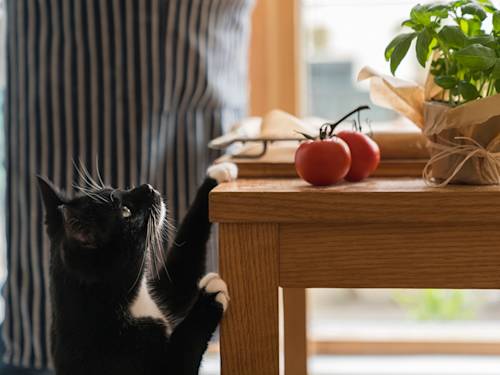
“Can cats eat tomatoes?” is one of those questions where the picture in your head is the safe part. You imagine a ripe red tomato, and yes, a little of that is fine. The danger lives in everything the question isn’t picturing: the vine, the leaves, the hard green tomato that hasn’t ripened yet. That’s the distinction most feeding guides bury near the bottom, and it’s the one that actually keeps a cat safe. So let’s lead with it.
Ripe fruit versus the rest of the plant
Tomatoes belong to the nightshade family, and like their relatives, potatoes and eggplant, they carry a natural defense compound. In tomatoes it’s a glycoalkaloid called tomatine, sometimes alongside solanine. These compounds are concentrated in the green parts of the plant: the leaves, stems, flowers, and unripe green fruit. They’re toxic to cats.
Here’s the elegant part of tomato biology that makes the fruit safe. As a tomato ripens, its tomatine levels drop to a negligible amount. So the same plant that’s toxic while green produces a fruit that, once fully ripe, is safe for a cat to nibble in moderation. The dividing line isn’t “tomato: yes or no.” It’s ripe fruit on one side, everything green on the other.
That’s why a cat batting a cherry tomato off the counter is a different situation from a cat chewing the leaves of your patio tomato plant. The first is harmless. The second warrants a call to the vet.
The tomato question is really two questions, and owners usually only ask the safe one. A bite of ripe tomato flesh won’t hurt a cat. But I’ve seen the worry go the other way, someone panicking over a slice of red tomato while a leafy tomato plant sits on the windowsill. The plant is the part I want cats away from. If your cat likes to chew greenery, keep the tomato plant somewhere they genuinely can’t reach.
What plant poisoning looks like
If a cat does ingest the toxic green parts, the usual signs are drooling, vomiting, diarrhea, loss of appetite, and lethargy. The reassuring reality is that most cats don’t consume enough plant matter to cause severe or fatal harm, and the typical case is self-limiting stomach upset. Still, the concentration of these toxins varies a lot from plant to plant, so it’s worth having your cat examined if you believe they’ve eaten tomato leaves, stems, or green fruit rather than assuming it’ll pass on its own.
The ripe fruit, kept in perspective
Now the fruit. Ripe tomato is safe in small amounts, and it does carry some nutrients, though a cat’s biology makes most of them beside the point. There’s fiber, mostly insoluble, that adds a little bulk to stool. There’s potassium, useful for muscle, heart, and nerve function. There’s lycopene, the antioxidant tomatoes are famous for, which cats don’t specifically require but may get a mild benefit from. And there’s a lot of water, which cuts two ways: it’s gently hydrating, but it also fills a cat’s small stomach without providing the animal protein they actually run on.
Two nutrients deserve a footnote for cats specifically. Tomatoes are rich in vitamin C, which sounds healthy but is irrelevant here: cats make their own vitamin C, and too much can actually raise the risk of bladder stones. And the fruit is very low in fat and protein, the nutrients that dominate a proper feline diet. So a tomato is a novelty, not nourishment. Some commercial cat foods do use tomato pomace as a fiber source, but that’s a formulated ingredient, not a reason to feed tomatoes at home.
How to share ripe tomato safely
If your cat is one of the odd ones who enjoys chasing and popping a tomato, offer only ripe fruit, in small, bite-sized pieces to avoid a choking hazard from whole cherry tomatoes or large chunks. Peel off tough skin that’s hard to chew. And watch what the tomato is served in: skip tomato-based sauces and cooked dishes, which are routinely made with garlic, onion, salt, or spicy peppers, all of which range from unhealthy to toxic for cats. Keep any tomato treat within the 90/10 rule, with complete cat food making up at least 90 percent of the diet.
What’s new since this was written
The core botany here hasn’t changed, ripe fruit safe, green plant toxic, but poison-control resources have gotten better at helping owners tell the difference and act fast, and the practical advice has consolidated around keeping the plant out of reach rather than fussing over the occasional bite of ripe fruit. If you grow tomatoes, the current guidance is straightforward: treat the plant like any other houseplant that’s toxic to cats and site it where a climbing, chewing cat can’t get to it.
The other useful update is about weight and watery treats. With cat obesity climbing, roughly a third of owners now report an overweight cat, the case against filling a cat up on low-value, high-water foods like tomato has only strengthened. It’s not that a bite hurts; it’s that the treat budget is small and better spent on protein a carnivore can use.
Foods that are safer to share
For a cat who likes to sample, a few options beat tomato: a bite of plain cooked chicken or turkey, a small piece of plain cooked egg, or a couple of blueberries. These bring protein or antioxidants a cat can partly use, rather than mostly water.
Foods and plants to keep away
Beyond the tomato plant itself, keep garlic and onion (and anything cooked with them) away from cats, since they can cause life-threatening anemia. Grapes and raisins can harm the kidneys, and many cheeses are risky given feline lactose intolerance. When in doubt about a plant or food, call your vet or a pet poison hotline before offering it.
FAQs
Can cats eat tomato sauce or ketchup? No. These are typically made with garlic, onion, salt, and sugar, which are unhealthy or toxic for cats even though the ripe tomato base is fine.
How much ripe tomato can a cat have? Just a small bite as an occasional treat, kept within the 10 percent of daily calories reserved for treats.
Why is my cat interested in tomatoes? Often the movement, cats enjoy batting round fruit, and the texture and pop of the flesh. Many cats aren’t interested at all once they taste it.
References
Not a substitute for your vet. Our guidance is educational. For urgent symptoms, contact a vet or emergency clinic right away. Editorial standards
Dr. Nair is a veterinarian focused on diet and feeding. She covers everyday nutrition, treats, and the many "can they eat this?" questions owners ask, grounding each answer in what is actually safe and sensible for dogs and cats.
Meet our experts ↗Keep reading
 FoodYour Cat's Plate-Begging Isn't Always Wrong. 8 Foods You Can Share.Dr. Mara Chen · 8 min
 FoodCats Can Eat Pineapple. They Literally Can't Taste the Point.Dr. Ravi Mehta · 3 min
 FoodCats and Marshmallows: The Bag Your Dog Should Worry About MoreDr. Priya Nair · 6 min
 FoodApples Won't Hurt Your Cat. Your Cat Just Won't CareDr. Priya Nair · 4 min
 FoodPopcorn Is Safe for Cats. The Stuff We Put on It Is the ProblemDr. Ravi Mehta · 6 min
 FoodYour Cat Can Eat Pomegranate. That's Not the Same as Should.Dr. Priya Nair · 5 min