


Popcorn Is Safe for Cats. The Stuff We Put on It Is the Problem
Plain, air-popped popcorn is non-toxic and even mildly enriching for a curious cat. But popcorn is almost never just corn, and the butter, salt, and flavorings around it are where the real risk lives. Here's how to share it without the disguise.

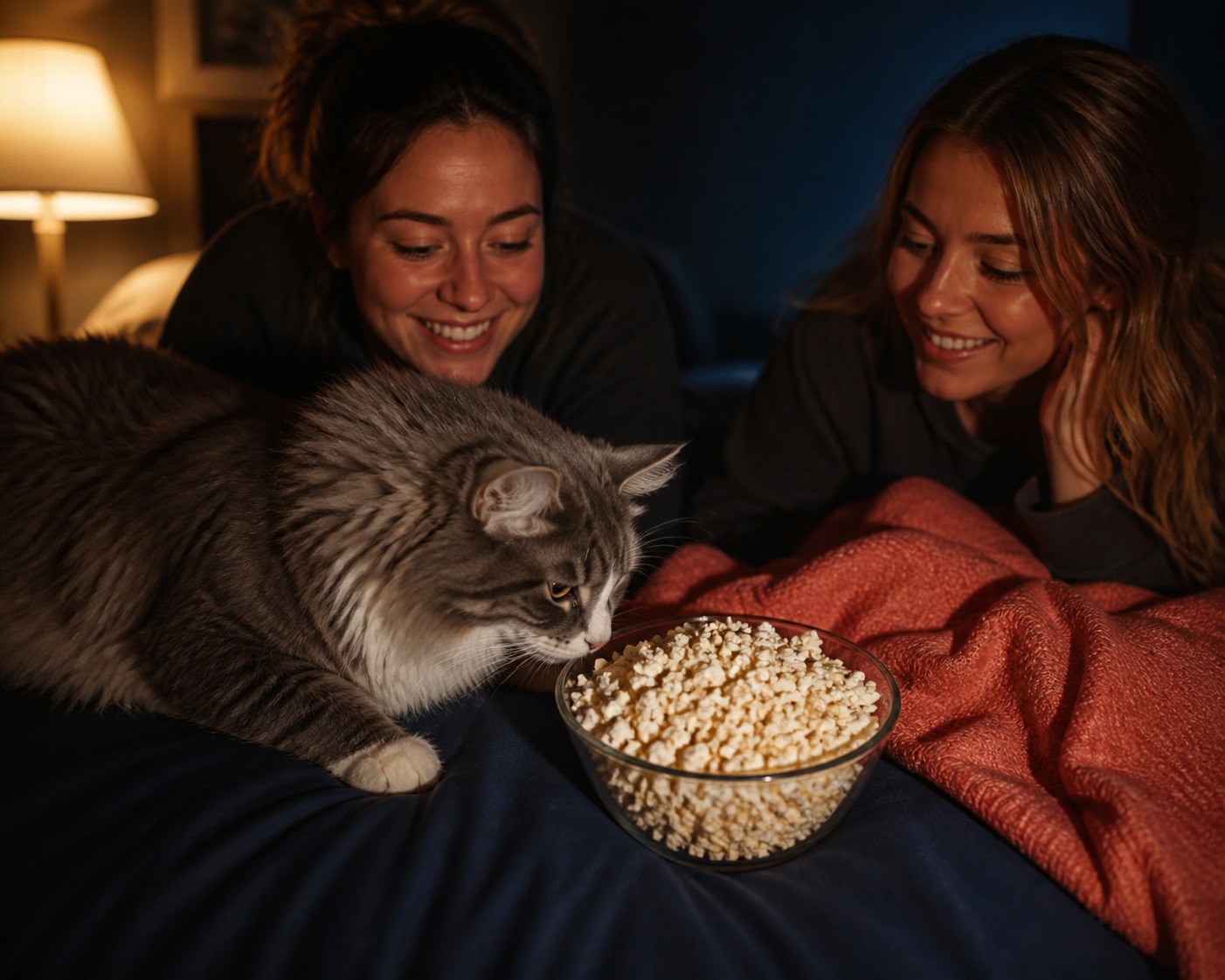
Type “can cats eat popcorn” into any search bar and you’ll get a chorus of yeses, usually followed by a quick note to skip the butter. That answer is correct and also slightly misleading, because it treats the butter as a footnote when the butter is really the whole story. Plain popped corn is one of the more harmless things a cat could steal off the couch. But popcorn almost never arrives plain. It is a snack defined by what we coat it in, and for a cat, the disguise is the danger. The corn is fine. The costume it’s wearing is the part to worry about.
The corn itself: genuinely fine, mildly interesting
Strip popcorn back to what it actually is and the worry evaporates. A kernel is a hard seed with a trace of water inside; heat it, the water flashes to steam, pressure builds until the kernel bursts, and the starch puffs into that airy shape. Corn shows up safely in plenty of commercial cat foods, so the base ingredient is already familiar to your cat’s diet.
Nutritionally, a piece of plain popcorn is mostly carbohydrate, with a little fiber and a few plant antioxidants along for the ride. In a cat, those translate to modest, take-it-or-leave-it perks: fiber that feeds gut microbes and adds bulk, starch the body can burn for quick energy even though cats don’t strictly need carbs, and polyphenols that have been linked to cell protection. None of this is a reason to feed your cat popcorn. It just means a stray plain piece is harmless.
There’s also a quieter case for it, and it has nothing to do with nutrition. Indoor cats get bored, and popcorn is, frankly, a great toy. It’s light, it bounces, it skitters across the floor, and it crunches when a curious cat finally bites it. The enrichment of a new texture to bat around and investigate is arguably the best thing popcorn offers a cat, more than any fiber.
Popcorn lands in the harmless-but-pointless category for most cats, and I mean that as reassurance, not a warning. A plain piece or two won’t hurt a healthy adult, and plenty of cats enjoy chasing it more than eating it. The problems I see almost never come from the corn. They come from everything we add to make it taste like a movie.
The disguise: where the actual risk lives
Here is the reframe that matters. When someone’s cat gets sick after popcorn, the culprit is reliably one of the things layered onto the corn, not the corn itself.
- Salt. Movie-style and most store-bought popcorn is heavily salted, and a cat’s small body has no use for that sodium load. Over-salted snacks are an easy way to push a cat past what its kidneys want to handle.
- Butter and oil. Fat is the fast track to a cat’s upset stomach, and a buttery snack on top of a complete diet is just surplus calories pointing toward a heavier cat.
- Seasonings. This is the sharp edge. Garlic salt, onion powder, and the flavor dusts on many snack popcorns contain allium compounds that are toxic to cats and can damage red blood cells. A “harmless” handful of flavored popcorn can carry a genuinely unsafe ingredient.
- Diacetyl, the microwave problem. Some microwave popcorns use diacetyl, an artificial butter flavoring linked to serious lung injury. The risk to a cat from one stray piece is low, but it’s one more reason microwave bags are the worst kind to share.
The fix is almost insultingly simple: if you want to give your cat a taste, set aside a few plain, air-popped pieces before you add a single thing to your own bowl. Share from the un-costumed batch.
Then there’s the kernel problem
Popped corn and un-popped kernels are two different hazards, and the kernels are the more physical danger. A raw kernel is rock-hard and sometimes pointy. It can chip or crack a tooth on that tough shell, scratch the delicate lining of the throat or gut, and resist digestion well enough to trigger gas, bloating, vomiting, or diarrhea. The half-popped “old maids” hiding at the bottom of the bowl count too. Keep raw and un-popped kernels out of paw’s reach entirely.
The safe-snacking checklist
If you’re going to share, a few rules keep it genuinely safe rather than technically safe:
- Plain and air-popped, always. No butter, oil, salt, sugar, or flavoring. Pull your cat’s pieces before you season yours.
- Break it small. A whole piece is large enough to be a choking risk for a cat. Tear or crush it into little bits.
- Skip the kernels. Raw and un-popped kernels are off-limits.
- Avoid the microwave bag. Between heavy seasoning and diacetyl, it’s the version least worth sharing.
- Keep it occasional. Like every treat, it should stay under 10 percent of daily calories, with the rest coming from a complete and balanced cat food.
The bigger picture: cats and “people food”
The popcorn rule is really a microcosm of a bigger one. There’s a saying in veterinary medicine that cats aren’t just tiny dogs, and they’re even less like tiny humans. A cat is an obligate carnivore, built around animal protein and fat, and poorly suited to processing the carbs and sugars that fill the human snack shelf. Your cat may seem to read your mind, but the two of you do not share a diet.
That doesn’t make every human food off-limits. It means the worthwhile ones are small, plain, and occasional, more enrichment than nutrition, while the genuinely dangerous ones, the alliums, the chocolate, the grapes, stay firmly on your side of the table. Popcorn fits the pattern exactly: fine as a plain, rare, broken-up nibble, risky the moment it’s dressed up.
The bottom line
Yes, cats can eat popcorn, but the headline buries the real point. The corn is one of the most harmless things in the bowl; the salt, butter, seasonings, and the hard kernels are where cats actually get into trouble. Treat popcorn as a costume problem. Share only the plain, air-popped, un-costumed version, in small pieces, once in a while, and you turn a movie-night temptation into a perfectly safe little moment with your cat. Dress it up first, and you’ve handed your carnivore a snack built for a human.
References
Common questions
Can cats eat buttered or salted popcorn?
No. The corn itself is harmless, but butter adds fat that can upset a cat's stomach, salt loads on sodium a small body doesn't need, and seasonings like garlic or onion powder are outright toxic. If you want to share, pull a plain portion before you season your own.
Are raw popcorn kernels dangerous for cats?
Yes, more than the popped kind. Hard, un-popped kernels can chip teeth, scratch the throat or gut, and are very hard to digest, which can cause vomiting or diarrhea. Keep raw kernels and the un-popped 'old maids' at the bottom of the bowl away from your cat.
Is microwave popcorn safe for cats?
It's the riskiest kind to share. Many microwave varieties are heavily salted and buttered, and some use diacetyl, an artificial butter flavoring linked to lung damage. Stick to plain, air-popped corn if you want to give your cat a piece.
Not a substitute for your vet. Our guidance is educational. For urgent symptoms, contact a vet or emergency clinic right away. Editorial standards
Dr. Mehta is a board-certified veterinary nutritionist who evaluates pet food formulations, ingredient quality, and the science behind dietary trends. He writes and reviews all nutrition content at The Pet Times, including our food rankings and feeding guides.
Meet our experts ↗Keep reading
 FoodYour Cat Can't Taste Sweet. So Which Fruits Are Even Worth Offering?Dr. Amara Solis · 6 min
 FoodRaspberries Are Safe for Your Cat. Your Cat Just Doesn't Care.Dr. Priya Nair · 5 min
 FoodYour Cat Doesn't Want a Popsicle. It Wants What the Popsicle Pretends to Be.Dr. Ravi Mehta · 5 min
 FoodYour Cat Is Built to Eat Pork. The Deli Counter Is Where It Goes WrongDr. Amara Solis · 6 min
 FoodYour Cat's Plate-Begging Isn't Always Wrong. 8 Foods You Can Share.Dr. Mara Chen · 8 min
 FoodCan Cats Eat Ice Cream? They Can't Even Taste Why You'd ShareDr. Lena Park · 6 min