


Your Cat Can't Taste Sweet. So Which Fruits Are Even Worth Offering?
Cats are missing the receptor that makes fruit appealing, which changes the whole question. It's not just what's safe, it's what your cat might actually bother with, and the short list of fruits that are genuinely worth a nibble.

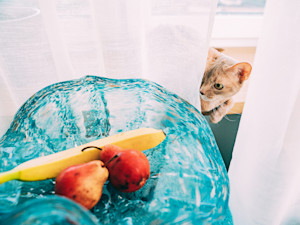
Here’s the fact that should reframe every “can my cat eat this fruit” question you’ve ever had: cats can’t taste sweet. They’re missing the working version of the receptor that makes strawberries and watermelon delightful to us, so the sugar that makes fruit fruit is simply invisible to them. That grape you find irresistible registers to your cat as a small, wet, texturally weird object, not a treat.
Which means the real question isn’t only which fruits are safe. It’s which fruits your cat might actually bother with, and why. Cats are obligate carnivores. They don’t need fruit at all, and their diets should run on animal protein. But some cats do go for the odd piece, drawn not by the flavor but by the cool, juicy texture and the smell. So this is less a menu and more a short, honest list: the fruits that are safe, the two that could actually appeal, and the ones to keep off the counter entirely.
We checked the safety details carefully, because when it comes to feeding cats fruit, guessing is exactly the wrong move.
First, the hard no’s
Some fruit isn’t a “in moderation” situation, it’s a “never.” Grapes and raisins can cause kidney damage in cats and should never be offered, not even one. Cherries are out too: the pits, stems, and leaves contain compounds that release cyanide, and the pit is also a choking and obstruction risk. Citrus, while not as dangerous, tends to upset cats’ stomachs and they generally hate the smell anyway, which is why burying citrus peels in a houseplant’s soil is an old trick for keeping cats from chewing the leaves.
The universal rule for everything below: no pits, no seeds, no rind, no stems. Cut fruit into small, bite-sized pieces.
The seeds and pits are where people get into trouble, not the fruit itself. I tell clients to treat any round fruit like a choking hazard until it’s cut down, quarter the berries, and skip anything with a pit entirely. And keep it tiny, because a cat filling up on fruit is a cat not eating the food that actually meets its needs.
The two that might actually tempt your cat
If any fruit is going to win your cat over, it’s the wet, mild ones.
Watermelon is the standout, precisely because it isn’t really about sweetness. It’s about 92 percent water, which makes it a genuinely useful hydration nibble for a species famous for not drinking enough. It’s low in calorie and carries some vitamin A and potassium. Remove the rind and every seed, since both can cause problems, and offer a small cube of the flesh. A dehydrated cat on a hot day is exactly the customer for this one.
Melon in general lands well for the same reason. Cantaloupe and honeydew are soft, watery, and mild, with a bit of vitamin A and C. Some cats are oddly enthusiastic about cantaloupe in particular, and the leading theory is that its aroma carries compounds that smell faintly like meat to a feline nose. Rind off, cut small.
The safe-but-shrug list
These won’t hurt your cat, and a few cats will take an interest, but don’t be surprised by a sniff and a walk-away.
Blueberries pack a lot into very little: fiber, vitamins C and K, and a heavy load of antioxidants. They’re a reasonable nibble, but a whole blueberry is a choking hazard for a small mouth, so slice them. Strawberries are high in fiber, which can gently help a constipated cat, and they’re a fine occasional bite with the leafy top removed. Apple is safe in small amounts of peeled flesh; avoid the skin for easier digestion and absolutely avoid the seeds, stem, and leaves, which contain cyanide compounds. Skip dried apple, which concentrates the sugar. Banana is safe and some cats acquire a taste for it, though plenty of cats react to bananas with pure theatrical disgust, which is worth having a camera ready for.
And a bonus that isn’t technically a fruit but earns its spot: plain cooked or canned pumpkin (not pie filling, which has spices like cinnamon and nutmeg that can be toxic) is a genuinely useful one, a fiber source that can ease mild constipation, diarrhea, and hairballs. Of everything on this page, it’s the one with a real functional reason to keep on hand.
The bottom line
Fruit is a novelty for cats, not a food group. Because they can’t taste sweetness, most fruit does nothing for them, and the ones worth offering earn their place through moisture and texture rather than flavor, watermelon and melon at the top, pumpkin for its fiber, the berries and apple as harmless nibbles your cat may or may not humor you by eating. Keep portions tiny, prep out every seed, pit, and rind, and never let the fruit bowl distract from the meat-based diet a cat is actually built to run on.
What’s new worth knowing
The grape-and-raisin warning got a firmer scientific footing recently. For years, no one knew what in grapes was toxic. Research now strongly implicates tartaric acid, the same compound behind the poisoning risk in tamarind and, notably, in homemade play dough. The practical upshot for cat owners: the danger isn’t a mystery quirk to second-guess, it’s a real toxin, and it means grapes and raisins deserve the same hard “never” you’d give a genuinely poisonous plant. There’s no established safe amount, so there’s no reason to test it.
References
Common questions
Which fruits are toxic to cats?
Never feed grapes, raisins, or cherries. Grapes and raisins can cause kidney damage, and cherry pits, stems, and leaves contain cyanide compounds. Citrus is also best avoided. When in doubt, leave it out.
How much fruit can a cat have?
Very little. Treats of any kind, fruit included, should stay under about 10 percent of daily calories. A couple of small, bite-sized pieces is plenty. The bulk of a cat's diet must come from a complete, balanced cat food.
Not a substitute for your vet. Our guidance is educational. For urgent symptoms, contact a vet or emergency clinic right away. Editorial standards
Dr. Solis is a board-certified veterinary dermatologist with over twelve years of clinical experience. She advises on skin conditions, allergies, and grooming practices that affect coat and skin health. All dermatology and allergy content at The Pet Times is reviewed by her team before publication.
Meet our experts ↗Keep reading
 FoodPumpkin Is the Rare 'Human Food' Your Cat Might Actually NeedDr. Lena Park · 5 min
 FoodThe Real Question About Cats and Cheese Isn't Whether, It's WhichDr. Mara Chen · 6 min
 FoodCats Can Eat Eggs. Just Never Raw.Dr. Mara Chen · 4 min
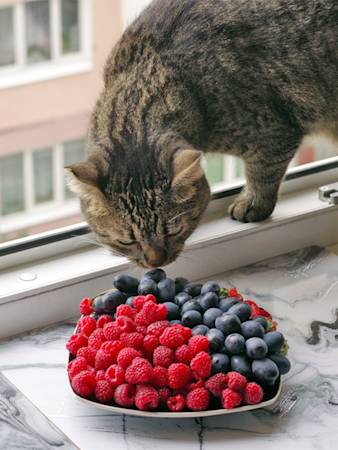 FoodRaspberries Are Safe for Your Cat. Your Cat Just Doesn't Care.Dr. Priya Nair · 5 min
 FoodShrimp Is the Rare Cat Treat That's Actually Lean, If You Lose the ShellDr. Priya Nair · 6 min
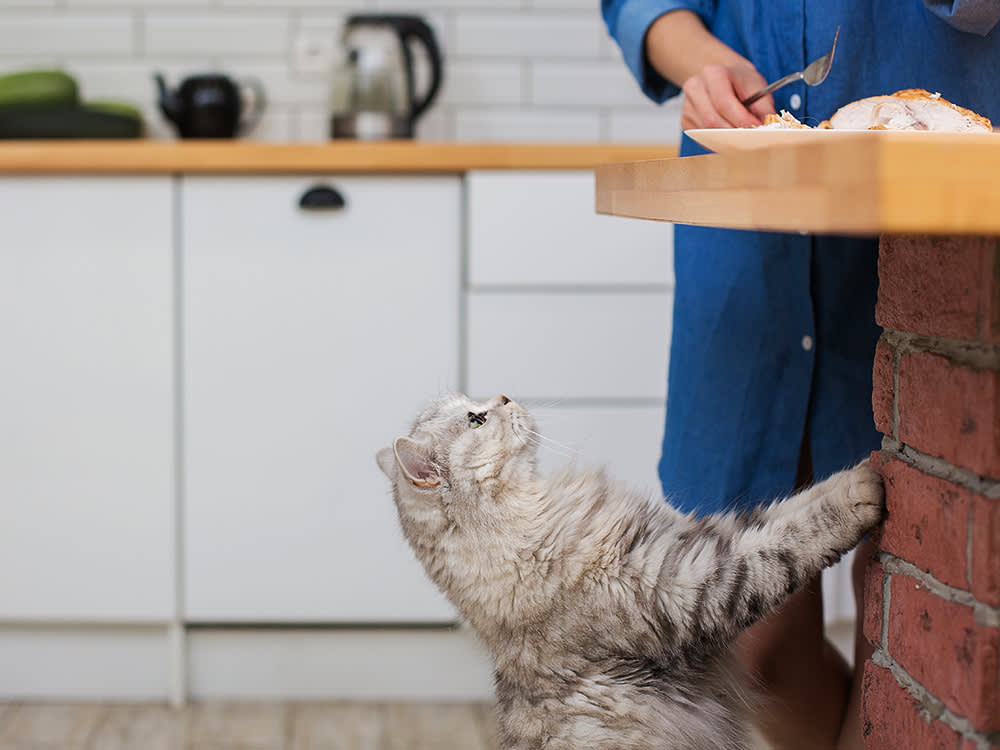 FoodYour Cat's Plate-Begging Isn't Always Wrong. 8 Foods You Can Share.Dr. Mara Chen · 8 min