


Shrimp Is the Rare Cat Treat That's Actually Lean, If You Lose the Shell
Plain cooked shrimp is high in protein and low in fat, which makes it a smart treat for the cat watching their weight. Here's who it suits, who should skip it, and why the shell has to go.

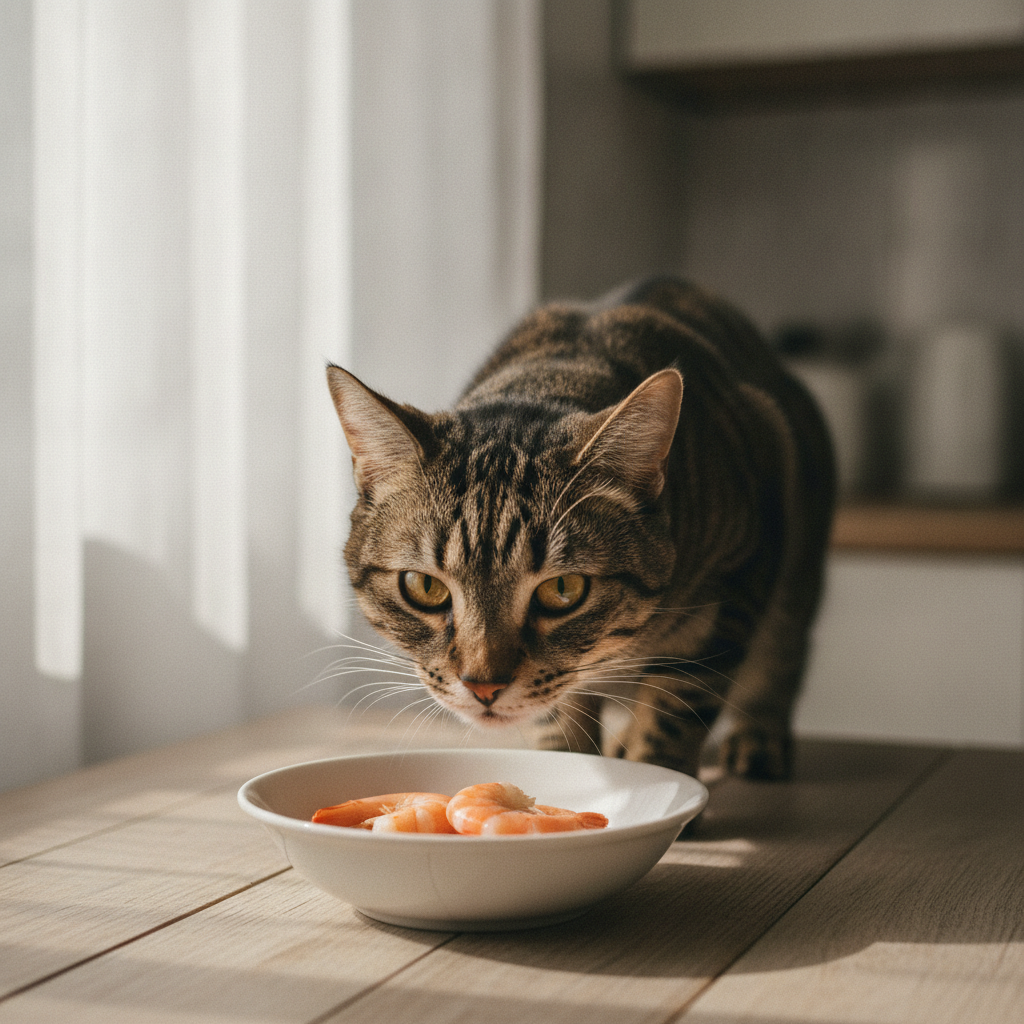
Most cat treats force a small trade-off: the things cats love tend to be rich, fatty, or calorie-dense, which is fine in tiny amounts but adds up fast in an indoor cat who naps for a living. Shrimp is the unusual exception. It is high in the animal protein cats crave and genuinely low in fat and calories, which makes it one of the few “people foods” that is arguably a smart treat rather than just a permissible one, especially for a cat carrying a little extra weight. The whole catch is in the preparation. Get the shell and the seasonings wrong, and a good treat turns into a vet visit.
So yes, cats can eat shrimp. The more useful version of the answer is: here is who it suits, who should pass, and exactly how to serve it.
Why shrimp is the lean choice
Cats are obligate carnivores with high protein requirements, and shrimp is essentially lean muscle. A small piece of plain cooked shrimp gives a meaty, satisfying hit of protein with very little fat behind it, the opposite profile of most rich treats. For a sedentary or overweight cat, that matters: you can offer a real reward, for training, for bonding, for tempting a picky eater, without much of a calorie penalty.
Beyond the lean protein, shrimp brings a few extras worth having:
- Omega-3 fatty acids (EPA and DHA): like other seafood, shrimp supplies these, which support brain and eye development in kittens and offer anti-inflammatory benefits to adults.
- Trace minerals and vitamins: shrimp meat carries a useful spread of micronutrients alongside its protein.
None of this makes shrimp a meal. It is not part of a balanced feline diet, and it should stay a treat. But as treats go, the nutritional math is unusually favorable.
Who should skip it
A responsible answer has to include the cats for whom shrimp is a bad idea, a distinction worth making before you reach for the plate.
Cats with hyperthyroidism. Shrimp and other shellfish absorb iodine from seawater. In a healthy cat, a little iodine is no problem and can even be beneficial. But cats with hyperthyroidism are sometimes managed on iodine-restricted diets, and shrimp could work against that. If your cat has hyperthyroidism, or any chronic condition, check with your vet before sharing.
Cats with a fish or shellfish allergy. Cats can be allergic to seafood. If your cat has a known fish or shellfish allergy, avoid shrimp entirely. If you are introducing it for the first time, offer a tiny piece and watch for vomiting, diarrhea, itching, or facial swelling before giving more.
The shell is the real hazard
Here is the part that turns a safe treat unsafe: the shell and tail. They are made of chitin, a tough material that cats cannot easily digest. A cat who swallows a piece of shell or tail can choke on it, suffer vomiting or diarrhea from the indigestible material, or, in the worst case, develop an intestinal blockage if a large undigested piece lodges in the gut, a genuine surgical emergency.
So before any shrimp goes to a cat: peel it completely, remove the tail, devein it, and cut larger shrimp into bite-sized pieces so an eager cat cannot bolt down a chunk that is too big. The meat inside is the treat. Everything on the outside is the risk.
The other rules of safe shrimp
A few more things separate safe shrimp from a problem:
- Cook it thoroughly. Raw or undercooked shrimp can carry pathogens. Cook shrimp to a safe temperature, and serve it plain.
- Plain means plain. This is where most shrimp goes wrong. Shrimp scampi, garlic butter, Cajun seasoning, cocktail sauce, a heavy salting, all of it makes shrimp unsafe. Garlic and onions are toxic to cats; salt, sugar, spice, and added fats are unhealthy. Set aside a plain boiled or steamed shrimp before you season the batch.
- Mind the mercury, lightly. Shrimp sits low on the food chain, so its mercury levels are small, far lower than large fish like tuna. An occasional piece poses minimal risk; this is not a reason to avoid shrimp, just a reason not to make it a daily habit.
Shrimp is one of the few treats I’m happy to recommend for a cat on a diet, because the calories are so low for the protein you get. I just always say it in the same breath as: shell off, tail off, nothing on it. The shell is where the trouble starts.
The bottom line on cats and human food
Cats can enjoy many human foods, but they are built differently from us. As obligate carnivores they need a complete, balanced cat food for the bulk of their diet, and they handle carbohydrates and sugar far less efficiently than we do, so carb-heavy or sweet treats are best avoided. Keep all treats and table foods under about 10 percent of total calories, both to protect their nutrition and to prevent the weight gain that drives problems like diabetes and arthritis. A few other cat-safe nibbles in moderation: a blueberry or two, a little peanut butter, and small amounts of carrot. A few to always avoid: chocolate, garlic (which can cause life-threatening anemia), and cinnamon. When you keep those guidelines in mind, sharing the occasional shrimp becomes a fun, low-cost bit of enrichment, and one of the smarter treats you can offer.
Frequently asked questions
Can cats eat shrimp?
Yes, plain cooked shrimp, peeled, deveined, with the shell and tail removed, is a safe, high-protein, low-fat treat for most cats in small amounts.
Can cats eat shrimp with the shells on?
No. The shell and tail are made of chitin, which is hard to digest and can cause choking, stomach upset, or an intestinal blockage. Always remove them first.
Why is shrimp a good treat for an overweight cat?
Shrimp is high in protein but unusually low in fat and calories, so it delivers a meaty reward without much of a calorie cost, a sensible pick for a cat watching their weight.
Are shrimp safe for cats with health problems?
Not always. Cats with hyperthyroidism may need to limit the iodine shrimp contains, and cats with a fish or shellfish allergy should avoid it. Check with your vet first.
References
- Tufts University Cummings School of Veterinary Medicine, Clinical Nutrition Service: The Skinny on Fat
- Merck Veterinary Manual: Disorders of the Thyroid Gland in Cats (iodine and hyperthyroidism)
- U.S. FDA: Mercury Levels in Commercial Fish and Shellfish (1990-2012)
- Merck Veterinary Manual: Foodborne Illness and Seafood Safety
Not a substitute for your vet. Our guidance is educational. For urgent symptoms, contact a vet or emergency clinic right away. Editorial standards
Dr. Nair is a veterinarian focused on diet and feeding. She covers everyday nutrition, treats, and the many "can they eat this?" questions owners ask, grounding each answer in what is actually safe and sensible for dogs and cats.
Meet our experts ↗Keep reading
 FoodThe Tomato Is Safe for Your Cat. The Plant Can Poison Them.Dr. Priya Nair · 6 min
 FoodCan Cats Eat Ice Cream? They Can't Even Taste Why You'd ShareDr. Lena Park · 6 min
 FoodRice and Cats: Safe to Share, but Not for the Reason You ThinkDr. Ravi Mehta · 7 min
 FoodApples Won't Hurt Your Cat. Your Cat Just Won't CareDr. Priya Nair · 4 min
 FoodThe Real Problem With Feeding Your Cat Ham Isn't Toxicity. It's MathDr. Ravi Mehta · 4 min
 FoodCats Can Eat Eggs. Just Never Raw.Dr. Mara Chen · 4 min