


Cats and Marshmallows: The Bag Your Dog Should Worry About More
A marshmallow won't poison your cat, but it can choke them. The bigger danger hides in the sugar-free bag, where an ingredient that's harmless to cats can be lethal to a dog in the same house.

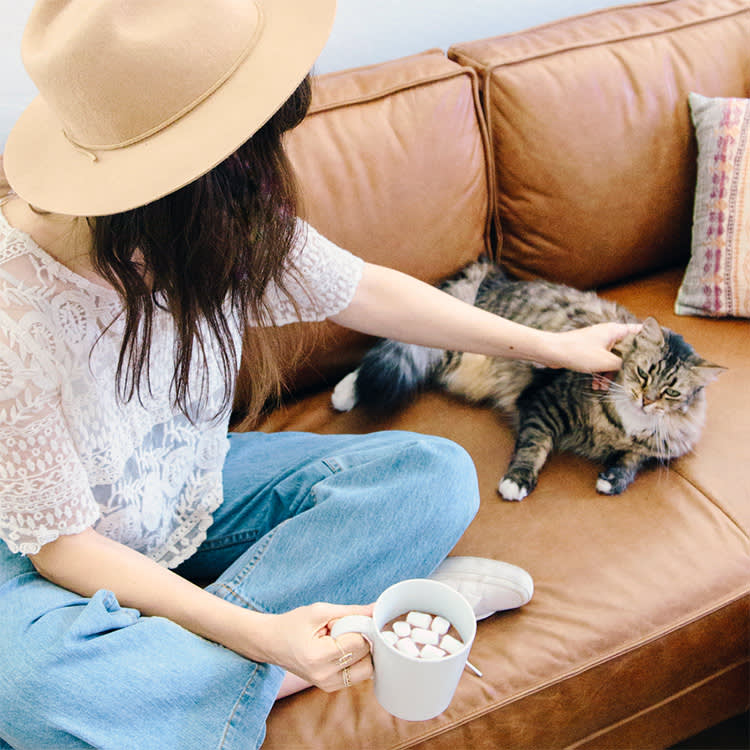
A marshmallow is a low-stakes snack for a cat. It’s the wrong snack, but a stolen one rarely ends in disaster. So instead of spending this whole article on a treat your cat can’t even taste and probably doesn’t want, let’s spend most of it on the part that actually deserves your attention: the difference between a regular bag of marshmallows and a sugar-free one, and why that difference can matter enormously if there’s a dog in your house.
First the basics, quickly, then the part worth remembering.
The quick version: regular marshmallows, regular caution
Can cats eat marshmallows? No, they shouldn’t, but not because a normal marshmallow is poisonous. It isn’t. The reasons to skip them are smaller and more practical.
They’re pure sugar and fat with zero nutritional value for a cat, and cats are obligate carnivores who handle sugar poorly and can’t taste sweetness in the first place. So a marshmallow offers your cat nothing they need and nothing they can even enjoy.
The more immediate concern is the texture. That thick, pillowy, slightly sticky softness that we love is genuinely awkward for a small animal to chew and swallow, which makes a whole marshmallow a real choking hazard for a cat. Marshmallow fluff is the same problem in a stickier package, and also a mess you do not want to peel off a squirming cat.
If your cat does sneak one, here’s the honest triage: don’t panic. Watch them for choking in the moment, then keep an eye out for vomiting or diarrhea over the next day, and call your vet if anything seems off. A regular marshmallow or two is very unlikely to cause real harm.
That’s the standard bag. The sugar-free bag is a different story, and it’s the reason this article exists.
The part that matters: the sugar-free bag and xylitol
Here’s the twist most “can cats eat marshmallows” articles miss entirely. Sugar-free and “keto” marshmallows are often sweetened with xylitol, a sugar alcohol, and xylitol behaves very differently across species.
For cats, the current evidence suggests xylitol is not the acute danger it is for dogs. But for dogs, xylitol is genuinely dangerous, even toxic in small amounts. In a dog, it triggers a rapid, dramatic insulin release that can crash blood sugar within 30 to 60 minutes, causing weakness, shaking, stumbling, and seizures, and larger doses can cause liver damage that may become life-threatening.
Now connect the dots in a typical home. You buy sugar-free marshmallows. Your cat noses into the bag, and you reasonably conclude the snack is no big deal for them. But that same open bag, that same dropped marshmallow under the counter, is something the dog in the house could find, and for the dog it’s a poison-control emergency, not a stomachache. The cat’s relative tolerance can lull you into leaving xylitol products accessible, which is exactly the mistake that hurts the dog.
So the rule that actually protects everyone: treat any sugar-free candy in a multi-pet home as a hazard to be stored like medication, not snacks. If a dog gets into anything containing xylitol, call your vet or the ASPCA Animal Poison Control Center (888-426-4435) right away, even if the dog seems fine, because the blood-sugar crash can hit fast.
How to keep the whole household out of the bag
Because cats can’t taste sweetness, most won’t actively hunt marshmallows, but a curious, texture-driven cat might still bat one around or gnaw it. And cats are the reason marshmallows so often end up where a dog can reach them: a cat knocks the bag off a shelf, and now it’s on the floor.
So storage is the real intervention:
- Keep marshmallows, and especially any sugar-free version, in a closed cabinet or the fridge, not on open shelves, counters, or the top of the refrigerator, all of which a cat can reach and clear with one shove.
- In a home with both species, store xylitol-containing products with the same care you’d give human medication, fully out of reach of the dog, since the cat may be the one who delivers it there.
Better treats for a cat who wants in on snack time
If your cat is clearly angling for a bite while you have a treat, give them something that suits a carnivore instead of a confection:
- Blueberries, cat-safe and full of vitamins C and K and fiber, cut small to prevent choking
- Strawberries, another good fiber source, in small pieces and small amounts
- Watermelon, around 90 percent water and great hydration for a cat who won’t drink, with the rind and seeds removed
And keep the genuinely toxic foods well away: grapes and raisins, which are dangerous to both cats and dogs, and citrus, whose essential oils can affect a cat whether eaten or simply gotten on the fur and paws.
The bottom line
For your cat, a regular marshmallow is a no, mostly because it’s empty sugar and a choking risk, not because it’s poison. The bigger lesson is about the bag, not the cat: sugar-free marshmallows can carry xylitol, which a cat may shrug off but a dog absolutely cannot, so in any home with a dog, those belong locked away like medicine. Save the marshmallows for the humans, and store the sugar-free ones like they’re hazardous, because for one member of your household, they are.
References
- ASPCA Animal Poison Control Center. “Updated Safety Warning on Xylitol: How to Protect Your Pets.”
- U.S. Food and Drug Administration. “Paws Off Xylitol; It’s Dangerous for Dogs.”
- Cornell University College of Veterinary Medicine, Riney Canine Health Center. “Xylitol Toxicities.”
- Li, Xia, et al. “Pseudogenization of a Sweet-Receptor Gene Accounts for Cats’ Indifference Toward Sugar.” PLOS Genetics, vol. 1, no. 1, 2005, e3.
Common questions
What should I do if my cat eats a marshmallow?
For a regular marshmallow, don't panic, just watch for choking and for vomiting or diarrhea over the next day, and call your vet if symptoms appear. If the marshmallow was sugar-free or you're unsure, check the label for xylitol and call your vet or animal poison control promptly, especially if a dog also got into the bag.
Why would my cat even want a marshmallow?
Not for the sweetness, cats can't taste it. It's the texture. Cats can be texture-motivated and may bat at or gnaw a soft, sticky marshmallow out of curiosity, which is reason enough to keep the bag in a closed cabinet.
Not a substitute for your vet. Our guidance is educational. For urgent symptoms, contact a vet or emergency clinic right away. Editorial standards
Dr. Nair is a veterinarian focused on diet and feeding. She covers everyday nutrition, treats, and the many "can they eat this?" questions owners ask, grounding each answer in what is actually safe and sensible for dogs and cats.
Meet our experts ↗Keep reading
 FoodMango and Cats: The Flesh Is Fine, the Family Tree Is the CatchDr. Nina Kohl · 6 min
 FoodPopcorn Is Safe for Cats. The Stuff We Put on It Is the ProblemDr. Ravi Mehta · 6 min
 FoodPumpkin Is the Rare 'Human Food' Your Cat Might Actually NeedDr. Lena Park · 5 min
 FoodYour Cat Can Eat Pomegranate. That's Not the Same as Should.Dr. Priya Nair · 5 min
 FoodWhy Your Cat Runs From Bananas (and Whether a Bite Is Safe)Dr. Priya Nair · 5 min
 FoodApples Won't Hurt Your Cat. Your Cat Just Won't CareDr. Priya Nair · 4 min