


Peanuts Won't Poison Your Cat. They're Also Close to Pointless, and Come With Four Real Risks
Peanuts aren't toxic to cats, but a carnivore gets almost nothing from them. The things worth knowing are the choking, salt, mold, and xylitol risks, not the nut itself.

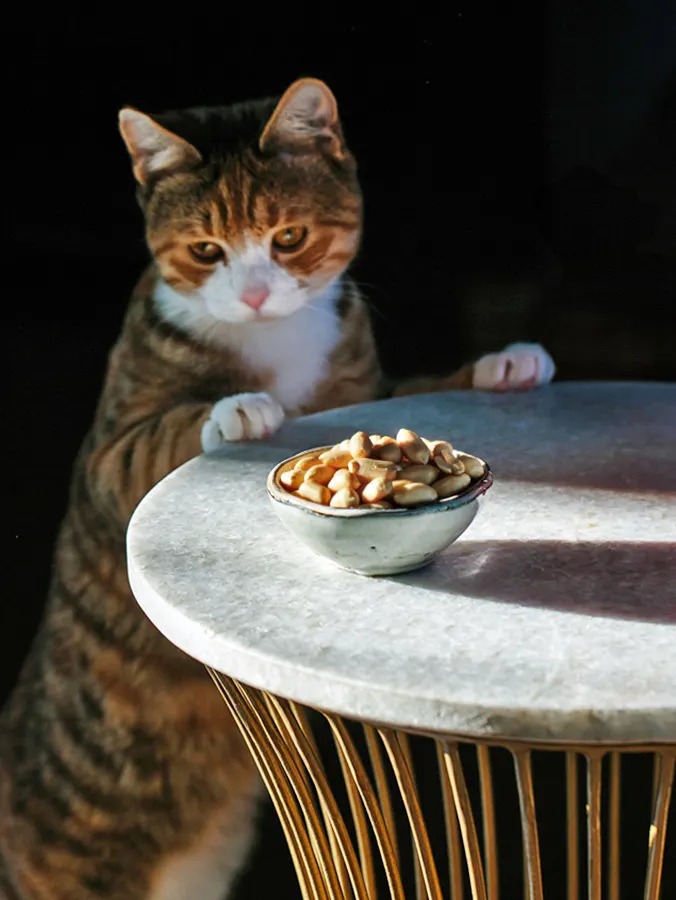
Peanuts sit in an odd spot on the “can my cat eat this” list. They’re not toxic, so there’s no dramatic warning to lead with. But they’re also close to useless for a cat, which means the real content isn’t “are they safe,” it’s “why bother, and what should you actually watch for.” Because while the peanut itself won’t poison your cat, the ways peanuts usually show up, salted, flavored, ground into peanut butter, do carry real risks. Four of them, specifically. Those are worth your attention. The nut is not.
Why a peanut does almost nothing for a cat
Peanuts are a genuinely good snack for people: protein, healthy fats, biotin, vitamin E, niacin. Almost none of that transfers to a cat. Cats are obligate carnivores, and the protein in peanuts is plant protein, which cats can’t break down and use the way they use animal protein. So the headline nutrient, the reason peanuts are a “health food” for us, is largely wasted on them.
What’s left is the fat and the carbohydrate, and those aren’t doing your cat any favors either. Peanuts are calorie-dense, and a steady stream of high-fat, high-calorie snacks nudges a cat toward obesity, diabetes, and other weight-related problems. So the plain-language verdict is: a peanut won’t hurt your cat, but it’s a snack that’s nearly all downside and no upside.
Owners are often surprised when I’m lukewarm on peanuts, because they think ‘high protein, that’s perfect for a cat.’ But it’s the wrong kind of protein for a carnivore. They can’t really use it. So you’re spending calories and adding risk for a snack their body basically ignores. I’d rather they get that treat from a little plain cooked chicken.
The four risks actually worth knowing
If a peanut ever does cause a problem, it’s almost always one of these, not the nut’s chemistry.
Choking and obstruction. Peanuts are small, hard, and round, exactly the profile that can lodge in a cat’s throat or gut, especially if a cat gulps rather than chews. If you ever share one, it should be crushed into small pieces, never a whole nut.
Salt and flavorings. Most peanuts humans eat are salted, and many are coated in seasonings. Salt in quantity is bad for cats, and flavored coatings can hide ingredients like garlic or onion powder, which are genuinely toxic. Only plain, unsalted, unflavored peanuts are even in the conversation.
Aflatoxin. Peanuts grow underground and are prone to a mold, Aspergillus, that produces aflatoxins. Human livers handle the trace, regulated amounts in our food supply; a cat’s liver is far more sensitive, and repeated low-level exposure can cause serious liver damage over time. It’s a slow, quiet risk, and it’s one more reason peanuts aren’t a snack to make routine.
Xylitol in peanut butter. This is the big one for the peanut-butter crowd. Some sugar-free peanut butters contain xylitol, an artificial sweetener that is dangerous to pets. If you ever offer peanut butter, it must be plain and xylitol-free, checked on the label, and even then only a tiny amount, because of the fat and mold concerns above. When in doubt, skip it.
Allergies happen, too
Like people, some cats can be allergic to peanuts, and allergies can develop later in life. A food-allergic cat often gets intensely itchy, scratching or licking the face, belly, legs, and paws to the point of hair loss or sores, and may have vomiting or diarrhea. If your cat shows any of that after eating peanuts, stop offering them and talk to your vet.
What newer research adds
The clearest recent shift isn’t about peanuts as a nut, it’s about xylitol, which now hides in far more than gum. It’s turning up in sugar-free peanut butters, baked goods, and even some “keto” spreads, and veterinary poison resources have pushed hard to raise awareness because the danger is real and fast-acting in dogs. For cats specifically, the evidence is thinner than it is for dogs, but the responsible guidance from toxicology sources is the same: treat xylitol as something to keep away from your cat entirely rather than gamble on a smaller feline risk.
The aflatoxin conversation has also grown, driven by periodic pet-food and peanut-product recalls. The practical, current takeaway lines up with everything above: peanuts and peanut butter are, at best, a rare tiny treat, and the safest version is plain, unsalted, xylitol-free, and given sparingly, if at all.
The bottom line
Peanuts are safe in the narrow sense that they won’t poison a healthy cat, and pointless in the broader sense that a carnivore gets almost nothing from them. If your cat swipes a plain, unsalted peanut, don’t panic. Just don’t turn it into a habit, keep salted, flavored, and candy-coated nuts off the menu entirely, and treat peanut butter with real caution because of xylitol, fat, and mold. There are better ways to treat a cat, and most of them start with meat.
References
- Cornell Feline Health Center. “Feline Food Allergies.”
- VCA Animal Hospitals. “Food Allergies in Cats.”
- U.S. Food and Drug Administration. “Aflatoxins.”
- ASPCA Animal Poison Control Center. “Xylitol.”
Common questions
What if my cat ate a peanut?
One or two plain, unsalted peanuts will most likely be fine. Watch for choking, vomiting, or diarrhea, and don't make it a habit. Salted, flavored, or candy-coated peanuts are the ones to worry about.
Is peanut butter safe for cats?
Only a tiny amount of plain, xylitol-free peanut butter, and even then it's not a good idea. Some sugar-free peanut butters contain xylitol, which is dangerous, and peanut butter is high in fat and can carry mold toxins.
Not a substitute for your vet. Our guidance is educational. For urgent symptoms, contact a vet or emergency clinic right away. Editorial standards
Dr. Mehta is a board-certified veterinary nutritionist who evaluates pet food formulations, ingredient quality, and the science behind dietary trends. He writes and reviews all nutrition content at The Pet Times, including our food rankings and feeding guides.
Meet our experts ↗Keep reading
 FoodYour Cat Can Eat Kiwi. The Fuzzy Skin Is the Part to Throw AwayDr. Nina Kohl · 4 min
 FoodNever Feed a Cat Grapes. Science Finally Figured Out Why They're So DangerousDr. Amara Solis · 6 min
 FoodPopcorn Is Safe for Cats. The Stuff We Put on It Is the ProblemDr. Ravi Mehta · 6 min
 FoodThe Real Question About Cats and Cheese Isn't Whether, It's WhichDr. Mara Chen · 6 min
 FoodYour Cat Can Eat Pomegranate. That's Not the Same as Should.Dr. Priya Nair · 5 min
 FoodThe Saucer of Milk Is a Plot Hole: What Cats Actually Do With DairyDr. Priya Nair · 6 min