


190 Dogs, One Man: The Largest Federal Dogfighting Seizure Ever Ends in Conviction
A former NFL running back was convicted of running a dog-trafficking and fighting operation that produced the biggest single seizure in federal dogfighting history. The number tells you this was a business, not a backyard. Here's the case, and what happens to survivor dogs.

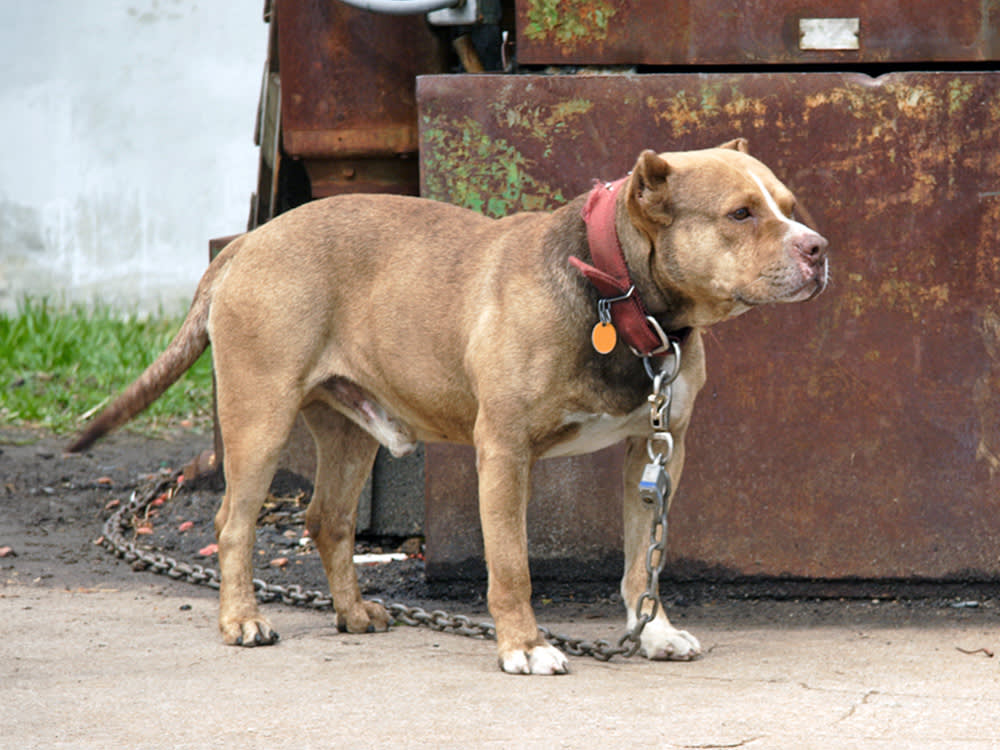
The number is the thing to sit with: 190 dogs, seized from a single person. That is the largest number of dogs ever taken in a federal dogfighting case, and it is what separates this story from the grim but familiar category of backyard cruelty. A haul that size is not a hobby gone wrong. It is an industry.
In August 2025, a federal jury convicted LeShon Johnson, a former National Football League running back and kick returner who played for the Green Bay Packers, Arizona Cardinals, and New York Giants in the 1990s, on six felony counts tied to a large-scale dog-trafficking and fighting operation in Oklahoma. The conviction closed a case that federal authorities had built after seizing those 190 Pit Bull-type dogs from his property.
What the operation was
According to the U.S. Department of Justice, Johnson ran a dogfighting enterprise called “Mal Kant Kennels” out of Haskell and his home in Broken Arrow, Oklahoma. The DOJ described a deliberate breeding program: he bred dogs who had already won fights, chasing puppies with desirable fighting traits, and then sold many of those dogs to other dog fighters around the country. That selling is the part that makes the word “trafficking” fit. His supply of fighting dogs to others, prosecutors said, helped the broader dogfighting industry grow while he profited from it.
The scale set records. The DOJ called it the largest number of dogs ever seized from a single person in a federal dogfighting case. And it was not his first time. In 2004, Johnson pleaded guilty to running a separate ring, “Krazyside Kennels,” and received a deferred sentence. Mal Kant Kennels was the far larger and more serious operation.
At trial, Johnson faced 23 counts of animal cruelty and was found guilty of six, for violating the federal Animal Welfare Act’s prohibitions on possessing, selling, transporting, and delivering animals for use in fighting ventures. He faces a maximum of five years in prison and a fine of up to $250,000 on each count, with sentencing set for a later date.
Why this is a felony in all 50 states
Dogfighting is illegal in every U.S. state, and the reasons are not abstract. Dogs bred and kept to fight are typically held in inhumane conditions, often chained in cramped, unsanitary spaces, according to the ASPCA. In the fights themselves, dogs suffer broken bones, deep lacerations, and puncture wounds. Animals who cannot or will not fight are frequently killed. The whole enterprise runs on money, through admission fees, gambling, and breeding, which is precisely why it persists and why trafficking cases like this one matter: cutting off a major supplier does real damage to the network.
What happens to the survivors
The part that rarely makes the headline is the most hopeful. Dogs pulled from fighting operations are no longer written off. Modern practice, shaped by cases going back to the 2007 Michael Vick bust, is to evaluate each dog as an individual, and the majority of fight-bust survivors turn out to be candidates for rehabilitation and adoption rather than lost causes.
“The public assumption is that a dog raised in that world is ruined, and it is mostly wrong,” says Dr. Amara Solis. “These dogs are victims, not weapons. When they are assessed one at a time and given structure, medical care, and patience, a large share of them decompress into perfectly loving pets. Writing them off by breed or by history is the outdated instinct we have spent nearly two decades unlearning.”
That work is slow and expensive. Seized dogs often spend long stretches as legal evidence before they can even begin the process, and rehabilitation takes trained handlers and time. But the outcome, for most of these dogs, is a home.
What’s new since the verdict
As of this writing, Johnson had been convicted but not yet sentenced; the court had not set or reported a final term, and he remained subject to the maximum penalties on each of the six counts. It is worth watching how the sentence lands, because animal-welfare advocates treat the punishment in a record-setting case like this as a signal of how seriously the federal system now takes dog trafficking, not just the fighting itself.
The larger trend the case fits into is that federal enforcement has increasingly gone after the commercial backbone of dogfighting, the breeding and interstate selling, rather than only busting individual fights. Targeting the supply chain is how you shrink the industry, and a 190-dog seizure that ends in a federal conviction is exactly the kind of case that advances that strategy.
This article discusses animal cruelty, which some readers may find distressing.
References
- U.S. Department of Justice, Office of Public Affairs. “Former NFL Player Convicted of Operating Large-Scale Dog Fighting and Trafficking Venture in Oklahoma.” https://www.justice.gov/opa/pr/former-nfl-player-convicted-operating-large-scale-dog-fighting-and-trafficking-venture
- American Society for the Prevention of Cruelty to Animals. “Dogfighting.” https://www.aspca.org/investigations-rescue/dogfighting
- CNN. “Former NFL player Leshon Johnson convicted of running Oklahoma dogfighting operation.” 5 Aug. 2025, https://www.cnn.com/2025/08/05/us/leshon-johnson-dogfighting-oklahoma
Nina Vasquez writes about life at home with pets and the relationships at the heart of it. Her work covers day-to-day living, people-and-pet stories, and the products that fit into a real household, with a warm, grounded take on everyday pet ownership.
Meet our experts ↗Keep reading
 LivingA Bystander's Phone Was the Only Thing Between These Dogs and DeathNina Vasquez · 4 min
 LivingMissouri Tops the 'Horrible Hundred' for a 14th Year. The 2026 Report Is Grim.Nina Vasquez · 6 min
 LivingA Comedian Built a Movement Around the Dogs Nobody WantedLeila Torres · 5 min
 Living55 Dogs, One Business License: The Arizona Case That Exposes a Rescue LoopholeJames Okafor · 5 min
 LivingA Layoff, a Pregnant Street Dog, and 4,500 Rescues LaterLeila Torres · 5 min
 LivingA Drug Raid Opened a Door. Behind It: a Dogfighting Ring and a 9-Foot Alligator Fed on the EvidenceJames Okafor · 5 min