


He Raised Two Dogs in a Van. His Small-Space Rules Beat Most Apartments.
Living with a dog in a tiny apartment or on the road isn't about tolerating less room. It's a set of systems. A veteran of van life with two dogs breaks down what actually works.

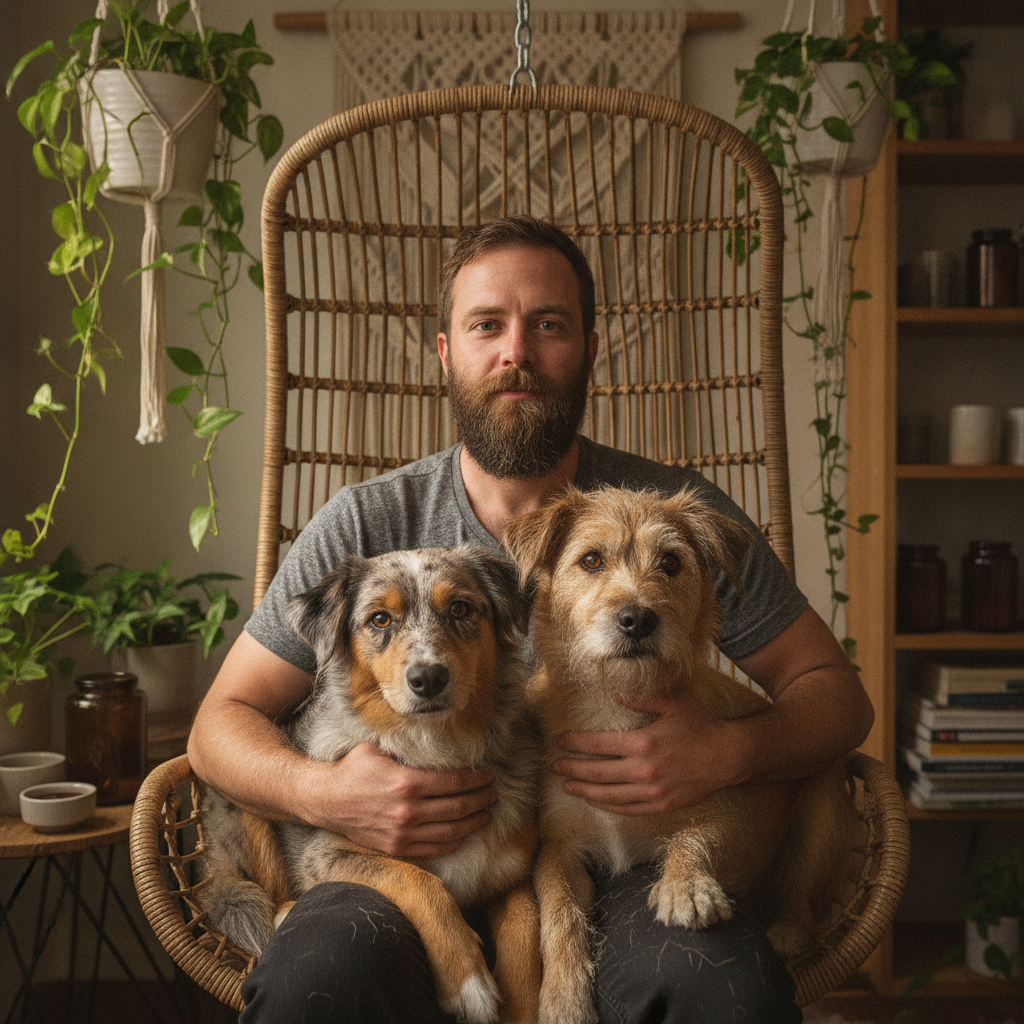
Somewhere along the way, “small-space living” stopped being a New York problem and became an everybody problem. Rents climbed, square footage shrank, and a growing number of people looked at the math and decided to skip the rental market entirely, moving into vans and tiny homes and taking their dogs with them. The surprising part isn’t that it’s possible. It’s that, done right, a cramped space can make you a better dog owner, not a worse one.
That’s the argument you hear from Henry Friedman, the rescue advocate behind @KeepingFinn, who has spent years living out of a van with his dogs. His central point is counterintuitive: when you and your dog share a tiny footprint, you end up more tuned in to each other, not less. There’s nowhere to drift apart to. You notice when they’re restless, bored, or need to go out, because you’re two feet away when it happens.
But good intentions don’t survive a 60-square-foot space on their own. What makes it work is a handful of systems, and they translate straight to a studio apartment. Here’s how to build them.
First, be honest about the dog you’re choosing
If you’re adding a dog to a small space rather than downsizing with one you already have, the temptation is to sort by size. Friedman’s take is that energy matters more than inches. A low-key lap dog, the kind that’s perfectly content to nap on a cushion for hours, asks very little of a small home. A large dog can actually be a fine fit temperament-wise, because plenty of big breeds are mellow, right up until the point where the dog is simply too physically large to move around the space comfortably.
His real advice, though, is to stop shopping by the space and start shopping by your life. He and his dogs are proof of the exception: he keeps medium-sized, athletic dogs who want to hike and explore, which is the “wrong” pick for a van on paper. It works because he built his days around what they need. Match the dog to how you actually live, then be honest about the work that match will require.
System one: every surface has two jobs
The core discipline of small-space living is that nothing gets to be single-purpose. The counter you chop vegetables on becomes your desk an hour later. A bench is also storage. A step is also a shelf. Once you accept that, a tiny space stops feeling like a compromise and starts feeling designed.
Clutter is the enemy here, and not just aesthetically. In a small room, a little mess reads as a big mess, and a dog’s gear, toys, food, leashes, towels, piles up fast. The flip side is the quiet superpower of tiny spaces: because there’s so little of it, the whole place can be reset in a few minutes. Tidy often and briefly, rather than rarely and desperately.
Part of that system is giving the dog a spot that is unmistakably theirs. Friedman built his dogs a bed on the van’s passenger seat, deliberately out of the main flow of the space, the spot they retreat to for naps and window-watching. In an apartment it might be a crate nook or a bed tucked beside the couch. The principle is the same: shared quarters work better when the dog has one square of it to call home base.
System two: the routine is the exercise plan
Here’s the hard truth of a small space. Your dog is not burning meaningful energy indoors, because there’s no indoors to burn it in. If you don’t build movement into the day on purpose, the dog will find its own outlet, and it will be scratching at the door the second you sit down to work.
So exercise becomes a scheduled, non-negotiable part of the day rather than something that happens when the dog “seems antsy.” Real walks, on a routine, are the load-bearing wall of the whole arrangement. The same predictability helps with food: feed at consistent times, and, in a small space especially, clean up every crumb afterward, because lingering food turns into smell turns into a problem faster than you’d think.
Mental exercise matters just as much, and it’s the part small-space owners tend to skip. A dog that can’t roam needs its brain worked instead. This is where enrichment toys earn their keep: snuffle mats that make a dog sniff out kibble, puzzle feeders, and treat-dispensing toys all buy you a calm, occupied dog during the hours you can’t be actively engaging them. Think of them less as toys and more as the indoor equivalent of a long walk.
System three: contain the mess before it spreads
Two things get amplified in a small home: smells and dirt. Both have straightforward fixes if you stay ahead of them.
Potty training is first, and it’s not optional. In a big house, a housetraining lapse is an annoyance in one room; in a tiny space, it takes over your entire living area. The upside, again, is that small spaces are easier to correct in, because there are fewer rooms for a dog to audition as a bathroom. Get it right early and the payoff is immediate.
For the everyday grime, the move is quick maintenance over deep cleaning. Keep a towel and a brush by the door for a fast wipe-down before a muddy, snowy, or generally disgusting dog gets back into your living space, and lean on dry shampoos, deodorizing sprays, and pet wipes to stretch the time between real baths. When you do groom or bathe, do it outside if you possibly can, with a hose or at a self-serve dog wash, rather than turning your one room into a wet-dog situation.
The part nobody warns you about: you’ll share the bed
In a small space, most of the space is shared space, and that eventually includes the bed. There’s no philosophical debate to be had when the mattress is a third of your floor plan. Friedman’s dogs walk across the counters to get on and off the bed, because that’s simply how the geometry works, and on cold nights they pile in for warmth. A dog is, if nothing else, an excellent furry heating pad.
It’s worth saying that this isn’t purely a concession. Many people find that sleeping near their dog adds a real sense of security and comfort, which is a fair trade for a little fur on the duvet. As with everything in a small space, the trick is to decide it’s the plan on purpose, rather than letting it happen and resenting it.
“The mistake I see with apartment and van dogs isn’t too little space, it’s too little to do,” says Dr. Nina Kohl. “A dog that gets a real walk on a schedule and something to solve with its nose during the downtime will settle almost anywhere. Square footage is not the variable people think it is. Predictable enrichment is.”
That’s really the whole philosophy. A small space punishes improvisation and rewards systems. Set up the surfaces, lock in the routine, contain the mess, and give the dog a corner of their own, and the walls stop being the problem. What’s left is the thing Friedman keeps coming back to: you and your dog, close, dialed in, and spending most of your time out in the world together anyway.
References
James Okafor covers rescue, adoption, and the causes shaping animal welfare. His work follows the people and organisations working to give more pets a home, and the issues owners and advocates care about most.
Meet our experts ↗Keep reading
 Living13 Dog-Friendly December Outings, Sorted by the Dog You HaveSasha Ford · 6 min
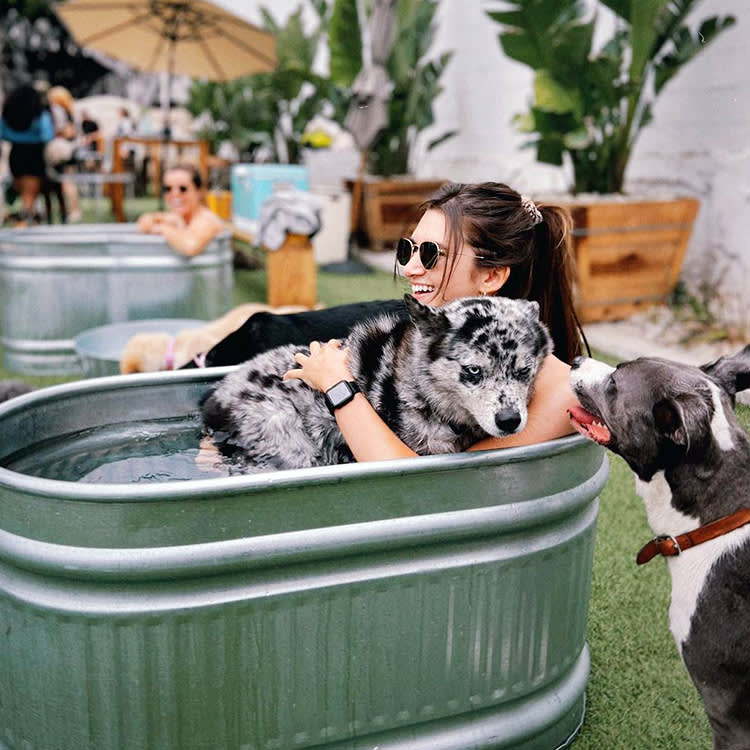 LivingInside the 'Soho House for Dogs,' Where a Dog Park Costs $1,400 a YearSasha Ford · 6 min
 LivingThe Question Every Winter Dog Trip Hinges On: Where Does the Dog Go While You Ski?Tom Hadley · 11 min
 LivingSF Is a Dog's City. The Leash Line Moves Every Few Hundred Feet.Jordan Ellis · 12 min
 LivingThe 10 Most Dog-Friendly Cities, and the Tradeoff Buried in the RankingsNina Vasquez · 5 min
 LivingHow to Actually Have a Dog Day in NYC (12 Spots, Sorted by Plan)Leila Torres · 6 min