


"Too Soon" to Introduce Your Dog to a New Partner? Wrong Question.
There's no universal calendar rule for when a new partner should meet your dog. The timing isn't about your relationship milestones. It's about what your specific dog can handle.

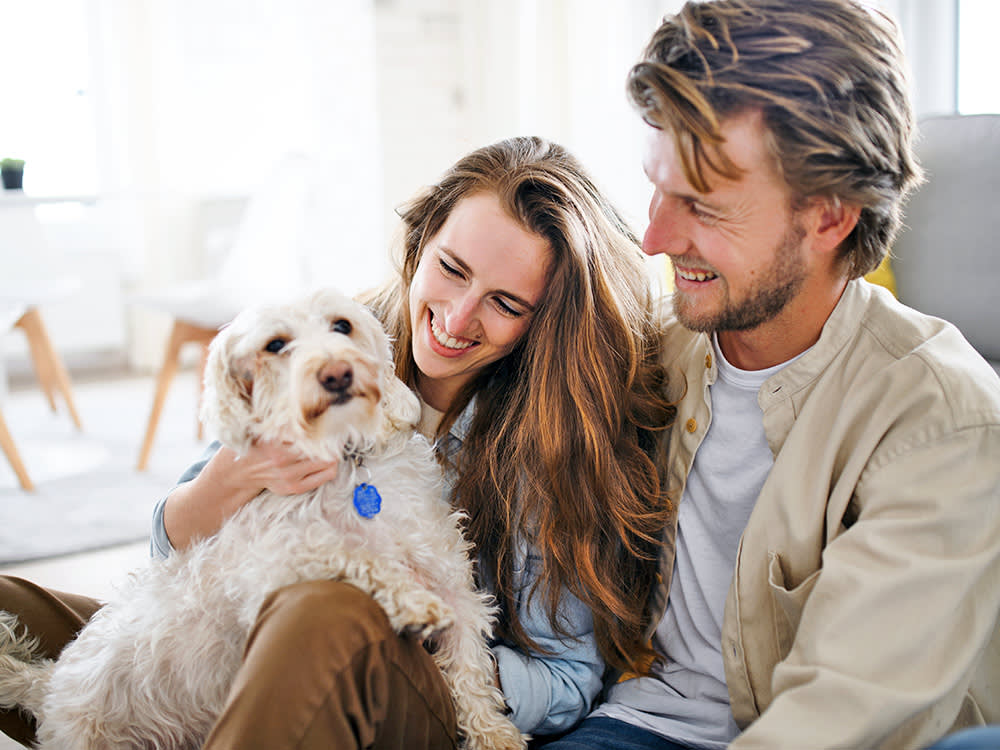
You finally like someone. After the bad dates and the situationships and the slow-motion ghostings, here is a person you actually want around. So the question surfaces: when do they get to meet the other great love of your life, the one already asleep on your pillow?
People want a rule for this. Three dates. Three months. After you have said the big words. But the honest answer is that the calendar is the wrong yardstick entirely. Whether it is “too soon” has almost nothing to do with how serious the romance is, and almost everything to do with a single variable people forget to check: your dog.
The timing question is really a “read your dog” question
Plenty of people happily bring a dog along on a first date and let a potential partner meet them right away. Others wait until they are fairly sure the whole thing has legs. Both can be right, because the correct timing is set by the animal, not the relationship status. A confident, social dog who adores every new human they meet has a very different “too soon” than a nervous rescue who needs a week to trust the mail carrier.
There is a nice bonus to letting your dog into the process: dogs really are shrewd judges of people. If you already suspect this could get serious, an early, low-pressure meeting lets your dog weigh in before you are picking out furniture together.
I tell people to stop asking how many dates is the right number and start asking what their dog can comfortably handle. A secure, outgoing dog can meet someone on week one with no harm done. A fearful or freshly adopted dog might need you to wait until the relationship is solid enough to be worth the slow, careful work. Match the pace to the dog in front of you, not the milestone on the calendar.
Know the dog you actually have
Before you schedule anything, be honest about your dog’s temperament. A dog carrying trauma, or one recently pulled from a shelter, may need everything to move at a crawl. Some dogs are wary of unfamiliar people in general, and some are specifically uneasy around one gender, which can make a new partner’s first appearance genuinely stressful rather than exciting. For those dogs, waiting is not overprotective. It is fair.
The same courtesy runs the other direction. If your new partner is the one who gets anxious around dogs, do not spring a meeting on them either. Let them arrive ready, rather than shoved into a room with an animal they are bracing against.
Meet on neutral ground, walking the same way
When you do introduce them, the setup matters more than the moment. Rather than staging it in your living room, where your dog may feel territorial, start somewhere neutral. A shared walk is close to ideal. Have your partner join you moving in the same direction rather than approaching your dog head-on, because a straight-on, face-to-face greeting reads as pushy or threatening in dog terms. Walking side by side, with the sights and smells of the route soaking up your dog’s attention, takes the spotlight off the stranger.
A little bribery helps enormously. Hand your partner some good treats or a favorite toy so your dog starts stacking up positive associations with this new person from the very first meeting. Keep the early sessions short, calm, and relaxed, and try a few walks together before you ever bring your partner into the home.
Protect the routine your dog leans on
A new person in the picture can rattle a dog even after a friendly first meeting. Some become clingy, some act jealous, and some get suddenly selective about listening to you, especially if the newcomer starts spending time in their space. For a dog whose sense of safety is built on predictable days, that disruption is real.
The fix is to fold your partner into the routine rather than around it. Let them help with walks, meals, and play, so your dog starts filing them under “part of my normal life” instead of “intruder.” Walk your partner through the house rules and your dog’s schedule so they can keep things as consistent as possible. If your dog seems unsettled, pour on extra attention and make sure they still feel like the center of things while the relationship builds.
Read the signals, both kinds
Learn what your dog is telling you, because they will tell you plainly if you watch.
Back off and slow down if you see stress signs: heavy panting, growling, pointedly avoiding eye contact, yawning when nobody is tired, hiding, snapping at the air, or repeated lip-licking. If those show up, give your dog room and freeze any sudden movements. A rocky first impression can plant a lasting negative association, so it is worth pausing and, if it keeps happening, bringing in a professional for the next attempt.
You are looking for the opposite picture as your green light: a loose, relaxed body and face, a soft wag with a wiggly rear end, a dog who happily comes over to say hello, and best of all a play bow, chest and front legs down, rump in the air, the universal canine invitation to be friends.
Introducing someone to your dog is a small act of commitment, and that can make it feel heavier than it is. Do not rush it and do not spiral. Your dog is on your side. Even a shaky start usually ends with them accepting anyone who clearly loves you back.
What’s new since this was written
Behavior professionals have increasingly framed introductions like this one through the lens of choice: the calmer meetings are the ones where the dog is never cornered and is always free to approach or retreat on their own terms. The practical upshot is to run first meetings off-leash-adjacent, in open, neutral space where your dog can add or close distance at will, rather than holding them in place to “get it over with.” Letting the dog control the gap consistently produces better first impressions than any scripted greeting, which is exactly why the parallel-walk approach works so well.
References
Dr. Solis is a board-certified veterinary dermatologist with over twelve years of clinical experience. She advises on skin conditions, allergies, and grooming practices that affect coat and skin health. All dermatology and allergy content at The Pet Times is reviewed by her team before publication.
Meet our experts ↗Keep reading
 Training'Dog-Friendly' Is a Permission, Not an InvitationDr. Nina Kohl · 8 min
 Training5 Reasons Your Dog Follows You Into the Bathroom (One Is Worth Watching)Dr. Nina Kohl · 6 min
 TrainingYou Got a Dog for Comfort. What If They're the Nervous Wreck?Dr. Lena Park · 6 min
 LivingWe Adopted Millions of Dogs in Lockdown. Here's How They Turned Out.Dr. Lena Park · 7 min
 TrainingYour Rescue Dog Isn't Being Difficult. They're Decompressing.Dr. Mara Chen · 8 min
 LivingYour Dog Doesn't Need a Longer Walk. They Need a Backpack.Marcus Webb · 6 min