


We Adopted Millions of Dogs in Lockdown. Here's How They Turned Out.
Adoption rates hit record highs in 2020, then the world reopened and a lot of dogs panicked. We checked back in with three pandemic pets to see what really stuck.

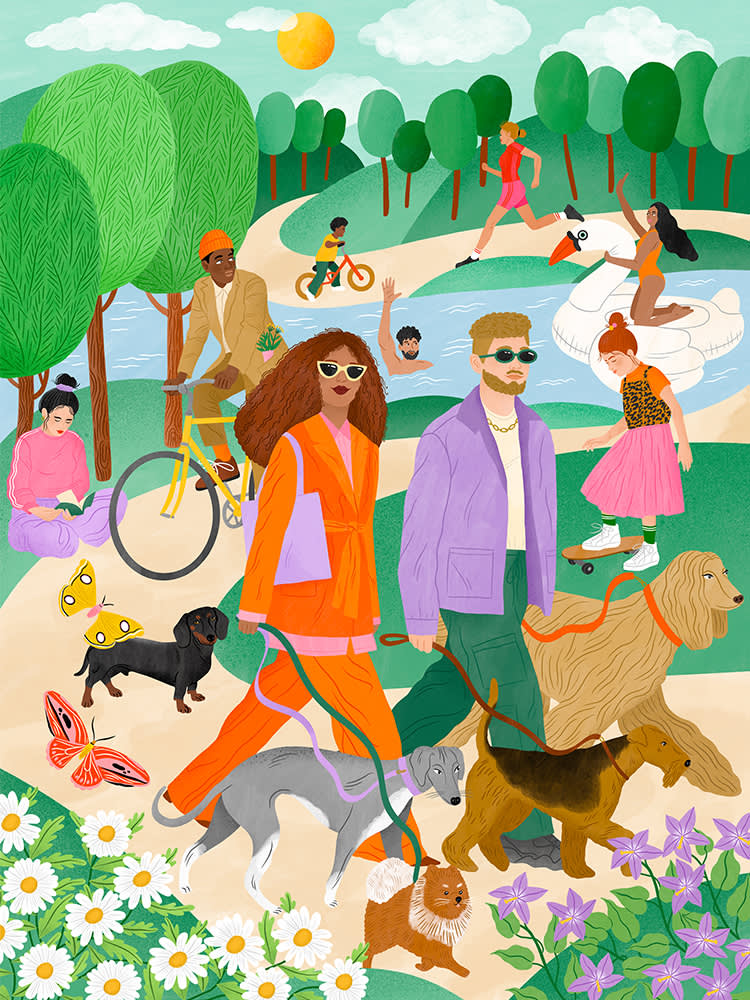
Being a dog in the early pandemic was, honestly, a pretty sweet gig. Adoption rates spiked, shelter waitlists ran long, and pets suddenly had their humans home around the clock. An ASPCA survey later estimated that about 23 million American households, roughly one in five, brought home a dog or cat during COVID-19.
Then the world reopened, and the bill came due. A wave of separation anxiety followed as people went back to offices and left dogs who had never once been alone. Some of those dogs adjusted quickly. Others are, years later, still working on it. So we did the obvious thing and checked back in with a few pandemic pets to see how the story actually ended.
Thriving, mostly
Allison, in Brooklyn, adopted her dog Oliver in January 2021 through the rescue Bideawee. It was, by her account, love on sight, and Oliver settled in fast. A dog park across the street gave him easy socializing, and a trainer met them outdoors for leash work. Life was good.
She worked remotely until February 2022, when her office called her back three days a week. She trusted Oliver to hang out alone in the living room but set up a camera anyway. Early on, she said, she’d leave and hear him crying, then spend the day obsessively checking the feed only to find him parked by the door looking glum, which of course made her glum too.
Eventually his attitude flipped. She logged on one day to find him lounging on the living room table, thoroughly enjoying his home-alone freedom, teenage era in full swing. Allison is candid that the adjustment may have been harder on her than on him. On a work trip to Europe she found herself genuinely missing him, and diagnosed herself, not the dog, with separation anxiety.
Today Oliver is thriving, mostly. Allison lives with her boyfriend now, who works from home, so the dog has daytime company again, and he travels well after being brought along young. The one lingering wrinkle: when Allison leaves for business trips, her boyfriend reports a stressed, needy dog, and Oliver can be wary or grumbly toward strangers and dogs who approach them. Whether that’s pandemic-related or just Oliver being protective, she can’t fully say.
Still adapting
Finn came into Catherine’s life in February 2021, a Los Angeles puppy adopted when vaccines were still months off and most of the city sat locked down. So Finn spent his formative months indoors and learned to relieve himself on pee pads in her apartment. He was sweet and affectionate but hesitant around other dogs, and two years on he still finds the outdoors suspicious.
Leash walks are a negotiation, and the bathroom situation remains, in Catherine’s words, a genuine struggle. She has walked him for two hours with nothing to show for it, only to watch him bolt straight for his indoor pads the second they’re home. Pull the pads entirely and he simply has accidents on the living room floor. She wonders aloud whether a non-pandemic puppyhood would have gone differently, but she wouldn’t trade a minute of the company he gave her during those isolated months. She and a trainer are still at it, and the trainer is optimistic.
The social butterfly
Eric moved back in with his parents at the start of the pandemic, and his childhood dog kept him company until the dog passed away in March 2021 at 15. Grief made him hesitant to adopt again, afraid of another loss. But he missed having an animal around, and in September 2021 he brought home Banjo, a three-month-old Schnauzer mix.
Banjo turned out to be a natural extrovert, immediately friendly with people and dogs and happiest on long walks. Because Eric was working remotely at first, being left alone was the hard part. When he started in-person grad classes the next year, he’d hear Banjo whining from the hallway as he left. But the camera told a kinder story than his guilt did: by the time Eric reached the street and pulled up the feed, Banjo had usually settled and stopped fussing. Watching the dog self-soothe took the edge off Eric’s own worry. He’s not convinced the pandemic shaped Banjo much at all; his read is that this dog was always going to be a social one who complains a little when left behind.
What the pattern tells us
The thing owners often miss is that most of these dogs aren’t broken, they’re under-rehearsed. A dog who never learned that alone-time is boring and survivable didn’t fail. He just never got the practice, and practice is exactly what you can still give him.
Across the stories, the common thread isn’t damage; it’s a missing skill and a strong attachment. These dogs learned that their people were simply always there, and then had to unlearn it. The dogs who did best had structure, gradual practice being alone, and owners who read the camera instead of catastrophizing about it.
What newer research adds
Behavior specialists increasingly treat “separation anxiety” as a broader category of separation-related behavior, and they’ve moved away from the idea that it’s always fear. For plenty of dogs it looks more like frustration or simple lack of conditioning to being alone, which matters because the fix is different: short, boring, gradual departures that stay under the dog’s panic threshold, built up over weeks, rather than dramatic goodbyes or flooding a dog with hours alone and hoping he copes.
For the dogs who genuinely panic, the current consensus is that medication paired with a desensitization plan works better than either alone. Anti-anxiety medication doesn’t sedate a dog into compliance; it widens the window in which he can actually learn to be calm. If your boom-era dog still spirals when you leave, that’s a reason to loop in a veterinarian or a certified behavior professional, not a life sentence. Most of these dogs, like the ones above, are ultimately all right, and the extra cuddles on the days they’re reunited with you are a fine consolation prize.
This piece touches on canine anxiety and behavior; for a dog in real distress, a veterinarian or credentialed behaviorist can tailor a plan to your specific pet.
References
Dr. Park is a board-certified emergency and critical care specialist. She reviews our health and safety content for clinical accuracy and contributes guides on recognising urgent conditions. Her focus is helping owners act quickly and correctly when it matters most.
Meet our experts ↗Keep reading
 TrainingYou Got a Dog for Comfort. What If They're the Nervous Wreck?Dr. Lena Park · 6 min
 Training5 Reasons Your Dog Follows You Into the Bathroom (One Is Worth Watching)Dr. Nina Kohl · 6 min
 LivingThe Dog That Got You Through Lockdown Can Quietly Become a CrutchNina Vasquez · 5 min
 Training'Dog-Friendly' Is a Permission, Not an InvitationDr. Nina Kohl · 8 min
 LivingYour City Dog Isn't 'Reactive.' The Sidewalk Is Screaming at Them.Dr. Mara Chen · 8 min
 TrainingYour Dog Isn't Lonely. Point a Camera at Them and Find Out.Dr. Nina Kohl · 8 min