


The Dog That Got You Through Lockdown Can Quietly Become a Crutch
A dog can be the thing that holds a person together through an isolating stretch. The tricky part is the exit ramp, for the dog and for you.
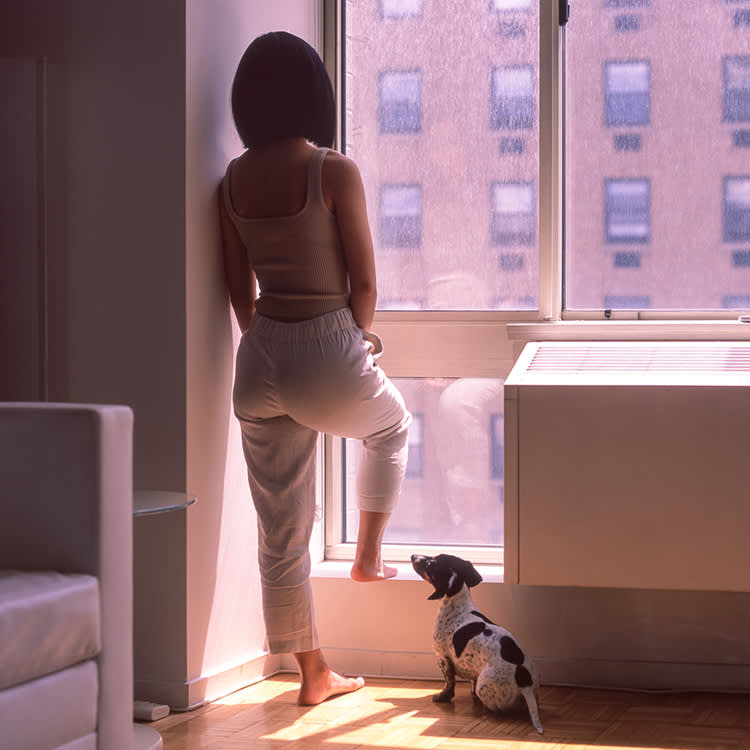
Some of the strongest human-dog bonds on record were forged in isolation. Think of the person who spent the spring of 2020 alone in a city apartment, with a book launch cancelled, family a plane ride away, and a single living creature for company. In a stretch like that, a dog stops being a pet and becomes the day’s only fixed point: the reason to go outside, the warmth on the couch at night, the one relationship that never went to Zoom.
That intensity is real, and it is worth honoring. But it carries a quiet risk that almost nobody warns you about while you are in it. A companion who becomes your entire emotional infrastructure can leave both of you unprepared for the moment the world reopens. The care you owe a dog like that is not more closeness. It is a gentle, deliberate plan to spend a little time apart.
When togetherness tips into dependence
During a lockdown, the math is simple: everything is closed, everyone is gone, so the dog comes with you everywhere. Weeks can pass without a single outing that does not include them. It feels like devotion, and it is. It is also, unintentionally, training. A dog who is never left alone learns that being alone is not part of the deal, and a person who never leaves without the dog learns the same thing in reverse.
The tell often comes from a third party. A vet, noticing that an owner has not been anywhere without their dog in two months, might suggest starting to leave the dog behind for short stretches, ostensibly so the dog does not develop separation anxiety. The subtext is usually broader than the dog. Learning to move through the world without your anchor at your side is a skill, and skills atrophy when they go unused.
“When a dog has been someone’s constant companion through a hard stretch, I am not just thinking about the dog’s separation anxiety, I am thinking about the person’s,” says Dr. Lena Park. “The kindest thing you can do for both of you is practice small, boring departures before you actually need them. Fifteen minutes for a coffee, then a little longer, so that being apart stays normal for everyone in the house.”
The exit ramp, in practice
The fix is unglamorous and it works: reintroduce absence in small, planned doses, long before life forces a big one. Leave for fifteen minutes to get a coffee. Build up to an hour meeting a friend. Keep departures and returns low-key rather than emotional productions, so your dog reads them as ordinary. The goal is not distance from an animal you love. It is teaching you both that a closed door is temporary and the reunion always comes.
Done early, this keeps a genuine problem from taking root. Done late, after months of round-the-clock togetherness, it is a harder retraining job, and one that can require real behavioral help.
What newer research adds
The dire predictions about a generation of “pandemic puppies” melting down once offices reopened turned out to be more complicated than the headlines. Two members of the American College of Veterinary Behaviorists have argued the feared nationwide surge in separation anxiety never really materialized, and that most owners adapted. Encouragingly, a large Royal Veterinary College study found that 98 percent of surveyed pandemic-puppy owners still had their dogs at 21 months old, a sign that commitment held even when the behavior got hard.
But the same body of work does not let anyone off the hook. That RVC research also found roughly a third of these dogs showing signs of separation-related behavior by 21 months, and it confirmed the pattern this piece is built on: dogs who never learned to be alone, especially those with early warning signs, were more likely to struggle later. The lesson that survived the hype is a practical one. Whether your dog arrived in a lockdown or last month, a little rehearsed alone-time now is cheap insurance against a much larger problem later.
References
- Christley, R. M., et al. “Impact of the COVID-19 Pandemic Lockdown on the Behaviour of Dogs.” Animals, 2023. www.ncbi.nlm.nih.gov
- American Veterinary Medical Association. “Pet Behavior Lessons Learned During the Pandemic.” www.avma.org
- American Society for the Prevention of Cruelty to Animals. “Separation Anxiety.” www.aspca.org
Nina Vasquez writes about life at home with pets and the relationships at the heart of it. Her work covers day-to-day living, people-and-pet stories, and the products that fit into a real household, with a warm, grounded take on everyday pet ownership.
Meet our experts ↗Keep reading
 TrainingYour Dog Isn't Reading Your Face. They're Reading Your Hand on the Leash.Dr. Lena Park · 8 min
 Training5 Reasons Your Dog Follows You Into the Bathroom (One Is Worth Watching)Dr. Nina Kohl · 6 min
 Training'Dog-Friendly' Is a Permission, Not an InvitationDr. Nina Kohl · 8 min
 LivingWe Adopted Millions of Dogs in Lockdown. Here's How They Turned Out.Dr. Lena Park · 7 min
 Living40 Malinois in One Apartment. The Crowding Wasn't the Cruelty.Dr. Amara Solis · 5 min
 TrainingYour Dog Isn't Lonely. Point a Camera at Them and Find Out.Dr. Nina Kohl · 8 min