


40 Malinois in One Apartment. The Crowding Wasn't the Cruelty.
Rescuers found full-grown Belgian Malinois folded into kitchen cabinets in a Queens apartment. The dogs had never been outside. What breaks a working dog isn't the tight space, it's the nothing.
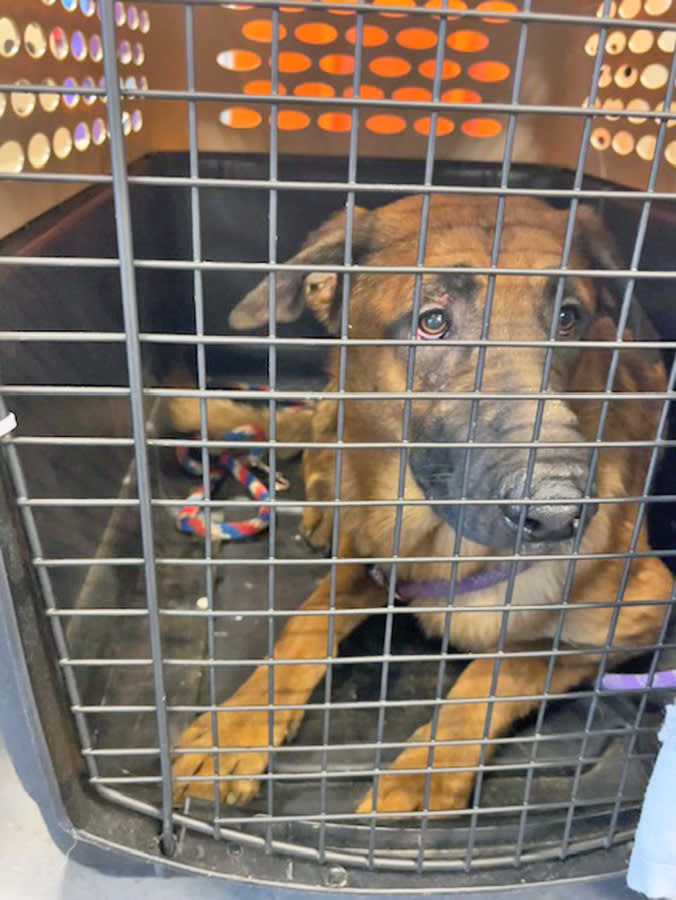
An 80-pound Belgian Malinois folded into a kitchen cabinet is an image that does its own work. It is also, oddly, the least important detail of what happened in that Queens apartment.
In May 2025, Animal Care Centers of NYC and the ASPCA pulled more than 40 Belgian Malinois out of a single apartment in Forest Hills. Puppies through full-grown adults. Some were found in closets and cupboards and any tight space that would hold a dog. There was no fresh air and no sunlight. Tara Mercado, ACC’s Director of Behavior and Shelter Operations, said in a statement that the dogs appeared to have spent their whole lives in complete confinement, and that adult Malinois were pulled out of cabinets and from behind furniture.
Then comes the detail that actually matters. According to ACC shelter medicine director Dr. Biana Tamimi, most of these dogs had probably never felt grass under their feet, never worn a leash, and never encountered a person outside that apartment.
Of all the breeds to store in a closet
There is no good breed to warehouse. There is a spectacularly bad one.
The Belgian Malinois is the dog that militaries and police departments reach for when the job is bomb detection, tracking, or search and rescue. The American Kennel Club’s description of the breed is not subtle about the price of admission: a Malinois needs serious physical exercise and serious mental work to be an even remotely content animal. This is a dog engineered across generations to be given a task and to obsess over it.
Take that dog, and give it a cupboard, and give it nothing to do in the cupboard, for its entire life.
The crowding is what makes the photo. The emptiness is what makes the damage.
People fixate on the square footage, but a dog’s welfare is not measured in feet, it is measured in choices. A working breed with no job, no novelty, and no sky is being deprived of the thing its brain was actually built to run on. That’s a harder injury to repair than any skin infection we treated.
Why “they’re safe now” is the middle of the story, not the end
The instinct, once the dogs are out, is to want them adopted by Friday. That instinct is how these dogs get returned.
A dog who has never met a stranger has no template for one. A dog who has never heard traffic has no way to file the sound. Dr. Tamimi described the dogs as overwhelmed by every unfamiliar noise and every human they encountered, while also noting early flickers of curiosity that gave the medical team some hope. So the dogs were not put up for adoption on rescue day. They went into health assessments and behavioral support, and into the thing rescuers call decompression, which is a deliberately boring period where almost nothing is asked of the animal.
ACC spokesperson Katy Hanson told the New York Post what the first days looked like: dogs on their first-ever walks, dogs being looked after for the first time in their lives, and a great deal of sleeping, which makes grim sense when you consider how loud an apartment holding 40 dogs must have been around the clock.
Decompression is not sentimentality. It is the practical recognition that a nervous system that has been on for years cannot be evaluated, trained, or matched with a family until it comes down.
What decompression actually involves, if you ever foster one of these dogs:
- Two weeks of almost nothing. No visitors, no dog parks, no errands, no meeting the neighbors. A quiet room, a predictable routine, and food.
- Let the dog set the distance. You do not reach for a dog who is not asking. Sit nearby, read something, be dull.
- Feed the outside world in slices. Five minutes of a quiet street beats twenty minutes of a busy one.
- Expect regression. Day nine is often worse than day four. That is not failure, that is the adrenaline draining out.
- Sleep is the metric. A dog who starts sleeping deeply and eating normally is a dog whose baseline is dropping.
The other pressure in the room
This rescue landed on a shelter system that had no room for it. ACC was already over capacity, with 200 dogs in the Queens care center and another 175 across Manhattan and Staten Island. To make space, the organization waived adoption fees for dogs over 40 pounds, which is exactly the size class the national data says is hardest to move.
Every large-scale rescue is really two problems: the dogs in the apartment, and the dogs already in the building who now have less room, less staff attention, and a longer wait.
What’s new since this was written
They all got out. Working with the ASPCA and a network of ten rescue partners, ACC placed every dog from the apartment, and several went to an ASPCA facility for extended medical and behavioral care rather than straight into homes. Note the second half of that sentence: a good outcome for a dog like this often means months in a specialized program, not a fast adoption.
The pressure that made the rescue so difficult has not lifted. Shelter Animals Count’s national data shows large dogs still waiting longest, with a median stay of 20 days against 14 for small dogs, and large-dog adoptions down 9% in the first half of 2025. The criminal investigation into the apartment’s owner, supported by the ASPCA, was ongoing after the seizure, and no public information about the owner was released at the time of the rescue.
If you take one thing from this: when your local shelter waives fees on big dogs, that is not a discount. That is a distress signal.
References
- Over 40 Dogs Rescued from Extremely Unsanitary, Overcrowded Conditions in NYC Apartment — ASPCA
- 40 dogs found living in filthy New York City apartment — CBS New York
- Animal cruelty investigation underway after 40 dogs found in cramped Forest Hills apartment — QNS
- Belgian Malinois breed standard and exercise needs — American Kennel Club
- Shelter Animals Count: 2025 Mid-Year Report
- Animal Care Centers of NYC
Dr. Solis is a board-certified veterinary dermatologist with over twelve years of clinical experience. She advises on skin conditions, allergies, and grooming practices that affect coat and skin health. All dermatology and allergy content at The Pet Times is reviewed by her team before publication.
Meet our experts ↗Keep reading
 Living'Unadoptable' Is a Description of the Building, Not the DogDr. Amara Solis · 7 min
 TrainingYour Dog Doesn't Miss You. He Can't Predict You.Dr. Ravi Mehta · 7 min
 LivingTo Your Dog, the Elevator Feels Like an Earthquake. That Changes How You Should Ride It.Dr. Amara Solis · 6 min
 TrainingYour Dog Isn't Shy at Your Party. Six Signs They Want Out.Dr. Lena Park · 8 min
 TrainingYour Dog Isn't Reading Your Face. They're Reading Your Hand on the Leash.Dr. Lena Park · 8 min
 TrainingYour Dog Isn't Lonely. Point a Camera at Them and Find Out.Dr. Nina Kohl · 8 min