


'Unadoptable' Is a Description of the Building, Not the Dog
The behavior that gets a shelter dog killed is often the behavior the shelter created. One California rescue is built entirely around that gap, and the science backs them up.

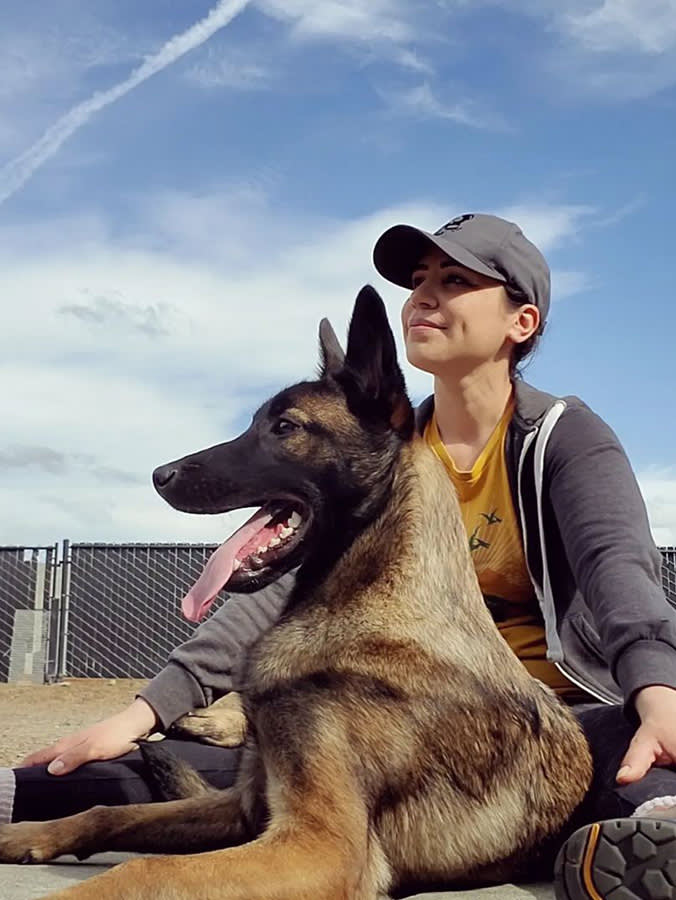
A dog lunges at the front of a kennel, barking, teeth visible, pupils blown wide. You walk past. Of course you do. Almost everyone does.
Here is the problem with the judgment you just made in that half second: you did not observe the dog. You observed the dog inside a box, and the box is doing most of the work.
That distinction is not a feel-good rescue slogan. It is the operating principle behind Wolf Mother K9 Rescue Services, a nonprofit in Santa Rosa, California, and it is the reason founder Saharai Salazar keeps pulling dogs off euthanasia lists that other trainers have already written off. Her organization has rehabilitated and homed a long line of animals formally designated unadoptable. The designation, it turns out, describes a set of conditions far more often than it describes an animal.
What a kennel does to a brain
Start with the physical facts. A typical shelter kennel is roughly six feet by three feet, about the size of a large closet. The dog does not know why they are in it. They cannot control a single thing that happens to them. Strangers file past all day. Other dogs bark without pause, around the clock. Sleep, the thing every mammal needs to regulate stress, becomes almost impossible.
Now compare that to the life of a dog in a house, who walks when they want, drinks when they want, chews a toy for a while, then relocates to a warm patch of floor to nap. That constant low-grade agency is not a luxury. It is a large part of what keeps a dog’s nervous system stable. Strip it out and the animal begins to come apart.
The clinical name for what happens next is stereotypic behavior: repetitive movement with no goal attached to it. In shelters it shows up as dogs licking the kennel bars for hours, chewing drywall off the surrounding wall, spinning in tight circles, chasing their own tails, or barking on an endless loop with dilated pupils. Salazar has watched animals waste away until only about a third of their body weight was left, and lose their coats along with it.
Every one of those behaviors makes the dog less adoptable. Every one of them was produced by the place that is now going to hold them accountable for it.
What gets recorded on the kennel card as aggression is very often a fear response with nowhere to go. The dog is not making a threat. The dog is asking, in the only language available, for the situation to stop.
The medical layer everyone skips
There is a second confound, and it gets missed constantly.
A meaningful share of the aggressive behavior seen in shelter dogs has a medical component. Pain, particularly chronic or untreated pain, is one of the best-documented drivers of canine aggression there is. A dog whose hips hurt, whose ear is infected, whose teeth are rotting, is a dog with a shorter fuse and a lower threshold for a defensive snap.
That means a behavioral label applied to an animal who has not had a real veterinary workup is not a finding. It is a guess, and it is a guess with a body count.
“Before I will call a behavior a temperament, I want to know that the dog is not in pain,” Dr. Solis says. “Get that wrong and you are euthanizing a dog for having a sore back.”
What “rehabilitation” actually looks like
Wolf Mother K9’s team travels to shelters and runs behavioral assessments on dogs facing euthanasia, including dogs other trainers have declared beyond help. They pull those dogs into space, exercise, and sustained human attention, and they work with positive reinforcement.
The most instructive thing about the whole model is how modest the goal is. Salazar is not chasing a finished, perfect dog. She is chasing enough improvement, a dog stable enough that other people can now work with them, foster them, adopt them. The bar is not a rehabilitated animal. The bar is an animal who is no longer a closed door.
That reframing matters for anyone who has ever thought about fostering and decided they were not qualified. You are not being asked to fix a dog. You are being asked to be the next set of hands.
The team also runs an unglamorous but effective secondary operation on Instagram, posting urgent calls for fosters and adopters when a dog is up against a hard euthanasia deadline. Social media is doing real triage work here, not brand-building.
The number is smaller than it was, and still enormous
Salazar’s framing of this is the one that should stick with you: it is not a shelter problem, it is a community problem. Dogs arrive at shelters because they were abandoned or surrendered by people. If a dog has developed aggressive behavior, that behavior was almost always built in a home, by an environment the dog did not choose. The failure ran downhill to the animal.
Intake now outpaces adoption at a great many shelters. Which is why the recommendation, if you want to help, is specific and local: volunteer, foster, or donate to the shelter closest to you. Not the one with the best video.
Wolf Mother K9 itself runs on donations and accepts them year-round.
What’s new since this was written
The national numbers have moved, and they moved in the right direction.
Shelter Animals Count’s 2025 annual data puts shelter euthanasia at roughly 597,000 animals, including about 320,000 dogs, with dog euthanasia down nearly 7 percent year over year. The overall euthanasia rate has fallen from 10 percent in 2019 to 8 percent in 2025. Intake dropped about 2 percent, some 121,000 fewer animals through the doors, and adoptions ticked up to 4.2 million dogs and cats. Median length of stay before adoption got shorter across every organization type.
That is real progress and it is worth naming. It is also three hundred and twenty thousand dogs.
The dogs in that number are not a random sample. They are disproportionately the ones the system finds hardest to move: German Shepherds, Huskies, and pit-bull-type dogs, the same animals who face the longest stays, and therefore the most kennel stress, and therefore the worst behavior on the kennel card. The label and the outcome feed each other in a loop.
Breaking that loop does not require you to be a trainer. It mostly requires you to look at the dog behind the door and stay curious about which parts of what you are seeing belong to the dog, and which parts belong to the room.
References
- Shelter Animals Count. “2025 Annual Data Report.” https://www.shelteranimalscount.org/2025-report/
- ASPCA. “Shelter Animals Count Releases 2025 Annual Data Report, Marking 10 Years of National Sheltering Data.” https://www.aspca.org/about-us/press-releases/shelter-animals-count-releases-2025-annual-data-report-marking-10-years
- Mills, D. S., et al. “Pain and Problem Behavior in Cats and Dogs.” Animals, vol. 10, no. 2, 2020, p. 318. https://doi.org/10.3390/ani10020318
- Protopopova, A. “Effects of sheltering on physiology, immune function, behavior, and the welfare of dogs.” Physiology & Behavior, vol. 159, 2016, pp. 95–103. https://doi.org/10.1016/j.physbeh.2016.03.020
- Wolf Mother K9 Rescue Services. https://www.wolfmotherk9.org/
Dr. Solis is a board-certified veterinary dermatologist with over twelve years of clinical experience. She advises on skin conditions, allergies, and grooming practices that affect coat and skin health. All dermatology and allergy content at The Pet Times is reviewed by her team before publication.
Meet our experts ↗Keep reading
 TrainingYour Rescue Dog Isn't Being Difficult. They're Decompressing.Dr. Mara Chen · 8 min
 LivingThe ADA Has No Breed List. Your Landlord's Insurance Does.Dr. Priya Nair · 6 min
 LivingThe Cheapest Way to Empty a Shelter Is the One Nobody UsesJames Okafor · 6 min
 LivingHe's Fostered Almost 40 Pit Bulls. The Stigma Is the Only Thing He Can't Rehome.Leila Torres · 8 min
 LivingThey Seized 305 Dogs, 30 Guns, and $40,000. The Dogs Were the Easy Part.Nina Vasquez · 6 min
 LivingToo Wild to Keep, Perfect to Save LivesMarcus Webb · 6 min