


One Cat, Three Flights, Zero Consent: How Mittens Became a Frequent Flyer
A cat named Mittens flew across the Tasman Sea three times after being left in a plane's cargo hold. The funny part hides a real question about how pet cargo travel actually works.
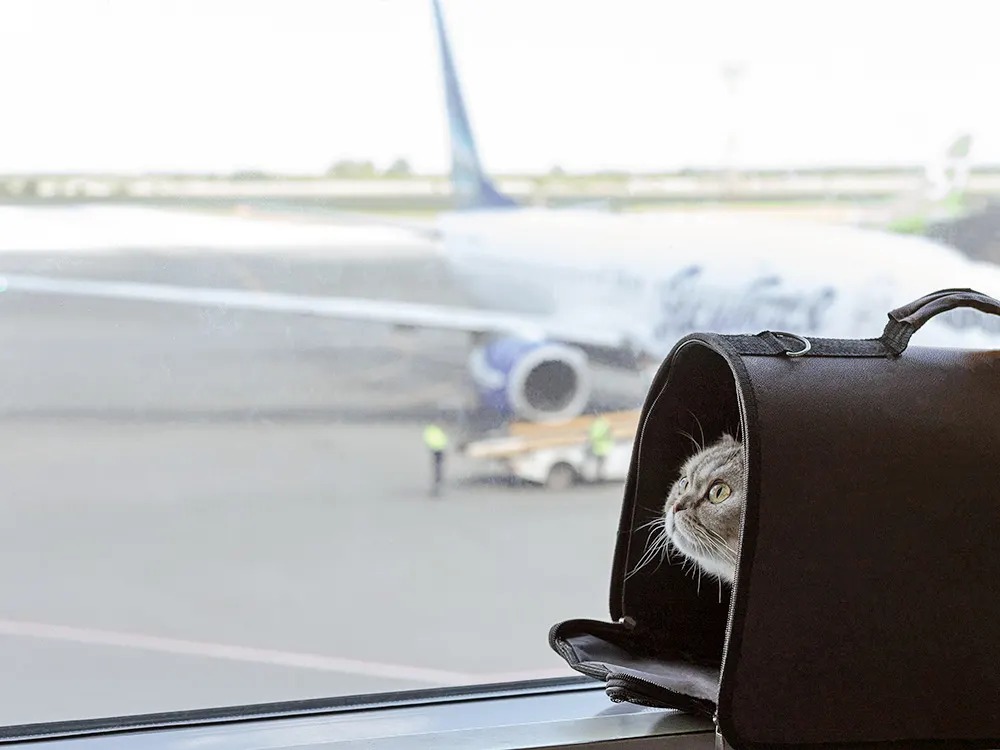
Most of us have made peace with two travel options for our cats: leave them home with a sitter, or bring them along and brace for the stress of it. Almost no one plans for the third option, which is that the cat travels without you. That is exactly what happened to a Maine Coon named Mittens, who crossed the Tasman Sea three times in a single stretch, none of it on purpose.
The story is genuinely funny. It also quietly exposes how little most of us know about what happens to a pet once they disappear behind the check-in counter, which is the part worth staying for.
What actually happened
In January 2025, Margo Neas was moving her family from Christchurch, New Zealand, to Melbourne, Australia, on Air New Zealand, with Mittens booked to travel in the cargo hold. When Neas landed in Melbourne, she waited three hours for her cat to be unloaded. Mittens never appeared.
Airline staff eventually delivered the news: Mittens was still on the plane, which had already begun its return flight to Christchurch. A wheelchair also stowed in the hold had apparently blocked the carrier from the ground crew’s view, so no one removed her. Once the mistake was caught, the airline alerted the pilot, who turned on heating in the cargo hold to keep Mittens warm, since that space can sit near 7 degrees Celsius. Her total accidental journey ran about seven and a half hours across roughly 4,500 miles.
On the ground back in New Zealand, a pet transport service retrieved Mittens, cleaned her up, gave her a visual health check, and rebooked her to Melbourne the next day at no extra cost. She had lost a little weight but was otherwise unharmed. “She basically just ran into my arms and just snuggled up in here and just did the biggest cuddles of all time,” Neas told reporters. Air New Zealand apologized, called it human error, and refunded the full cost of Mittens’ travel.
The part the headline skips
It is easy to read this as a one-off blunder and move on. The more useful takeaway is that Mittens’ trip is a window into how manual and how human cargo pet travel still is. A carrier in a hold is not tracked like a passenger. It is loaded, counted, and unloaded by people working fast against a turnaround clock, and a wheelchair in the wrong spot was enough to make a living animal invisible to the process.
That is not a reason to panic about flying with a cat, but it is a reason to travel like the system can fail, because occasionally it does.
“The hold is survivable and, for many pets, the only option on a given route, but it removes you from the equation for hours at a time,” says Dr. Lena Park, a feline veterinarian on the Pet Times roster. “That is why the prep matters more than people think. A carrier your cat has actually acclimated to, clear ID on and inside the crate, and a vet check beforehand are the things that protect them when you cannot.”
If you are booking a cat into cargo, a few concrete moves stack the odds in your favor. Confirm your pet onto the flight at the gate, not just at check-in, so a real person has laid eyes on the booking. Label the carrier inside and out with your name, phone number, and destination. Freeze a small water dish so it thaws into a drink rather than sloshing out during loading. And choose direct routes over connections whenever you can, because most of the ways this goes wrong happen during transfers and turnarounds, exactly the moment Mittens got missed.
What’s new since this happened
Mittens’ saga landed during a broader stretch of scrutiny over how airlines handle animals in cargo, and it fed real momentum. Since her flight, aviation and consumer advocates have kept pushing carriers toward better tracking and clearer accountability when a pet is mishandled, and several airlines have publicly reviewed their ground-handling checklists for animals. Air New Zealand said at the time it would work with its Melbourne ground handler to make sure the mix-up would not repeat.
The honest status is that pet cargo handling is still largely manual and still varies a lot by airline and route. Mittens came home fine, and the airline made it right. But the lasting lesson is the unglamorous one: the safeguards that protect your cat are the ones you put in place before you hand the carrier over.
Jordan Ellis is a certified professional dog trainer with a decade of experience working with rescue organisations and private clients. They specialise in anxiety, reactivity, and positive reinforcement methods, and review all training and behaviour content at The Pet Times.
Meet our experts ↗Keep reading
 LivingHis Cat Vanished in Yellowstone. Two Months Later, a Chip Pinged 900 Miles Away.Dr. Lena Park · 5 min
 LivingThe Goodbye Ritual You Think Is Sweet Is Stressing Your Cat OutDr. Nina Kohl · 5 min
 Product PicksFor a Cat, the Wrong Harness Isn't Gear. It's an Escape Hatch.Marcus Webb · 7 min
 LivingA Cat Roamed a Plane for Hours. The Funny Part Hides a Real Travel MistakeJordan Ellis · 5 min
 LivingA Full Bowl Isn't Cat Care. Hire the Sitter Who Notices.Leila Torres · 6 min
 Health & WellnessYour Cat Skips the Vet Because of the Car, Not the BillDr. Mara Chen · 6 min