


For a Cat, the Wrong Harness Isn't Gear. It's an Escape Hatch.
Cats are escape artists and a neck-attached leash can choke them, so the harness you pick is a safety decision, not a style one. Here's how to choose by escape risk, plus the picks that hold up and the collar rule for outdoor cats.

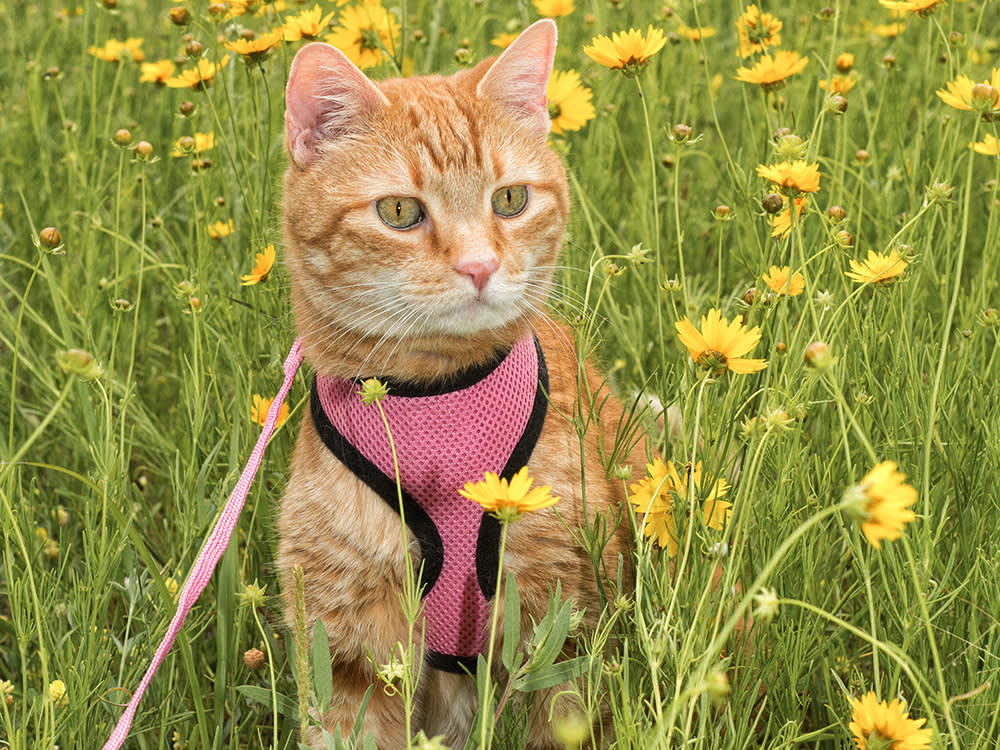
Start with the fact that reframes everything else: to a cat, an ill-chosen harness is not equipment, it’s an exit. Cats are practiced escape artists, and the two ways a harness fails are backing out of a loose fit and, far worse, hurting the cat at the neck. Get either wrong and a “walk” becomes a bolt into traffic or a genuine injury. So before we talk brands, understand that picking a cat harness is a safety decision. Style is the last thing on the list, not the first.
The one rule that outranks all the others
Never attach a leash to a cat’s neck. Not to a collar, not to a harness with a neck clip.
“The collar works fine on a dog because a dog’s neck can take that pressure, but a cat’s can’t,” says Dr. Lena Park. “A leash pulling on the front of a cat’s throat can cut off their air and cause real damage, and in a panic a cat can genuinely strangle. A body harness spreads that force across the chest, which is the whole reason it exists. That’s not a preference, it’s the line between safe and dangerous.”
Everything else about walking a cat flows from that. A cat walk is not a dog walk, and it isn’t for every cat. Dogs, as a rule, love going out. Cats are individuals, and plenty of them find the noise, dogs, and traffic outside genuinely stressful. Watch your cat honestly: if leashed time makes them crouch, freeze, or fight the gear, that’s a no, and forcing it just teaches them to dread the harness. But for a cat who takes to it, a harness earns its keep, it adds safe exercise and boredom relief, and it means you can move your cat quickly and securely in an emergency.
How to fit it, because fit is the whole ballgame
The best harness is the one that fits your cat, and no brand overrides your tape measure. Measure your cat and check those numbers against each manufacturer’s guide, because harnesses run differently and are not interchangeable. Aim for snug but not constricting: tight enough that your cat can’t wriggle out, loose enough that it isn’t digging in. And a harness is only ever for supervised, leashed use, never a leave-it-on garment. A cat wearing a harness unattended can get hung up on furniture.
Match the harness to your cat’s escape risk
Instead of shopping by looks, shop by how much of a flight risk your cat is. That single question sorts the field.
If your cat is a determined escape artist: a martingale vest
For the Houdinis, start with an adjustable vest-style harness built around a martingale. The Sleepypod Martingale Harness for Cats is the reference pick here: a breathable mesh vest that’s light but heavy-duty, with a martingale that gently cinches the moment a cat tries to wiggle free, so backing out becomes much harder. The Outdoor Bengal “Houdini” Harness, named for the master escapist himself, is another strong option, available in three adjustable sizes with an escape-resistant design built around snug neck straps. If your cat’s superpower is disappearing, this is the category to buy from.
If your cat might bolt outdoors: a GPS vest
For the flight risk you can’t fully trust, a harness with built-in tracking buys peace of mind. The Pathfinder by Travel Cat is a padded vest with its own GPS unit housed in a secure compartment on the back, not around the neck, which is an added safety win. It won’t stop a determined bolt, but it means a getaway doesn’t become a missing-cat poster.
If you want a do-it-all safety pick: a walking jacket
The Yizhi Miaow Tactical Cat Harness is built around cat-specific safety: a snug vest fit, a top handle so you can lift your cat if you need to, and an interchangeable patch to signal your cat’s status to strangers (“don’t pet,” “in training”). Those features make it as useful for high-stress moments, vet trips, travel, escape-prone situations, as for a stroll. The Jackson Galaxy “True Adventurer” Reflective Set is another versatile walking jacket, generally easier to get on and off than a step-in harness, with reflective strips for low light and two back rings that clip to a leash or a compatible carrier backpack.
If it’s mostly for indoor handling and short outings: a lightweight harness
Not every harness is for hiking. Indoors, a light harness gives you gentle control for grooming, nail trims, giving medication, or steadying a nervous cat. The Found My Animal Prismatic Harness is a hand-dyed cotton option, sturdily top-stitched, and the brand donates a share of profits to rescues. Necoichi (“cats first” in Japanese) makes a comfortable set with a fish-skeleton charm, and Supakit’s leather harness is light enough for indoor use but secure enough to double for the occasional walk. These lean cuter and lighter than the tactical options, which is exactly right for their job.
Already have an outdoor cat? The answer is a collar, not a harness
If your cat roams free rather than walks on a leash, the gear changes completely. A free-roaming cat should never wear a walking harness unattended; they should wear a breakaway collar with an ID tag. Cats climb through bushes and over fences, and a standard buckle collar can snag and become a choking hazard. A breakaway collar snaps open under a tug, so a caught cat frees themselves. Pair it with a current microchip as the real backstop, since a collar that breaks away has also taken the ID with it. Look for collars with laser-engraved reflective ID strips for visibility, or lightweight silicone breakaway styles if you want color options that still release safely.
What newer gear adds
The most useful recent shift in this category is that tracking has gone from novelty to genuinely practical. Beyond purpose-built GPS harnesses like the Pathfinder, small Bluetooth and satellite trackers have gotten light enough to ride on a breakaway collar, giving indoor-outdoor owners a last-known-location if a cat wanders. Two honest caveats keep this from being magic: any tracker on a breakaway collar leaves with the collar if it snaps, and Bluetooth tags only “ping” when they pass near someone else’s phone, so neither replaces a microchip. Treat trackers as a helpful extra on top of a chip and a well-fitted collar, not a substitute for either.
References
Common questions
What's the most escape-proof cat harness?
Look for an adjustable vest-style harness with a martingale feature, which cinches gently if a cat tries to back out. Snug, even coverage across the chest matters more than any single brand, and the fit you get from careful measuring matters most of all.
Can I walk my cat on a collar instead of a harness?
No. A leash attached to a collar, or to a harness that clips at the neck, puts dangerous pressure on the throat and can cause serious injury. Always walk a cat on a properly fitted body harness, never a neck attachment.
Is it okay to leave a harness on my cat all the time?
No. Harnesses should only be worn during training or active use. For everyday wear, fit your cat with a breakaway collar instead, which is designed to release if it snags on something.
Is there a special harness for Maine Coons or other big breeds?
Not really. Regardless of breed, choose the harness by your cat's actual measurements against the manufacturer's size guide, not by the breed name on the box.
Marcus Webb writes about the gear, gadgets, and everyday choices that make life with a pet easier. His coverage runs from product picks to training and the causes worth paying attention to, always with an eye on what actually earns a place in your home.
Meet our experts ↗Keep reading
 Product PicksThey Live in a Van With Two Cats. This Is the Gear That Survives ItNina Vasquez · 7 min
 Product PicksYour Hand Is the Worst Place for a Leash. 7 Hands-Free Picks for Active Dogs.Marcus Webb · 6 min
 Product PicksTheir First Dog Backpack Fell Apart in Two Weeks. So They Built One That Doesn't.Sasha Ford · 7 min
 Product PicksThe Walk Fails at the Neck and the Pavement: Walking Gear Ranked by SafetyJordan Ellis · 10 min
 Product PicksBuild a Walk Wardrobe That Lasts: Leash, Harness, and Collar Picks That Won't DieMarcus Webb · 7 min
 Product PicksWarmth, Safety, or Just Style? The Pet Coats Worth It, Sorted by What They DoSasha Ford · 11 min