


Build a Walk Wardrobe That Lasts: Leash, Harness, and Collar Picks That Won't Die
Most walk gear is bought one impulse at a time and replaced just as fast. Here's how to assemble a coordinated, durable, lower-waste kit, from puppy and cat harnesses to leather leads and recycled poop bags, that actually goes the distance.

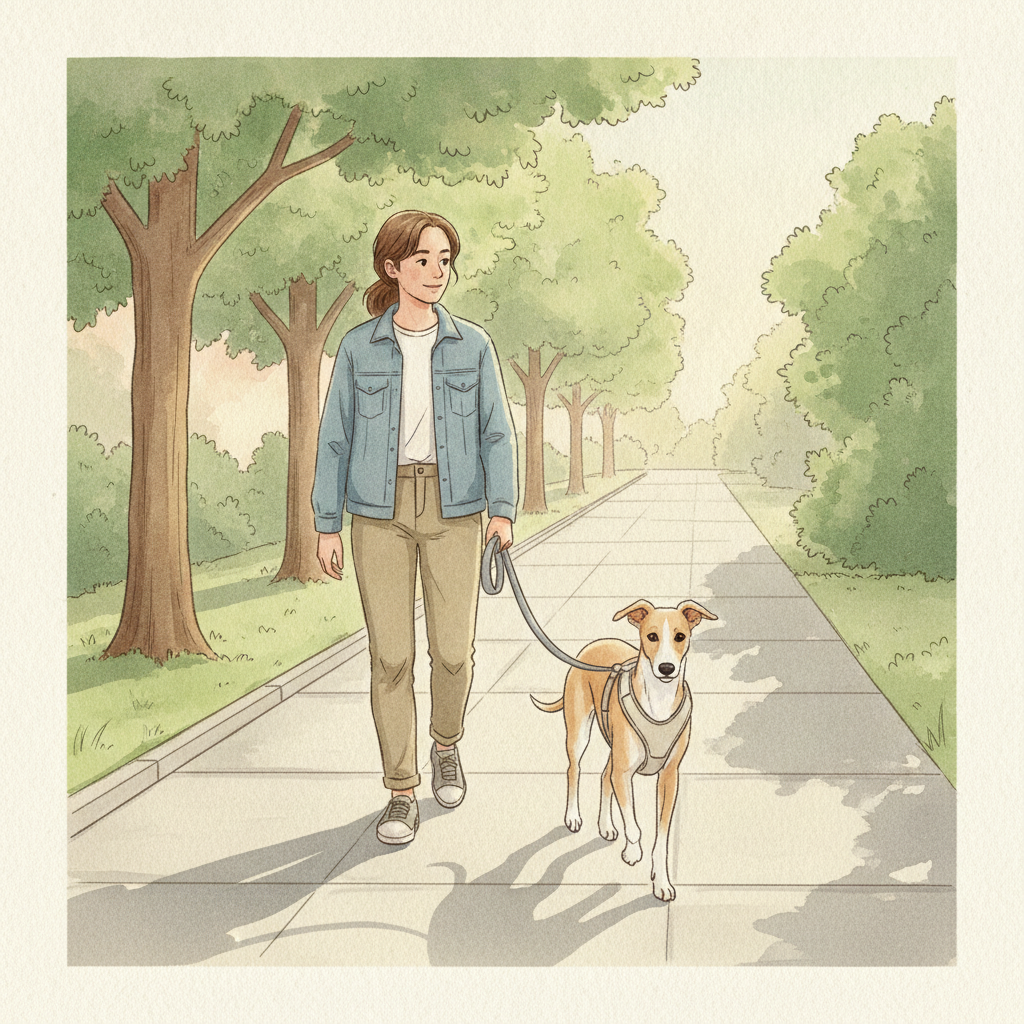
Open most dog owners’ gear drawer and you’ll find the same archaeology: three half-dead leashes, a harness that never fit, a collar from a phase, and a box of bags that don’t match anything. Walk gear gets bought one impulse at a time and tossed almost as fast, which is bad for your wallet and genuinely bad for the planet, since most of it is plastic that outlives us all.
This guide takes the opposite approach. Instead of a pile of “bests,” it’s a plan for assembling one coordinated walk wardrobe, the few pieces that pull together, hold up for years, and lean low-waste where they can. Buy it as a system once, and the drawer stays sane. We’ll move outward from the dog’s body: harness first (because that’s the safety piece), then leash, collar, weather gear, and the unglamorous-but-essential cleanup kit. Cats get their own note at the end, because they play by different rules.
Start with the harness, because it carries the load
The harness is the one piece where fit is a safety issue, not a style one, so it anchors the whole kit. For a growing puppy, the priority is something forgiving and easy to get onto a squirming body. Maxbone’s soft “Easy Fit”-style neoprene harness adjusts generously and won’t constrict the airway, which matters for puppies and flat-faced breeds prone to breathing trouble.
“A harness is gentler on a dog’s neck than a collar-only setup, especially for a growing puppy whose trachea is still developing,” says Dr. Mara Chen, a Pet Times veterinary contributor. “Get them used to it indoors first, with treats, before you add the chaos of the outside world. A dog who associates the harness with good things stops fighting it fast.”
Once it’s on, do the two-finger check under every strap and watch the dog walk for a minute, a harness that looks right standing still can ride up into the armpit in motion. A well-chosen harness is also the piece you’ll replace least often, so it’s worth spending here.
A leash you’ll keep for a decade
Leashes are where “buy once” pays off most, because a good one genuinely lasts ten years. Three styles cover most needs, and a coordinated wardrobe usually has two.
For everyday walking with a stylish streak, a handcrafted leather lead like Ware of the Dog’s two-tone leashes is built to age well rather than fray. Founder Jackie Rosenthal, who spent a career in fashion before launching the line, notes that the leashes “have been in our collection for ten years and still continue to be our best sellers,” and they’re sold with coordinating collars so the kit matches by design. Leather wears in instead of out, which is exactly the point of a buy-it-for-life piece.
For runners and hikers, a hands-free option earns its keep. The Found My Animal rope leash is long enough to wear around the waist, freeing your hands for water or treats; as trainer Annie Grossman puts it, that waist-wearable length is what makes treat-based training on the move actually possible. There’s a mission angle too: Found My Animal was built around dog rescue, has donated to more than 70 rescue organizations, and runs collaborations whose proceeds fund animal welfare. It’s sold direct through the brand’s own site.
For low-light and trail safety, a reflective rope leash like Wilderdog’s stands up to strong pullers on tightly spun climbing rope, clips with a locking carabiner, and weaves reflective thread through the whole length so drivers see your dog at dawn and dusk. If you walk before sunrise or after dark, this is the leash that earns its slot.
The collar: one for ID, maybe one for show
Every dog needs a flat ID collar; whether you add a “nice” one is taste. For security on a dog who backs out of flat collars, a martingale (limited-slip) collar from a maker like Dog + Bone tightens just enough to stay on without choking, and trainers recommend keeping one as a failure-proof backup to whatever else you walk on.
If you want the collar to be the outfit, the field has gotten genuinely good. Daisy by Shelby’s wavy-edged vegan-leather collars use rust-resistant zinc-alloy and copper hardware; founder Shelby Eastman started the brand in 2022 because everything else “felt so minimal and basic.” At the luxury end, Pagerie’s grain-leather collars use REACH-certified European leather held to stricter sustainability standards. These are want-not-need, but if you’re buying a forever collar, buying one well-made one beats cycling through five cheap ones.
Weather gear: boots are the piece people skip and shouldn’t
Paws take a beating from the two extremes most cities serve up: summer pavement hot enough to blister, and winter sidewalks dosed with de-icing salt that causes chemical burns and cracked pads. Dog boots solve both, and the modern designs are far easier to use than the old four-sock ordeal.
WagWellies Mojave, a ventilated, Croc-inspired clog, slips on without the wrestling match and breathes in summer while still protecting against ice. “Think of boots as all-season equipment: road salt and ice in January, scorching pavement in July, sharp gravel year-round. And for dogs whose hind paws scuff when they walk, whether from an old injury or a nerve condition, they spare the toes from wearing raw,” notes Dr. Chen. Introduce them indoors first; the first-time-in-boots high-step is hilarious but means the dog needs a minute to adjust.
The cleanup kit: the most-used gear in the bag
You’ll use poop bags more than anything else you own, so durability and waste both matter. Earth Rated’s bags are thick, leak-proof, and made largely from post-consumer recycled plastic, the brand says reusing roughly five million pounds of landfill-bound plastic a year. They’re not perfect (most “biodegradable” bags don’t meaningfully break down in a landfill, a nuance worth knowing), but a thick, partly recycled bag you’ll actually use beats a flimsy “eco” one that splits.
Pair them with a holder that mounts to the leash so you’re never caught empty-handed, Wild One’s twist-top carrier clips to any leash and reloads in seconds, and if your dog already wears that brand’s harness and lead, the kit finally matches. A coordinated cleanup setup is a small thing that removes a daily annoyance.
Cats walk by different rules
If you’re taking a cat out, throw out the dog playbook on one point: never clip a leash to a cat’s collar. “Leashes attached to neck collars, or harnesses with attachments at the neck, put pressure on the front of the throat and can cause serious injury,” says Dr. Nina Kohl, a Pet Times veterinary contributor. A startled cat can choke against a neck attachment or slip free of it entirely. Use a breathable mesh vest harness with a martingale feature that gently cinches if the cat tries to back out, and let the cat acclimate indoors for days, not minutes, before the first outdoor outing. An indoor cat can still wear a handsome breakaway collar with a removable bell for ID; just keep the walking and the collar as two separate systems.
The whole kit, in one line
Pick one well-fitted harness, one everyday leash plus a reflective or hands-free second if you need it, a flat ID collar (with a martingale backup for escape artists), boots for weather extremes, and a matched, recycled-where-possible cleanup setup. Buy those few pieces well and the gear drawer stops being a graveyard, your dog looks pulled together, and a lot less plastic ends up in the ground.
References
- American Veterinary Medical Association. “Cold Weather Animal Safety” and “Hot Weather Safety for Pets.” avma.org.
- ASPCA. “Cold Weather Safety Tips.” aspca.org.
- U.S. Federal Trade Commission. “Environmental Claims: Green Guides.” ftc.gov.
- International Cat Care. “Walking Your Cat on a Harness and Lead.” icatcare.org.
Marcus Webb writes about the gear, gadgets, and everyday choices that make life with a pet easier. His coverage runs from product picks to training and the causes worth paying attention to, always with an eye on what actually earns a place in your home.
Meet our experts ↗Keep reading
 Product PicksWarmth, Safety, or Just Style? The Pet Coats Worth It, Sorted by What They DoSasha Ford · 11 min
 Product PicksDog Shoes Don't Fail Because They're Ugly. They Fail Because They Fall Off.Sasha Ford · 5 min
 Product PicksThe Escape-Proof Collar Shelters Swear By Comes From a Town of 400Nina Vasquez · 5 min
 Product Picks7 Pieces of Dog Gear That Won't Wreck Your Living RoomSara Lim · 6 min
 Product Picks'Pet-Safe' Bug Spray Isn't Pet Spray. Read That Before You Buy.Sara Lim · 7 min
 Product PicksHow to Buy Personalized Pet Jewelry You'll Actually Wear (11 Ideas)Sara Lim · 4 min