


The Nonprofit Getting Hundreds of Businesses to Bankroll Cat Rescues
Small feline rescues do enormous work on almost no money. Mission Meow's founder built a fix around a simple observation: if a whole town of businesses will rally for one family in crisis, they'll rally for a community of cats, too.
Ask anyone who runs a small cat rescue what they’re short on and the answer is always the same: money. The organizations doing the most stubborn, unglamorous work, trapping and neutering colonies, bottle-feeding orphaned kittens, pulling cats out of hoarding cases, tend to operate on shoestrings. Mission Meow, a New Jersey nonprofit, was built to loosen that knot, and its method is clever enough to be worth explaining.
Why cats get the short end
The founder, Sally Williams, focused her organization on felines on purpose, because in her view the cat community is chronically underserved. It’s a striking gap when you consider that cats are, by sheer numbers, the most popular pet in the United States, and yet that popularity isn’t reflected in how they’re resourced. Cats are far less likely than dogs to get an annual wellness exam. The cat aisle at the pet store is smaller than the dog aisle. Trap-neuter-return, the humane backbone of managing feral populations, remains controversial in many communities. And cats that lack enrichment slide into boredom, weight gain, and the health problems that follow. Williams frames the underlying issue as one of equality: we adore cats at home, but that devotion doesn’t extend to how society funds and cares for them at large.
The idea: fundraising as a team sport
Williams wasn’t new to nonprofit work. Before Mission Meow she ran The Brodie Fund, which for roughly six and a half years helped families cover care for pets diagnosed with cancer. That work was meaningful and also emotionally punishing, and after stepping back from it she wanted to build something that helped animals without living inside the grief of the cancer world every day.
The spark for the new model came from watching her own community. When a house fire hit a nearby family, she saw local businesses spontaneously band together to help. If a cluster of businesses could pool their weight for one family, she reasoned, the same coordination could support an entire community of cats. She already understood how individual crowdfunding worked; Mission Meow’s innovation was to run that same playbook with businesses as the crowd.
Most charities lean on four income streams: individual donors, grants, fundraising events, and business donations. Williams’s earlier experience had taught her the limits of the first three, events require money up front and are unpredictable, grants for cat-focused groups were shrinking as applicants multiplied, and a steady drip of individual gifts is hard to sustain. That pushed her toward the fourth. Rather than chase one big corporate sponsor, Mission Meow signs up many businesses that each commit an annual donation sized to their budget, then funnels the pooled money to a different feline nonprofit on a recurring cycle. Individual donations and merchandise sales round out a three-part approach designed to stretch every dollar.
What the money actually does
The point of concentrating funds is impact. A single grant in the five-figure range can be transformational for a small rescue, the difference between limping along and buying a transport van, building a catio, or standing up a neonatal unit for orphaned kittens. Recipients don’t get a blank check, either. Organizations apply, have to clear set criteria, and must name the exact project or need the money will address. A grant committee vets applicants by reviewing proposals and interviewing each group’s leadership, and selected recipients sign a memorandum of understanding spelling out how the money will be used, then follow up with photos of the finished project so every donor, business and individual alike, can see exactly what their contribution built.
Mission Meow launched in the fall of 2022 with a kickoff at Asbury Park’s Catsbury Park, over in New Jersey, which became its first grant recipient and put the funds toward more than doubling its storefront, adding medical isolation rooms and a much larger adoption space.
What’s new since this was written
The model has matured since that first launch. Rather than a strict monthly cadence, Mission Meow now awards grants on a quarterly basis, and the amounts have settled into a range of roughly $7,000 to $15,000 depending on a project’s scope and the recipient’s needs. The reach has also spread well beyond New Jersey: in early 2025, the organization granted $9,300 to Sioux Empire TNR to support its work rescuing cats in the Sioux Falls, South Dakota area, one example of the business-crowdfunding engine doing exactly what it was designed to do. The core promise hasn’t changed, small, cat-focused nonprofits getting meaningful money they’d struggle to raise alone, funded by a lot of businesses each giving what they can.
The bigger point
Williams’s own path into this work threads through her life, from a childhood cat who kept vigil in her bassinet, to feeding neighborhood cats as a kid, to a mid-career health crisis that pushed her into shelter volunteering and, eventually, into founding nonprofits. What Mission Meow adds to the rescue landscape isn’t just another donation button. It’s a structure, a way to turn scattered goodwill from hundreds of businesses into concentrated, accountable help for the cats and the tiny organizations that so often get overlooked.
Nina Vasquez writes about life at home with pets and the relationships at the heart of it. Her work covers day-to-day living, people-and-pet stories, and the products that fit into a real household, with a warm, grounded take on everyday pet ownership.
Meet our experts ↗Keep reading
 LivingThe Only Part of TNR People Fight About Is the Part That WorksLeila Torres · 7 min
 LivingOne Woman, a 2002 Camry, and Brooklyn's Cats Nobody Else Will SaveJames Okafor · 6 min
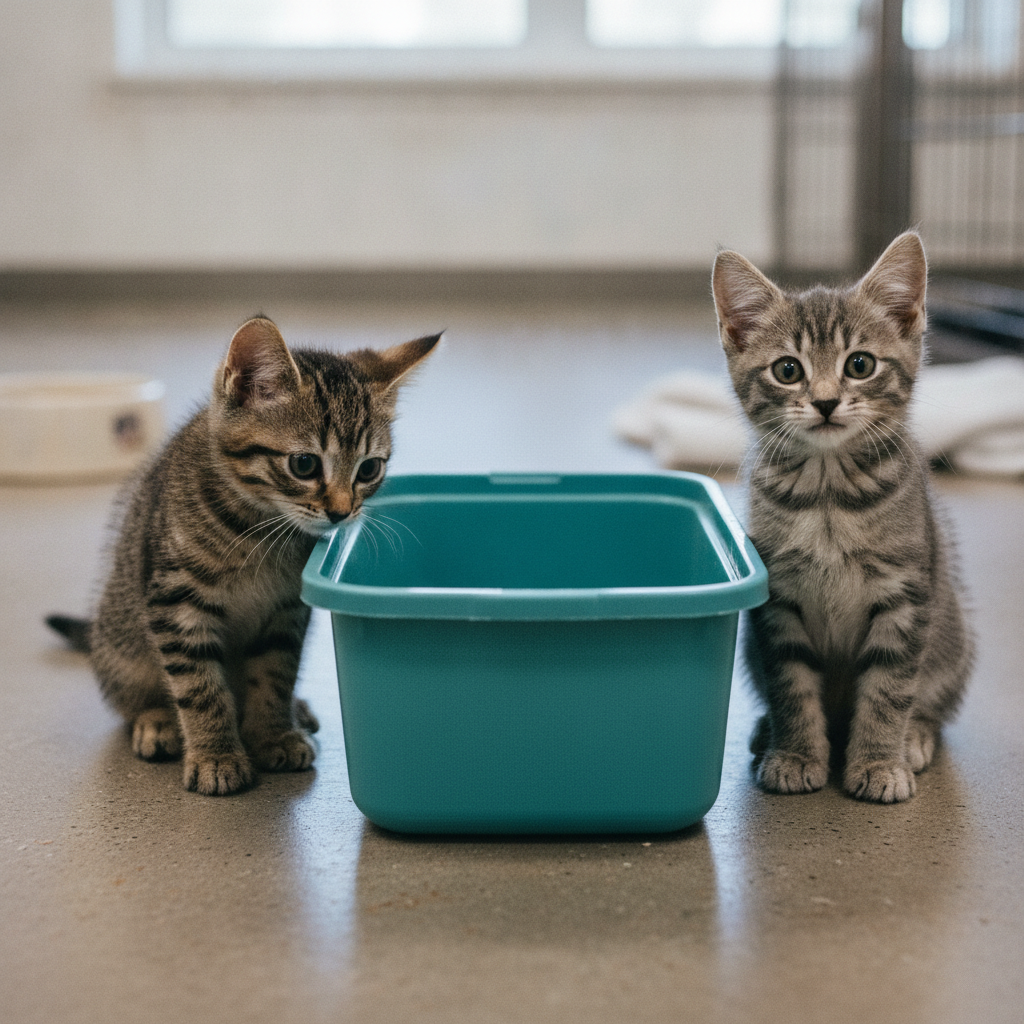 LivingOne Ohio Shelter Turned Your Worst Ex Into Its Best FundraiserSasha Ford · 3 min
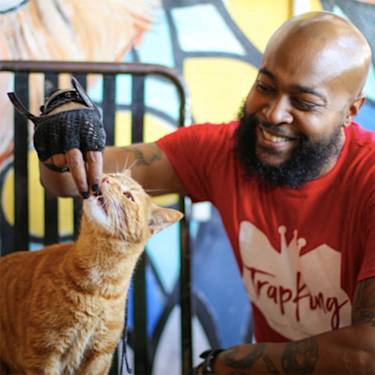 LivingTrapping the Cats Was Never the Hard PartJames Okafor · 8 min
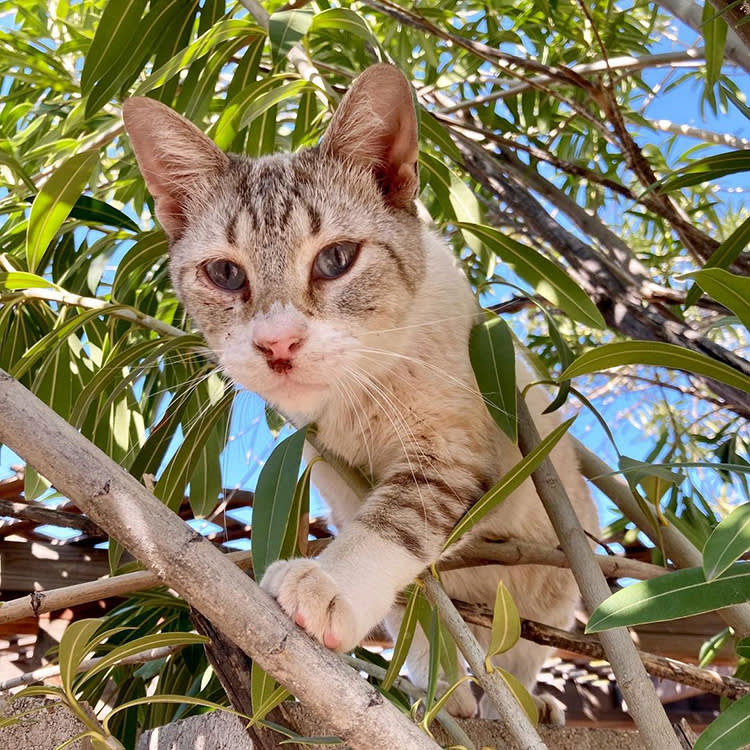 LivingShe Rented a House in Tucson and Inherited 30 Cats. The Internet Did the Rest.Nina Vasquez · 6 min
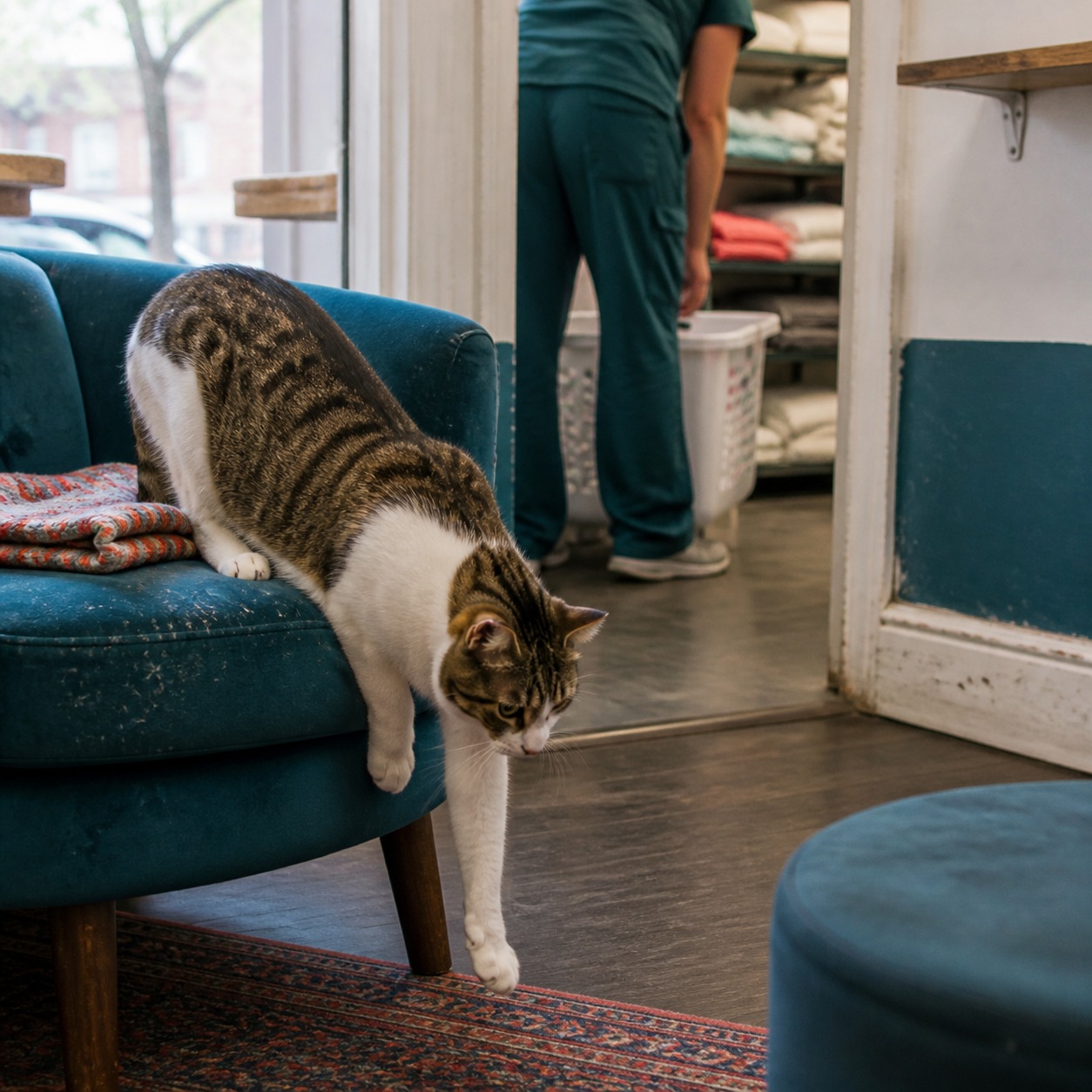 LivingBrooklyn's Cat Cafe Flipped the Model: It's a Rescue Clinic With a Cafe AttachedSara Lim · 6 min