


A Cat's Homing Instinct Is Real. It's Also the Last Thing You Should Rely On
Cats navigate with scent, memory, and maybe Earth's magnetic field, and some travel astonishing distances home. But the instinct is fragile and unevenly distributed, which is exactly why it's a lottery ticket, not a safety net.

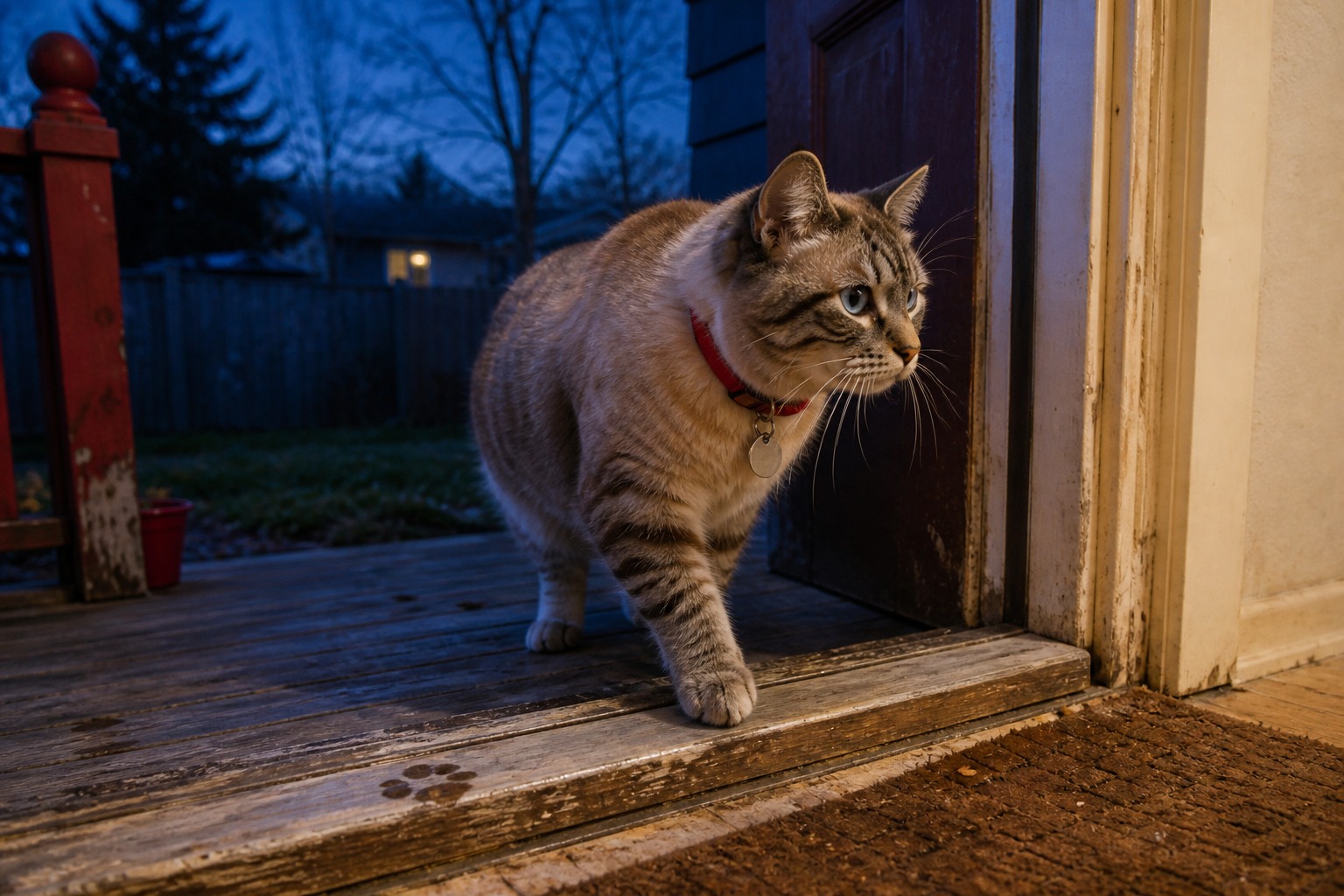
There’s a whole genre of heartwarming story about the cat who crossed a county to find its family, and those stories are real. Cats do navigate, sometimes spectacularly. But the way the “homing instinct” gets talked about, as a near-magical built-in GPS, quietly invites a dangerous conclusion: that a cat who slips out will simply find its way back. The truth is more sobering and more useful. A cat’s sense of direction is a fragile stack of fallible senses, distributed unevenly from one cat to the next, and easily defeated by weather, distance, fear, or age. It’s a lottery ticket, not a safety net. Understanding why is the difference between marveling at the instinct and actually protecting your cat.
What’s really under the hood
There is no single feline GPS. What we call homing is several overlapping abilities working at once, each impressive and each with limits.
Scent does a lot of the work. Cats lay down and read a scent map of their territory, and they can detect a strong, familiar smell, like their own food, from an estimated 120 to 150 feet away under good conditions. That’s enough to draw a cat down the block and back into the yard, but nowhere near enough to summon one home from across a neighborhood. Wind, competing odors, and rain all degrade it.
Spatial memory and sight build the mental map. Cats see well and they learn their spaces, so a confident cat moving through known ground is navigating from memory as much as instinct. Take that cat somewhere unfamiliar and the map runs out.
Magnetism, maybe. There’s a long-standing hypothesis that cats, like some other animals, carry tiny amounts of iron in the inner ear that let them sense Earth’s magnetic field and hold a rough compass bearing. It’s suggestive, not settled, and it’s part of why some animals orient along a north-south axis.
People imagine homing as one superpower, but in a cat it’s really a stack of overlapping skills, scent, spatial memory, maybe a magnetic sense, all filtered through the cat’s temperament. A bold cat with a strong grip on its territory has a real shot at getting home. A timid cat dropped somewhere strange is at a serious disadvantage, and that variation is exactly why you can’t treat the instinct as a guarantee.
That last point, temperament, is the one most people skip. A nervous cat is far more likely to freeze and hide than to undertake a confident trek home, which means the very cats most likely to bolt in fear are often the ones least equipped to navigate back.
Why cats end up out there in the first place
Understanding what pulls a cat out of its territory also tells you how far the instinct will be stretched.
Curiosity and the hunt. Cats are explorers who follow their noses and chase prey, and either can lead them past the edge of familiar ground.
Mating drive. Intact cats are powerfully motivated by it. A female in heat advertises loudly, and an intact male can detect her from a great distance and leave his territory entirely. Even a spayed or neutered cat can get pushed out of its usual range when an aggressive, roaming intact male moves through.
Fear. Cats run on fight-or-flight, and flight usually wins. Construction noise, fireworks, a new predator in the area, or landscaping that strips away hiding cover can all drive a cat out of its safe zone and into terrain it doesn’t know.
Plain bad luck. Some of the saddest cases have nothing to do with instinct. Cats climb into car engines and get driven miles away, get shut in sheds and garages, or get scooped up by well-meaning strangers who think they’re strays. Each of these drops a cat somewhere its homing toolkit was never going to reach.
What defeats the instinct
Wanting to go home and being able to are two very different things, and a long list of factors stands between them.
Distance. A self-reported survey project by Lost Pet Research and Recovery gathered data from 2013 to 2018 suggesting lost cats using their homing instinct traveled an average of two to four miles, though some covered as much as 80 miles. The headline-grabbing 80-mile cat is the exception that proves the rule, most cats are working with a far shorter range.
Changed ground. Homing leans on the familiar. New construction, fresh scents, walls, highways, and waterways all turn a navigable route into a maze.
Weather. Rain washes away the scent trail that points home and can flood the path. Heat brings dehydration, exhaustion, and burned paws. The worse the conditions, the lower the odds.
Age and health. Any illness can throw off navigation, and older cats are both more prone to health problems and more likely to have lost the tools homing depends on, dimming vision and hearing, a duller nose, less stamina to cover ground or evade predators.
The part that actually brings cats home
If the instinct is the lottery ticket, here’s the insurance, and it’s not subtle: a registered microchip with current contact information is the single most effective thing you can do to reunite with a lost cat. Unlike instinct, it doesn’t depend on your cat’s mood, courage, or luck. Shelters and vet clinics scan every animal that comes in, and a chip gives them a direct line to you even when a collar is long gone. A growing number of shelters now scan as a matter of routine, which only makes the chip more valuable.
Two more layers stack on top. A breakaway collar with a visible ID tag lets a friendly neighbor reach you without a vet visit. And for cats that go outdoors, lightweight GPS trackers have matured into a genuinely useful complement, better battery life and accuracy than a few years ago, giving you real-time location instead of relying on instinct and hope. A tracker isn’t a substitute for a chip, since it can fall off or run flat, but together they cover far more ground than instinct ever will.
If your cat goes missing tonight
Stay calm, move fast, and don’t count on the homing instinct to do your job for you. Search your immediate area thoroughly first, frightened cats usually hide close by rather than ranging far. Put out food and familiar-smelling items like bedding or a worn shirt. Contact local shelters and vet clinics right away and confirm your microchip registration is current. Spread the word widely, online and door to door. The faster you act, the less the outcome rides on luck.
The bottom line
A cat’s ability to find its way home is real, occasionally astonishing, and worth appreciating. It’s also fragile, wildly variable from cat to cat, and easily undone by distance, weather, fear, and age. Admire the instinct, but don’t bank on it. The cats that come home most reliably aren’t the ones with the best noses, they’re the ones with a current microchip, a tag, and an owner who acted quickly. Treat the instinct as the long shot it is, and put your trust in the technology that actually closes the distance.
References
Common questions
Can cats really find their way home?
Some can, using a mix of scent, spatial memory, and possibly a sense of Earth's magnetic field. Survey data suggests lost cats often travel a couple of miles back, and a few have covered far more. But it's unreliable and depends heavily on the individual cat and the situation, so it should never be your safety plan.
How far can a lost cat travel to get home?
A long-running owner survey found lost cats using their homing instinct traveled an average of about two to four miles, with rare cases reaching dozens of miles. Distance, unfamiliar terrain, weather, and the cat's health and age all cut into those odds.
What's the single best way to get a lost cat back?
A registered microchip with current contact information. It's the only 'homing' technology that doesn't depend on your cat's instinct, mood, or luck, and shelters and vets scan for it. Pair it with a collar and ID tag, and increasingly, a GPS tracker if your cat goes outdoors.
What should I do the moment my cat goes missing?
Act fast. Search your immediate area thoroughly, since frightened cats often hide close by, put out familiar-smelling items and food, contact local shelters and vets, and make sure your microchip registration is current so anyone who finds your cat can reach you.
Tom Hadley writes about training and behavior, helping owners understand what their pets are trying to tell them. His work covers everyday manners, decoding common behaviors, and the small changes at home that make dogs and cats easier to live with.
Meet our experts ↗Keep reading
 Health & WellnessCats Don't Always Land on Their Feet. Scientists Just Found the Part That Does the WorkDr. Priya Nair · 6 min
 Health & WellnessYou're Decorating Your Cat's World With Smells It Can't StandDr. Lena Park · 6 min
 LivingWhether a Cat Tolerates Water Is a Coat Question, Not a Willpower OneDr. Ravi Mehta · 8 min
 LivingThe Litter Scoop in the Dishwasher: It Was Never About the IckNina Vasquez · 5 min
 Health & Wellness45 Degrees Is the Number That Should Bring Your Cat InsideDr. Nina Kohl · 7 min
 LivingShe Keeps 200 Houseplants and One Curious Cat. The Plants Are Winning.Leila Torres · 5 min