


Whether a Cat Tolerates Water Is a Coat Question, Not a Willpower One
Every cat can swim. Whether one will tolerate water comes down to fur, not personality, and that single fact tells you which cats to even consider introducing to it, and how to keep them safe.

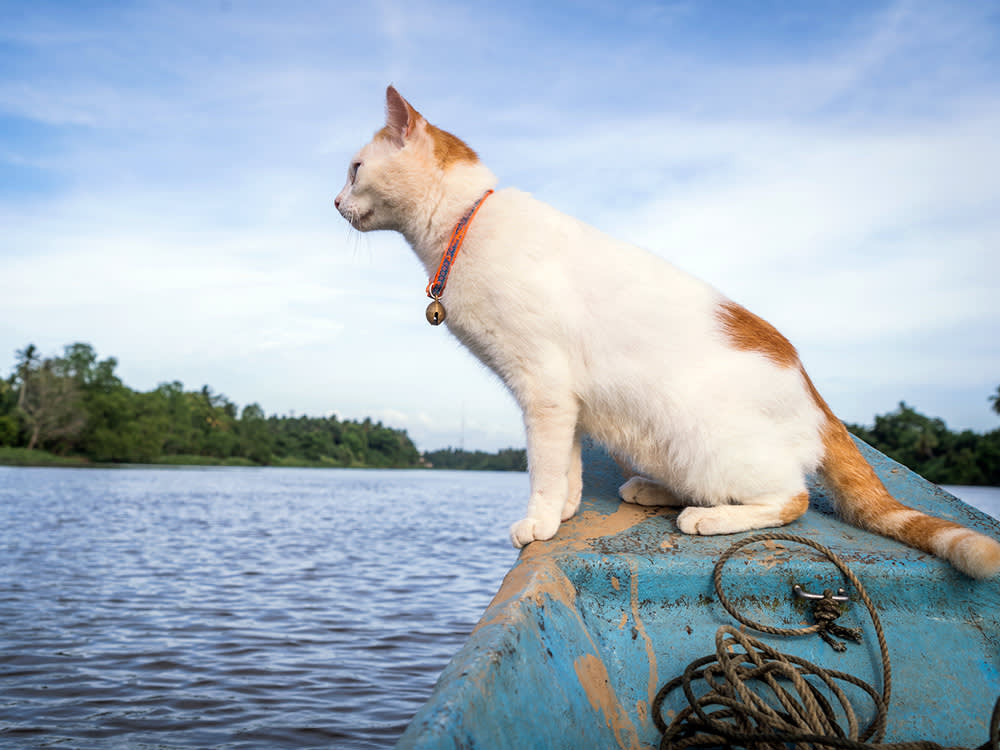
The internet loves the “do cats hate water” debate, and it usually frames the answer around feline personality, some cats are brave, some are prissy. That framing is mostly wrong, and it hides the fact that actually predicts whether a cat can enjoy water: the coat. Whether a cat tolerates getting wet is decided far more by fur than by willpower. Once you understand that, two useful things fall out of it. You can look at your own cat and make a reasonable guess about how it will feel about water, and you know exactly which cats are worth even considering an introduction with. Here is the coat-first way to think about cats and water.
Every cat can swim. That was never the question.
Let’s clear the easy part first. Every domestic cat knows how to swim in a pinch. Drop one in a full bathtub by accident and its legs will paddle, the instinct is intact even in a lifelong indoor cat. So “can cats swim” is a settled yes and a bit of a red herring. The real question is whether a cat will tolerate the water long enough for swimming to be anything but a panic. And that is where the coat comes in.
Cats can all swim if they have to, that part is reflex. What varies enormously is whether they can stand being wet. A cat whose coat holds water is fighting a heavy, cold, clingy layer the whole time, so of course it hates it. A cat whose coat sheds water has a completely different experience.
Note the exception, too: some cats simply are not strong swimmers regardless of coat, panicky ones gulp water, and very short-legged breeds like Munchkins lack the leg length for efficient paddling. Instinct is not the same as competence.
Why the coat decides it
A typical house cat’s fur is built to insulate, not to repel, so it soaks up water and holds onto it. That has three downstream consequences that add up to “no thank you”:
- A wet coat is heavy and slow. Saturated fur weighs a cat down, which is a genuine problem for an animal that is both predator and prey and depends on speed and agility. Feeling slowed and vulnerable is deeply unpleasant to a cat.
- Cats are fastidious. Cats do not like wearing anything they did not put there themselves, and they will lick a wet coat dry at the first opportunity. Water feels like a mess to be corrected.
- Cat fur dries slowly. Where many dogs have water-shedding coats and shake mostly dry in minutes, a typical cat stays damp for a long time, prolonging every downside above.
Now flip it. The breeds famous for liking water tend to have coats that behave differently, and that is the whole pattern.
The water-tolerant breeds, and the coat logic behind them
Do not fall for the blanket “all cats hate water” line. A handful of breeds break it, and when you look at why, the coat theme keeps reappearing:
- Turkish Van. The original “swimming cat,” from the shores of Lake Van. Its single-layer, water-resistant coat with no heavy undercoat means water rolls off rather than soaking in, exactly the coat that makes wetness bearable.
- Maine Coon. Bred for harsh Maine winters, its dense, somewhat water-repellent coat and tufted paws handle wet and snow far better than an average cat’s, which tracks with its reputation for dunking toys and playing in water bowls.
- Bengal. Its Asian leopard cat ancestry seems to carry a fascination with running water, faucets, sinks, puddles.
- Savannah. Another wildcat-descended breed (from the African serval) with a well-earned water-curious streak.
The lesson is not to memorize the list, it is to notice that water tolerance clusters with water-shedding coats and water-linked ancestry. Your ordinary domestic shorthair with an absorbent double coat is, coat-wise, built to dislike this.
Signs your particular cat might be an exception
Regardless of breed, some individuals are just curious. Watch for a cat that tries to climb into the tub or shower with you, plays in its water bowl or fountain, or bats at toys floating in the sink. Those are your candidates. As Dr. Mehta notes, plenty of cats happily live on houseboats and enjoy being around water, and no cat needs to swim to have a rich life, so read your cat’s actual signals rather than forcing the idea.
If your cat is a candidate: how to introduce water
You are not teaching swimming technique, that is reflexive. You are building comfort, which means desensitization and positive reinforcement, and cats can learn this at any age if they are willing participants.
- Start in the bathtub, dry. Get in with your cat, bring a few toys, and reward calm presence with treats, praise, or play. (For a seasoned outdoor adventure cat, the edge of a calm lake or slow river can substitute.)
- Add water slowly. Run the faucet to a trickle so a shallow pool forms near the drain. Let the cat watch and avoid it if it wants, and reward calm.
- Invite exploration. Use toys to coax a paw into the water, model calm by gently splashing your own hand, and reward any interaction.
- Check in constantly. At the first sign of stress, slow down or stop. Comfort comes first, always.
And accept that for many cats, batting a mechanical fish toy in a dry sink will always beat a real lake. That is a perfectly good outcome.
Safety, for the cats who do take to it
If your cat genuinely enjoys water, a few rules keep enjoyment from turning into an emergency:
- Never force it. As Dr. Mehta puts it, a common misconception is that cats want to join every activity their humans enjoy, they do not, so follow the cat’s lead every time.
- Use a life jacket. Cat-specific vests exist (brands like Baltic and Lyra Cat). Introduce the vest with the same gradual, reward-based approach, and confirm a proper fit before any outing.
- Shallow water only, always supervised. Keep the cat able to exit easily and keep its head above water, and stay close enough to intervene instantly. A panicking cat can drown or be traumatized even in shallow water.
- Avoid blue-green algae. These harmful blooms can be fatal, appear in lakes, ponds, and rivers as it warms, range from reddish to brown despite the name, and concentrate along the water’s edge. Check local advisories before any natural swim.
The two hazards worth their own warning
Beyond drowning, two exposures deserve special attention because they poison rather than drown.
Chlorine pools. Do not let a cat swim in chlorinated water. Ingesting pool water can cause vomiting and drooling, and the danger continues after the cat exits, because it will groom the chemical off its coat and swallow it. Worse, contact with concentrated chlorine tablets used for pool care can cause corrosive injuries to the mouth, esophagus, and stomach. Signs of chlorine trouble include drooling, pawing at the mouth, mouth ulcers, reluctance to eat, and vomiting, call your vet or a pet poison hotline if you suspect exposure.
Salt water. Skip the ocean. On top of currents, rip tides, hidden drop-offs, and unfamiliar wildlife, swallowing salt water can cause salt poisoning, which can be serious or fatal.
The upside, for the right cat
It is not all cautionary tales. Swimming is low-impact exercise that works many muscles while sparing the joints, which is why vets and rehab therapists sometimes use underwater treadmill work for overweight cats or those recovering from injury. And water-adjacent enrichment, riding along on a kayak or canoe in a fitted life jacket, can be rewarding for a water-curious cat without any swimming at all.
The bottom line
Every cat can swim, so that was never the real question. Whether a cat will tolerate water is mostly a matter of coat, absorbent double coats make wetness miserable, while the water-resistant coats of Turkish Vans, Maine Coons, and their kin make it bearable, which is why those breeds break the “all cats hate water” rule. Read your own cat’s coat and signals before assuming anything, introduce water only to willing cats and only with rewards, and if your cat does take to it, keep the water shallow, fresh, algae-free, and supervised, with chlorine and salt water off the table entirely.
References
- Driscoll, C. A., et al. “The Near Eastern Origin of Cat Domestication.” Science, vol. 317, no. 5837, 2007, pp. 519–523. https://www.science.org/doi/10.1126/science.1139518.
- Pet Poison Helpline. “Salt.” https://www.petpoisonhelpline.com/poison/salt/.
- Centers for Disease Control and Prevention. “Harmful Algal Bloom (HAB)-Associated Illness.” https://www.cdc.gov/harmful-algal-blooms/.
- Cat Fanciers’ Association. “Turkish Van Breed Profile.” https://cfa.org/turkish-van/.
Common questions
Why do most cats hate water?
Largely their coat. A typical cat's fur soaks up water and stays wet for a long time, which is heavy, uncomfortable, and dangerous for an animal that relies on agility. Water-tolerant breeds tend to have coats that shed water instead of absorbing it.
Which cat breeds like water?
Turkish Vans, Bengals, Savannahs, and Maine Coons are the usual water-curious breeds, and it is not a coincidence that several have water-resistant or single-layer coats, or wildcat ancestry tied to water.
Can cats swim in chlorine pools or the ocean?
Neither is safe. Chlorinated water can cause vomiting and drooling when groomed off, and concentrated chlorine tablets can cause corrosive injuries. The ocean adds currents, drop-offs, and salt-poisoning risk. Shallow, supervised, fresh water only.
Dr. Mehta is a board-certified veterinary nutritionist who evaluates pet food formulations, ingredient quality, and the science behind dietary trends. He writes and reviews all nutrition content at The Pet Times, including our food rankings and feeding guides.
Meet our experts ↗Keep reading
 Health & WellnessYou're Decorating Your Cat's World With Smells It Can't StandDr. Lena Park · 6 min
 Health & WellnessHalloween Is Your Cat's Least Favorite Night. Six Ways to Fix That.Dr. Lena Park · 5 min
 LivingThe Best Thing in Your Cat's Life Is Also the Most DangerousDr. Priya Nair · 8 min
 Health & WellnessCats Don't Always Land on Their Feet. Scientists Just Found the Part That Does the WorkDr. Priya Nair · 6 min
 Health & WellnessYour Cat Begs to Go Outside. The Honest Case for Keeping Them In.Dr. Priya Nair · 8 min
 Health & WellnessThe 'Stray Cat Telegraph' Is Nonsense. It Still Beats Standing on the Porch Yelling.Dr. Nina Kohl · 7 min